You’re standing in Halfords or Mamas & Papas staring at thirty car seats, each one plastered with logos and certifications you’ve never seen before. One says “i-Size compliant.” Another says “R44/04 approved.” A third has a “Plus Test” badge and costs twice as much. They all look safe. They’re all legal. But they’re not all the same, and the sales assistant who’s drifted over to help seems to know roughly as much as you do.
Car seat safety standards exist to protect your child in a crash. We’ve spent weeks researching the different systems and speaking with child safety experts to break it all down. The standards themselves are confusing — partly because there are multiple systems running in parallel, partly because the logos and jargon make everything sound equally impressive, and partly because manufacturers don’t always make it easy to understand what you’re actually getting. This guide breaks down what each standard tests, how they differ, and which one you should prioritise when buying a car seat in the UK.
The Two Standards: R44 and i-Size (R129)
Right now in the UK, you’ll see car seats approved to one of two standards. Both are legal. Both have been approved by the relevant authorities. But they test different things, in different ways, and one is measurably more protective than the other.
R44 (ECE R44/04)
R44 is the older standard. It’s been around since 1982 (with the /04 revision from 2006 being the current version). For decades, it was the only approval standard for child car seats in Europe and the UK, and the vast majority of seats sold over the past 20 years were tested to R44.
What R44 tests:
- Frontal impact — the seat is mounted on a test bench and subjected to a simulated frontal crash at about 50km/h (31mph). The test measures the forces on the dummy’s chest and head using accelerometers.
- Rear impact — not tested. R44 does not require a rear impact test.
- Side impact — not tested. R44 does not require a side impact test.
That’s the key limitation. R44 only tests frontal crashes. In the UK, around 25% of serious car accidents involve a side impact, and side impacts are disproportionately dangerous for children because there’s much less crumple zone between the impact point and the child’s head. A seat that passed R44 might offer excellent frontal protection but minimal side protection — and you’d have no way of knowing from the approval label alone.
How R44 categorises seats:
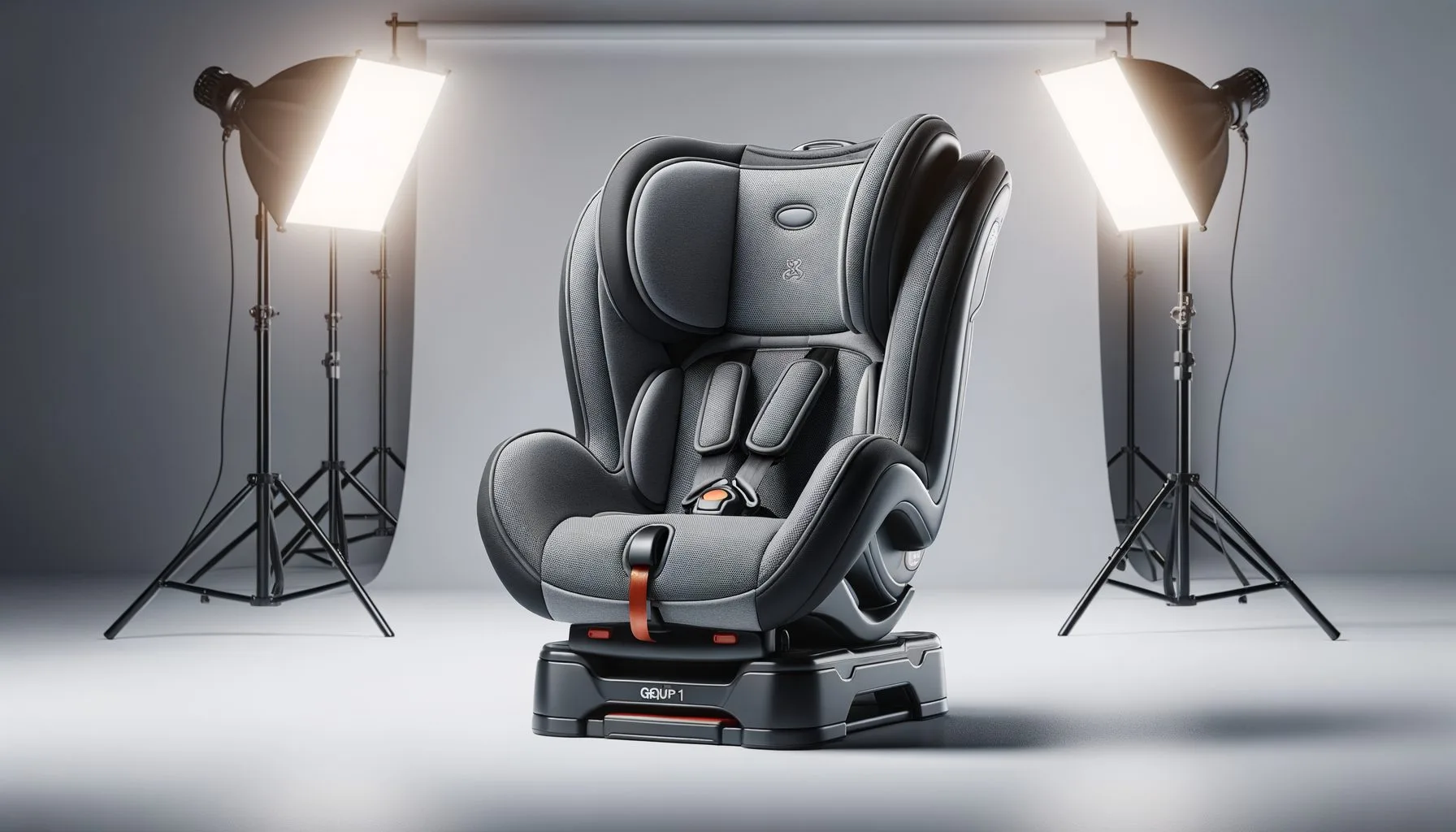
R44 uses child weight to determine which seat group to use: – Group 0: Up to 10kg (birth to about 6-9 months) – Group 0+: Up to 13kg (birth to about 12-15 months) – Group 1: 9-18kg (about 9 months to 4 years) – Group 2: 15-25kg (about 4-7 years) – Group 3: 22-36kg (about 6-12 years)
The weight-based system works, but it’s a blunt instrument. Two children who weigh the same can be very different heights, and a seat that’s right for a short, heavy toddler might not properly protect a tall, slim one. The harness might sit in the wrong position relative to the shoulders, or the headrest might not align with the child’s head.
Is R44 being phased out? Yes. Since September 2023, manufacturers can no longer produce new car seat designs to R44. However, existing R44-approved seats can continue to be sold and used — and many are still on shelves in Halfords, Smyths, and online retailers. They’re legal and they’re still safe. But they’re yesterday’s standard.
i-Size (R129)
i-Size (technically UN Regulation 129) is the newer standard, introduced in 2013 and now the direction of travel for all child car seat approvals in Europe and the UK. It’s more demanding than R44 in several important ways.
What i-Size tests that R44 doesn’t:
- Side impact testing — mandatory. Every i-Size seat must pass a side impact test, which measures the forces on the child’s head during a lateral collision. This is the single biggest improvement over R44.
- More advanced crash test dummies — i-Size uses the Q-series dummies, which are more biofidelic (they respond more like a real child’s body) than the P-series dummies used in R44 testing. The sensors in the Q-series dummies measure more data points, giving a better picture of crash forces.
- Rear-facing requirement until 15 months — i-Size mandates that children travel rear-facing until at least 15 months old. R44 allowed forward-facing from 9kg (which some babies reach at 6-7 months). This matters because rear-facing travel distributes crash forces across the child’s back and spine rather than concentrating them on the neck and head. For young children with proportionally large, heavy heads and underdeveloped neck muscles, rear-facing is measurably safer.
How i-Size categorises seats:
Instead of weight groups, i-Size uses child height (stature) to determine which seat is appropriate. You’ll see height ranges like “40-105cm” or “76-150cm” on i-Size seats. This is a better system because height correlates more directly with how a child fits in a seat — where the harness sits relative to the shoulders, whether the headrest is at the right height, and whether the side bolsters protect the head properly.
You’ll still need to check the weight limit (each seat has one), but height is the primary fitting criterion.
ISOFIX as standard: i-Size seats use ISOFIX mounting — the standardised clip system built into virtually every car made since 2006 in the UK. No more threading seatbelts through confusing routes and hoping you’ve done it right. ISOFIX clicks in and you can visually confirm it’s secure (green indicators on the connectors). This noticeably reduces the rate of incorrect installation, which is one of the biggest real-world risks with car seats — studies have found that up to 60% of seatbelt-installed car seats are fitted incorrectly.
Some i-Size seats also have a top tether or support leg for additional stability. These anti-rotation devices stop the seat pitching forward in a crash, which reduces the forces on the child.
The Plus Test: The Standard Above the Standards
The Plus Test is a Swedish voluntary test that goes beyond both R44 and i-Size. It’s not a legal requirement — it’s an additional crash test that manufacturers can choose to submit their seats to. Only seats that pass the Plus Test can carry the Plus Test logo, and very few seats pass it.
What makes the Plus Test different:
The Plus Test measures the forces on the child’s neck during a frontal impact. Neither R44 nor i-Size directly measures neck forces — they focus on chest and head acceleration. The Plus Test sets a maximum allowable neck tension and neck compression, and the thresholds are strict. The reasoning is that a child’s neck is the most vulnerable point in a frontal crash, particularly for forward-facing children, and measuring neck forces gives the most complete picture of how well a seat protects.
Only rear-facing seats pass the Plus Test. No forward-facing seat has ever passed the Plus Test, and engineers who work on crash testing say it’s physically impossible for a forward-facing seat to meet the neck force limits. In a frontal crash, a forward-facing child’s head is thrown forward, and the neck absorbs enormous forces — even with the best restraint system. A rear-facing child’s head is pushed into the seat shell, and the forces are distributed across the entire back and supported by the seat structure. For a related angle, see our Best Baby Sleeping Bags 2026 UK: TOG Ratings Explained guide.
This is why organisations like the Swedish National Road and Transport Research Institute (VTI) recommend rear-facing travel until at least age 4, and many Swedish families keep children rear-facing until 5 or 6. Sweden has some of the lowest child road fatality rates in the world, and extended rear-facing travel is a significant factor.
Plus Test seats available in the UK:
Only a handful of brands consistently pass the Plus Test, and they tend to be Scandinavian: – Axkid — the Minikid, Modukid, and Move are all Plus Tested – BeSafe — several models including the iZi Kid and iZi Twist – Britax — some rear-facing models carry the Plus Test approval
Expect to pay £250-£450 for a Plus Tested seat. They’re more expensive than most forward-facing alternatives, but the level of protection is measurably higher.
What Do These Ratings Actually Mean in a Crash?
Standards and test names are abstract. Here’s what the differences look like when something goes wrong.
In a frontal crash at 50km/h (the most common type of serious collision):
An R44-approved forward-facing seat restrains the child’s body with the harness, but the head — which in a toddler is proportionally much heavier than an adult’s — is thrown forward violently. The neck experiences peak forces that, in the worst cases, can cause serious spinal injury. The seat passed R44 because chest deceleration was within limits. But the neck wasn’t measured.
An i-Size forward-facing seat offers better overall protection because the seat was tested with more advanced dummies and had to meet stricter performance criteria. But the fundamental physics of a forward-facing crash haven’t changed — the head is still thrown forward.
A Plus Test rear-facing seat distributes the crash forces across the child’s back, shoulders, and the back of the head. The neck is loaded in compression rather than tension — which the human body tolerates far better. The measured neck forces in Plus Test seats are a fraction of what forward-facing seats produce in the same crash scenario. Our Car Seat Accessories: Mirrors, Protectors & Sunshades Worth Buying guide is useful alongside this.
In a side impact:
An R44 seat may or may not protect well — it was never tested for this. Some R44 seats have excellent side impact protection by design; others don’t. You’re relying on the manufacturer’s engineering rather than a test result.
An i-Size seat was tested for side impact, and the forces measured were within the standard’s limits. The side bolsters and head protection have been validated.
Which Standard Should You Look For When Buying?
The simple answer: choose i-Size (R129) wherever possible, and strongly consider a Plus Tested rear-facing seat for children under 4-5 years.
Here’s the practical buying guide:
For Newborns to 15 Months
Rear-facing is mandatory under i-Size and strongly recommended regardless. Choose an i-Size infant carrier (the “bucket” style you click in and out) or an i-Size seat that covers from birth. Every infant carrier on the market is rear-facing, so you can’t really get this wrong.
Picks: The Maxi-Cosi Pebble 360 (about £200-£250) is the most popular i-Size infant carrier in the UK, fits on most travel systems, and has excellent side impact protection. The Cybex Cloud Z2 (about £200-£230) is another strong choice with a lie-flat option that’s better for longer car journeys with newborns.
For 15 Months to 4 Years
This is the critical stage — the one where the choice between forward-facing and rear-facing makes the biggest difference.
Best option: A Plus Tested rear-facing seat. The Axkid Minikid 3 (about £350-£400) fits from 61-125cm and has been the benchmark in this category for years. The BeSafe iZi Twist B i-Size (about £400-£450) adds 360° rotation, which makes getting the child in and out much easier — a genuine practical advantage in a car park.
Good option: An i-Size rear-facing or combination seat. The Joie i-Spin 360 (about £250-£300) is one of the most popular rotating i-Size seats in the UK and offers both rear-facing and forward-facing modes. Keep it rear-facing as long as possible — ideally until the child outgrows the rear-facing height limit. We cover a similar decision in How to Adjust Car Seat Straps as Your Baby Grows.
Acceptable option: An i-Size forward-facing seat. If rear-facing isn’t practical for your car (some seats don’t fit rear-facing in smaller cars) or your child is distressed rear-facing (it happens — some children are miserable), a forward-facing i-Size seat is still a well-tested, safe choice. It’s just not as protective in the most serious crashes.
For 4 to 12 Years
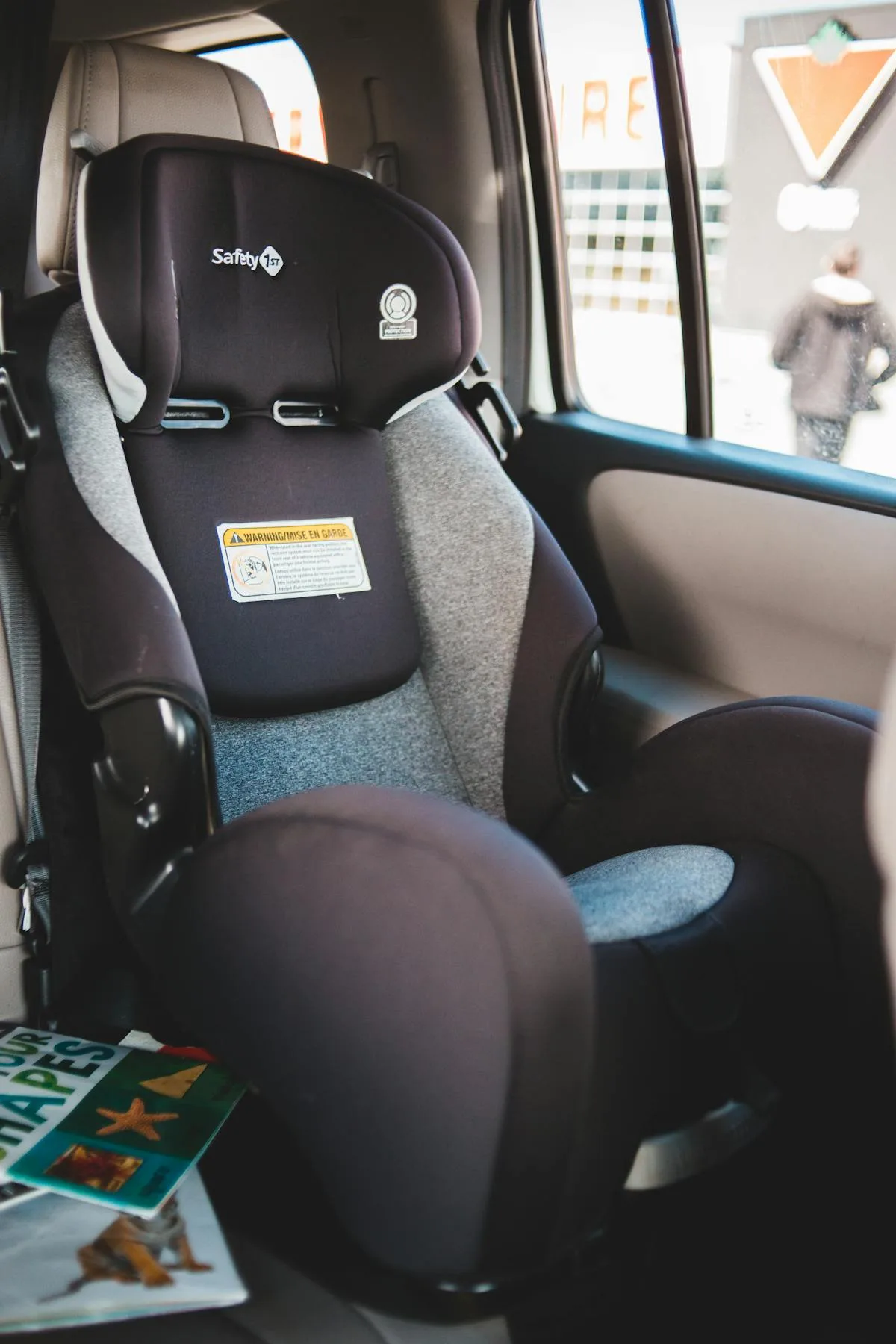
Once children outgrow their harnessed seat, they move to a high-back booster that uses the car’s seatbelt. At this stage, i-Size compliance and good side impact protection are what to look for.
Picks: The Britax Kidfix i-Size (about £150-£180) has ISOFIX, excellent side protection, and grows with the child. The Maxi-Cosi RodiFix Pro2 i-Size (about £140-£170) is well-regarded and widely available from John Lewis, Halfords, and Amazon UK.
Avoid backless boosters for as long as possible. They’re legal from 125cm height and 22kg weight, but they provide zero side impact or head protection. A high-back booster is always the safer choice. Keep your child in a high-back booster until they physically outgrow it or reach 150cm (when they can use the adult seatbelt alone).
Common Questions
“My car doesn’t have ISOFIX — can I use an i-Size seat?”
Some i-Size seats can be installed with a seatbelt as well as ISOFIX, but not all. Check the specific seat’s manual. If your car doesn’t have ISOFIX (most cars built before 2004-2006), you may be limited to R44 seats for some age groups. Consider whether it’s worth upgrading the car — ISOFIX points can sometimes be retrofitted by a specialist. For independent guidance, check GOV.UK child car seat rules.
“Is it legal to use an R44 seat?”
Yes, completely legal. R44/04 approved seats can be used for their full lifespan. You won’t be breaking any law using one. But if you’re buying new, there’s no good reason to choose R44 over i-Size.
“Are seats sold in Halfords safe?”
Yes. Halfords only stocks seats that meet current UK/European approval standards. The same applies to John Lewis, Mamas & Papas, and other major retailers. Where you need to be more careful is buying from unknown sellers on Amazon Marketplace or eBay, where non-approved imports occasionally appear.
“Do more expensive seats perform better in crashes?”
Not always, but often. The additional cost in premium seats typically goes into better side impact protection (deeper bolsters, more energy-absorbing material), higher-grade harness systems, and features like anti-rotation devices. But a well-fitted £150 i-Size seat will protect your child better than a poorly fitted £400 seat. Correct installation matters as much as the seat itself.
“Where can I get my seat checked?”
Good Egg Safety run free car seat safety checks across the UK — they have events at Mamas & Papas stores, Halfords, and other venues. Your local council road safety team may also offer checks. These are worth doing, especially with your first child. Having a trained fitter confirm your seat is correctly installed gives genuine peace of mind.
The Bottom Line
Don’t panic about standards. As the Royal Society for the Prevention of Accidents confirms, any seat sold by a reputable UK retailer meets at minimum R44/04 requirements, and the majority now meet i-Size. Your child will be far safer in any properly approved, correctly fitted car seat than without one.
But if you want to make the best choice:
- Buy i-Size wherever you can. The side impact testing alone makes it worth it.
- Keep children rear-facing as long as possible. At least to 15 months (i-Size minimum), ideally to 4 years or beyond.
- Consider a Plus Tested seat for the toddler stage — it’s the highest level of proven protection available.
- Fit the seat correctly. Read the manual. Watch the manufacturer’s fitting video. Get it checked at a free fitting event.
The seat that’s fitted right beats the “better” seat that’s fitted wrong. Every time. If you’re ready to buy, our guide to choosing a baby car seat walks you through finding the right one, and our expiry and recall checker helps you verify any seat you already own.
Frequently Asked Questions
Is R44 being phased out? Yes. Since September 2023, manufacturers can no longer produce new car seat designs to R44. However, existing R44-approved seats can continue to be sold and used — and many are still on shelves in Halfords, Smyths, and online retailers. They’re legal and they’re still safe. But they’re yesterday’s standard. i-Size (R129) i-Size (technically UN Regulation 129) is the newer standard, introduced in 2013 and now the direction of travel for all child car seat approvals in Europe and the UK. It’s more
How do I know if a child car seat fits my car? Check the seat maker’s fit list, confirm your car has the right ISOFIX or belt setup, and test the seat in the car before relying on it.
When should I move to the next car seat size? Move only when your child exceeds the current seat’s height or weight limit. Staying rear-facing for longer is usually the safer option.
What should I check first with Car Seat Safety Ratings Explained: Plus Test, i-Size & R44? Start with the real use case, then check size, compatibility, running costs and maintenance. A product that looks good on paper can still be the wrong fit if it does not suit the room, routine or budget.
How do I avoid wasting money on Car Seat Safety Ratings Explained: Plus Test, i-Size & R44? Avoid buying on one headline feature alone. Compare the practical details, read the warranty or returns terms, and choose the option that solves your main problem rather than the one with the longest specification list.