Your baby has grown 4cm since you fitted the car seat three months ago, and now the harness straps are cutting into their shoulders, the chest clip sits at stomach level, and you’re not actually sure whether to move the straps up or loosen them or both. You’re not alone — car seat straps are the thing most parents get wrong, and getting them right matters more than almost any other piece of baby safety equipment you own.
In This Article
- Why Correct Strap Adjustment Is Critical
- How Often to Check and Adjust
- Adjusting Harness Height
- Getting the Right Harness Tightness
- Chest Clip and Buckle Position
- Adjustments for Different Car Seat Stages
- Seasonal Clothing and Strap Fit
- Signs Your Baby Has Outgrown the Seat
- Common Mistakes Parents Make
- Frequently Asked Questions
Why Correct Strap Adjustment Is Critical
The Physics of a Crash
In a 30mph collision — the speed limit on most UK residential roads — your baby experiences forces equivalent to 20-30 times their body weight. A 10kg baby feels like 200-300kg of force pulling them forward. The harness straps are the only thing keeping them in the seat.
If those straps are too loose, the baby moves forward into them before they engage — called “slack.” That extra movement means the baby’s head travels further, the deceleration is more abrupt, and the forces on their neck and spine multiply. Just 2cm of strap slack can double the peak force on a child’s body in a crash.
What “Properly Adjusted” Actually Means
According to Good Egg Car Safety — one of the UK’s leading child car seat safety charities:
- Harness height: at or just above shoulder level (rear-facing) or at or just below shoulder level (forward-facing)
- Harness tightness: you should not be able to pinch a fold of strap webbing between your finger and thumb at the shoulder (the “pinch test”)
- Chest clip position: at armpit level, centred on the chest (if your seat has one — many UK seats don’t use chest clips)
- Crotch buckle: sits flat between the legs, not twisted
The Most Common Problem
The single most common car seat error in the UK: straps too loose. A survey by the Child Seat Safety Centre found that over 60% of car seats checked at their fitting stations had harness straps that were too slack — often because parents loosen straps to make it easier to get the baby in and out, then forget to retighten.
How Often to Check and Adjust
Every Trip
Tightness should be checked every single time you put your baby in the seat. Children wriggle, straps loosen, and clothing thickness changes. It takes 5 seconds:
- Buckle the harness
- Pull the adjustment strap until snug
- Do the pinch test at the shoulder
- Check the chest clip position (if applicable)
Monthly Height Check
Once a month, check whether the harness slots need moving up:
- Place your baby in the seat without the harness
- Look at where the harness exits the seat back relative to their shoulders
- If the straps come out below the shoulders (rear-facing) or above the shoulders (forward-facing), it’s time to re-thread
At Every Growth Spurt
Babies grow in bursts — you might not notice daily changes, but suddenly the straps look tight in a way they didn’t last week. After any noticeable growth spurt, check both height and tightness.
Adjusting Harness Height
Rear-Facing Seats (Birth to ~15 months)
In rear-facing seats, harness straps should exit the seat at or just below shoulder level. This is because in a rear-facing crash, forces push the baby into the seat shell — straps below the shoulders prevent the child from sliding upward.
How to Move the Harness Slots
Most car seats have 3-5 harness height positions. The process varies by model but typically:
- Remove the harness from the current slots — usually involves unthreading the strap from behind the seat shell
- Thread the strap through the next higher slot — match both sides
- Re-route through the splitter plate (the metal or plastic plate behind the seat where both shoulder straps meet)
- Check symmetry — both straps must come through at the same height
- Test the adjustment mechanism — pull the tightening strap to ensure it still locks and releases properly
Some newer seats (Cybex Sirona, Joie i-Spin, Maxi-Cosi Mica) have a no-rethread harness — you slide a headrest/harness unit up or down with a lever. Much easier and means you’re more likely to actually do it regularly. If you’re choosing a seat with this in mind, our car seat buying guide covers which models have this feature.
Forward-Facing Seats (15 months to ~4 years)
In forward-facing seats, straps should be at or just above shoulder level. The logic reverses: in a frontal crash, the child is thrown forward — straps above the shoulders prevent them from being ejected over the top of the harness.
When to Move Up
If the harness straps consistently sit more than 2cm below your baby’s shoulders in a rear-facing seat (or above shoulders in forward-facing), it’s time to move to the next slot. Don’t wait until it looks obviously wrong — by then it’s been wrong for weeks.
Getting the Right Harness Tightness
The Pinch Test
This is the definitive test and takes 2 seconds:
- Tighten the harness by pulling the adjustment strap (usually at the front, between the legs)
- Try to pinch a fold of harness webbing between your thumb and forefinger at the child’s shoulder
- If you can pinch a fold: too loose. Tighten more
- If you can’t pinch a fold: correct. The webbing should lie flat against the body
“But They Look Uncomfortable”
New parents often worry that a properly tight harness looks restrictive. The reality: a snug harness is comfortable. A loose harness allows the child to slump into awkward positions (which is actually uncomfortable) and is dangerous in any sudden stop. For a related angle, see our Car Seat Accessories: Mirrors, Protectors & Sunshades Worth Buying guide.
Think of it like a seatbelt — worn properly, you barely notice it. Worn loose, it digs in at all the wrong angles during braking.
How Tight Is Too Tight?
If the harness is compressing the child’s chest visibly, restricting their breathing, or leaving red marks after a short journey — it’s too tight. This is rare with standard adjustment mechanisms. The correct tension is firm-but-not-compressive: flat against the body, no slack to pinch, but not squeezing.
After two years of twice-daily car seat use with my own kids, the pinch test becomes second nature. It’s genuinely a 3-second check that you do on autopilot alongside buckling the harness.
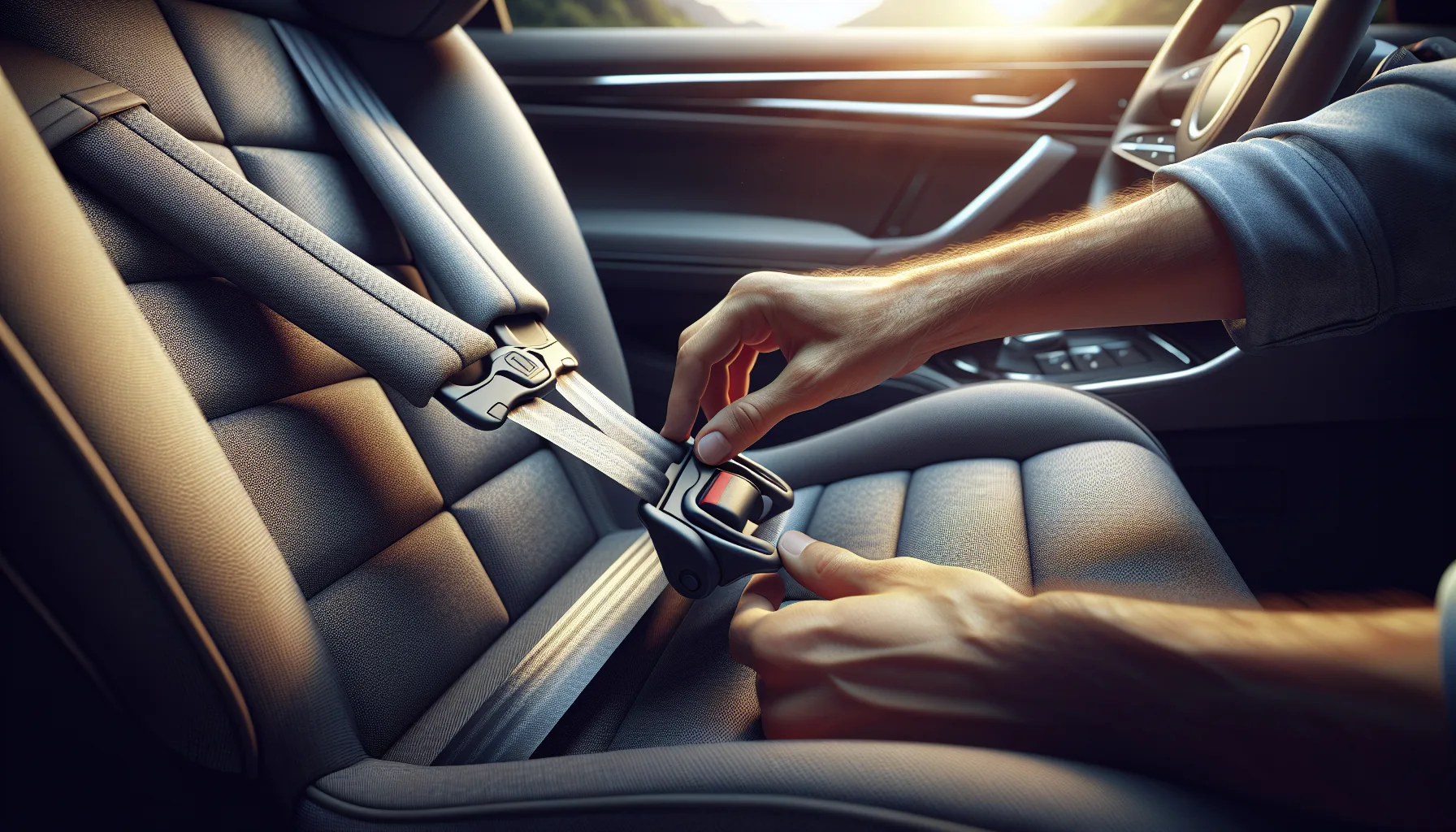
Chest Clip and Buckle Position
Chest Clips (Where Present)
Not all UK car seats have chest clips — they’re more common in US-designed seats (Graco, Chicco). Where present:
- Position: at armpit level, centred on the sternum
- Too low: sits on the stomach, provides no structural benefit and can cause abdominal injury in a crash
- Too high: sits on the throat, restricts breathing
- Check after every buckling — children pull at chest clips constantly
Crotch Buckle
The buckle that connects the shoulder straps between the child’s legs:
- Should sit flat — not twisted, not pressing into the inner thigh
- Webbing not twisted — each strap should lie flat from the buckle to the shoulder slot
- Some seats have adjustable crotch strap length — extend it as the baby grows to prevent the buckle sitting too close to the body
Strap Twist Check
Run your finger along each harness strap from shoulder to buckle. The webbing should be completely flat with no twists. A twisted strap:
- Reduces the effective width of the strap against the body (concentrating force in a crash)
- Can dig into the child’s neck or face
- May not tighten properly through the adjustment mechanism
Adjustments for Different Car Seat Stages
Group 0+ (Birth to ~13kg / 12-15 months)
- Harness: 5-point, rear-facing
- Typical adjustments: harness height moves up 2-3 times as baby grows; tightness checked every trip
- Headrest: adjustable on most modern seats — raise as head grows
- Recline: newborns need more recline; reduce as they gain head control (usually around 4-6 months)
- Seat safety checks explained: our safety ratings guide covers what the i-Size and R44 labels on your seat mean
Group 0+/1 (Birth to ~18kg / 4 years)
- Longer in rear-facing — extended rear-facing to 4 years is safer and increasingly standard in the UK
- Transition from newborn insert: most have a removable newborn insert that comes out at 3-6 months (check your manual for the specific weight/height)
- Harness height: may need adjusting 4-6 times across the full life of the seat
Group 1 (9-18kg / ~9 months to 4 years)
- Often forward-facing with harness — strap height at or above shoulders
- Recline adjustment: forward-facing seats have less recline range but should still offer a slight tilt for sleeping
Group 2/3 (15-36kg / ~4 to 12 years)
- No harness — the car’s seatbelt restrains the child; the booster seat positions the belt correctly
- Headrest height: adjustable — the top of the headrest should be level with the top of the child’s ears
- Seatbelt guide: the belt should cross the shoulder (not the neck) and sit flat across the hips (not the stomach)

Seasonal Clothing and Strap Fit
The Winter Coat Problem
This is critical and most parents don’t know about it: puffy winter coats create dangerous harness slack.
The coat compresses in a crash, creating 5-10cm of effective strap looseness — enough for the child to be ejected from the harness. This is not a theoretical risk; it’s a documented cause of child injuries in car crashes.
The Solution
- Remove the coat before putting the child in the seat
- Buckle and tighten the harness over thin layers (jumper, cardigan)
- Place the coat over the harness backward (arms through, like a blanket) or use a car-seat-specific blanket
- Alternatively: use a thin fleece instead of a puffy coat for car journeys
Summer Considerations
- Metal buckles get hot in summer sun — cover with a cloth or towel when the car is parked
- Thin summer clothing means the harness should be tighter than in winter (less fabric padding)
- Sweat makes straps slippery — check tightness more frequently
- Never leave a child in a car seat in a hot car, even briefly
Testing With and Without Coat
To see the difference yourself:
- Buckle your child in their coat and tighten properly
- Without loosening the harness, unbuckle and remove the coat
- Re-buckle — the massive gap between harness and child is the crash slack
This visual demonstration converts every parent who sees it. I tested this with my daughter’s puffer jacket and the gap was alarming — roughly the width of my fist between the strap and her chest.
Signs Your Baby Has Outgrown the Seat
Weight Limit Reached
Every seat has a maximum weight printed on the label and in the manual. Weigh your child regularly — you don’t need a baby scale; stand on a normal scale holding them, then subtract your weight.
Height Limit Reached
- Rear-facing: the top of the child’s head must not extend above the top of the seat shell (the hard back of the seat). Even 1cm above = outgrown
- Forward-facing with harness: the harness slots at their highest position should be at or above the child’s shoulders. If the highest slot is below the shoulders, the seat is outgrown
- Booster seats: the child’s eyes should be below the top of the headrest at its highest setting
Harness at Maximum Extension
If the harness straps are at the highest slot position and you still can’t get proper shoulder alignment, the seat is outgrown by height even if the weight limit hasn’t been reached. Our How to Check If Your Car Seat Is Expired or Recalled guide is useful alongside this.
When to Move to the Next Stage
Move up when any single limit (weight, height, or harness capacity) is reached — not when all three are hit. The first limit reached is the one that matters. For guidance on what comes next, our ISOFIX vs seatbelt guide helps you choose the right fixing for the next seat.
Common Mistakes Parents Make
Leaving Straps Loose for “Comfort”
The most dangerous and most common mistake. A loose harness feels easier to buckle and looks less “restrictive” — but it provides minimal protection in a crash. Always retighten after buckling. Always do the pinch test.
Not Removing Winter Coats
Covered above, but worth repeating: puffy coats create lethal amounts of harness slack. Thin layers under the harness, coat over the top.
Using a Second-Hand Seat Without the Manual
Every seat model has specific harness routing, adjustment mechanisms, and weight/height limits. Without the manual, you’re guessing — and guessing wrong means the harness may not function correctly in a crash. Most manuals are available as free PDFs from manufacturer websites.
Twisting the Crotch Strap
When buckling quickly (screaming baby, running late), the crotch strap often gets a 180° twist. This reduces its effectiveness and can pinch the child’s inner thighs. Take the extra 2 seconds to lay it flat.
Forward-Facing Too Early
UK law allows forward-facing from 15 months, but rear-facing is 5× safer for children under 4 years old. Keep them rear-facing as long as the seat allows — extended rear-facing seats accommodate children up to 105cm/18-25kg. The extra year or two of rear-facing provides massive safety benefits for the developing spine and neck.
Frequently Asked Questions
How do I know if car seat straps are tight enough? Use the pinch test: after tightening, try to pinch a fold of harness webbing between your finger and thumb at the child’s shoulder. If you can pinch a fold, it’s too loose — tighten until the webbing lies flat against the body. This should be checked every single trip.
Should car seat straps be above or below the shoulders? It depends on the direction. Rear-facing: straps should be at or just below shoulder level. Forward-facing: at or just above shoulder level. The physics are different — rear-facing pushes the child into the seat (straps below prevent upward sliding), forward-facing throws them forward (straps above prevent ejection over the top).
How often should I adjust car seat harness height? Check monthly by placing your child in the seat and comparing strap exit points to shoulder position. Most children need 2-3 height adjustments in a Group 0+ seat and 3-5 in a longer-lasting Group 0+/1 seat. Modern seats with no-rethread harnesses make this much quicker.
Can my baby wear a snowsuit in a car seat? No — snowsuits and puffy jackets create dangerous harness slack that doesn’t compress until a crash, at which point the child moves forward before the straps engage. Use thin layers under the harness and place coats or blankets over the harness after buckling. This applies to all padded outerwear, not just snowsuits.
When should I switch from rear-facing to forward-facing? As late as possible. UK law allows forward-facing from 15 months, but rear-facing is five times safer for children under 4. Extended rear-facing seats accommodate children up to 105cm and 18-25kg. Keep them rear-facing until they reach the seat’s height or weight limit, regardless of age.