Choosing a pushchair is one of those decisions that feels impossibly high-stakes when you’re a new parent. You’ll use it almost every single day for years, it needs to work with your car, your hallway, your local pavements (complete with their charming potholes), and ideally not cost more than your monthly rent. After spending months testing pushchairs across UK towns, parks, public transport, and supermarket aisles, we’ve put together this honest guide to the best options available in 2026. No fluff, no paid placements — just real-world experience from parents who’ve wrestled with folding mechanisms in the rain.
What We Looked For in Our Testing
Before diving into the picks, it’s worth understanding what actually matters when you’re choosing a pushchair in the UK. We tested each model across several real-life scenarios because a pushchair that looks brilliant in a showroom can fall apart (metaphorically, thankfully) when you’re navigating a cobbled high street in February.
Our testing criteria covered the things that genuinely affect your daily life:
- Fold size and mechanism — Can you fold it one-handed while holding a baby? Does it fit in your car boot alongside a weekly shop?
- Newborn suitability — Whether it lies fully flat, accepts a carrycot, or works with a compatible car seat from birth
- Weight and manoeuvrability — How it handles on uneven pavements, through standard doorways, and on public transport
- Weather protection — Because this is Britain, and it will rain on you more than you’d like
- Shopping basket size — A surprisingly important feature that varies enormously between models
- Longevity — How long will it genuinely last before your child outgrows it or it falls apart?
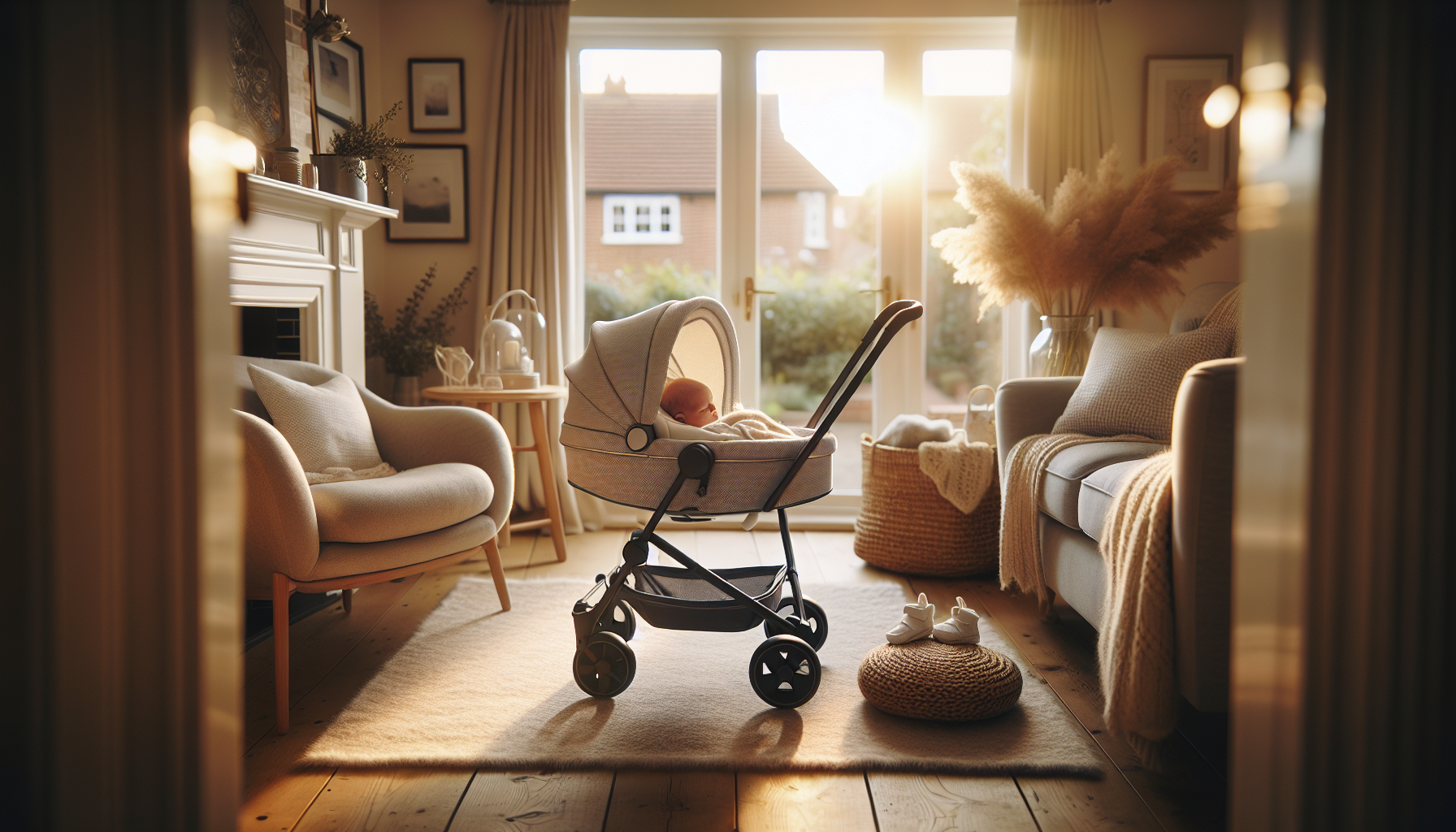
Best Overall: Bugaboo Fox 5
The Bugaboo Fox 5 continues to earn its reputation as one of the most complete pushchairs on the market, and the 2026 model refines what was already a very strong package. It’s not the cheapest option here — far from it — but if your budget stretches to around £1,200 for the full system, it delivers on virtually every front.
What struck us most during testing was the ride quality. The suspension system genuinely works, absorbing the bumps and cracks that litter most UK pavements. We tested it across cobbled streets in York, gravel paths in the Cotswolds, and the perennially potholed roads of south London, and it handled all of them without rattling our test baby (a very opinionated six-month-old) awake.
The Fox 5’s one-piece fold is a marked improvement over older Bugaboo models. You can collapse it with one hand in about three seconds — we timed it — and it stands upright when folded, which matters more than you’d think when you’re loading shopping around it in the boot. The seat unit reverses easily between parent-facing and world-facing positions, and the lie-flat recline means you can use it from birth without the separate carrycot, though Bugaboo does offer one if you prefer that option.
The basket is generous at 32 litres and, crucially, accessible from every angle. Some pushchairs have baskets that are technically large but practically impossible to reach once a child is seated. Not the case here. Our main criticisms? The price is steep, and the included rain cover feels slightly flimsy for something at this price point. But as an all-round performer that’ll take you from newborn through to a 22kg toddler, it’s hard to beat.
Best for City Living: Silver Cross Dune 2026
If you spend most of your time navigating busy streets, cramped shops, and public transport, the Silver Cross Dune deserves serious consideration. This is a pushchair designed with urban parents in mind, and it shows in every design decision.
The Dune is compact. Genuinely compact, not “compact for a full-size pushchair” compact. When folded, it fits comfortably in the overhead luggage rack on most trains, and it slips through the barriers at Tube stations without the sideways-shuffle that larger pushchairs demand. At 10.8kg for the chassis and seat unit combined, it’s light enough to carry up a flight of stairs without feeling like you’re training for a strongman competition.
Silver Cross has packed the Dune with thoughtful details. The magnetic harness buckle is a small thing, but when you’re fastening a wriggly toddler into the seat for the hundredth time, you’ll appreciate not having to line up a fiddly clip. The hood extends far enough to offer genuine sun protection — something that cheaper pushchairs often get wrong — and includes a mesh ventilation panel for warmer days.
The ride isn’t quite as smooth as the Fox 5 over rough terrain, which is the trade-off for the lighter weight. And the basket, while adequate, won’t swallow a full supermarket shop. But for the parent who’s primarily walking on pavements and hopping on buses, it’s a brilliant choice at around £895.
Best Budget Pick: Joie Versatrax
Here’s the thing about pushchairs: spending more money doesn’t always mean getting a better product. The Joie Versatrax, at around £350, is proof of that. It’s not perfect — nothing at this price is — but it does an impressive number of things well, and it comes with a carrycot included in the box, something that costs extra with most competitors.
The Versatrax offers reversible seating, a full lie-flat position, and compatibility with Joie’s i-Level and i-Gemm car seats for a travel system setup. The one-hand fold works reliably (we tested it repeatedly in car parks during drizzle, as is tradition), and the auto-lock mechanism means it stays folded without you needing to clip anything.
Where does it fall short compared to pricier options? The wheels are smaller, so it doesn’t glide over rough ground as effortlessly. The fabrics feel a step down from premium models — perfectly functional, but you can tell the difference. And at 13.1kg, it’s heavier than you might expect, which makes stairs a bit of a workout.
But honestly, for a pushchair that does virtually everything a first-time parent needs, at a price that leaves budget for all the other baby gear you’ll need, the Versatrax is outstanding value. It’s particularly good if you’re not sure what type of pushchair life you’ll lead — it handles most situations competently rather than excelling in one and struggling in others.
Best Lightweight Stroller: Cybex Libelle
If you already have a primary pushchair and need something ultra-portable for travel, days out, or the school run, the Cybex Libelle is in a class of its own. It folds down to a size that genuinely fits in an aeroplane overhead bin — we verified this on a Ryanair flight, which is about as stringent a test as luggage dimensions get.
At just 6.2kg, you can sling it over your shoulder with the included carry strap. The fold is tiny: roughly the size of a large laptop bag. It’s the pushchair you throw in the boot for a day trip without having to rearrange everything else. For holidays, it’s transformative — no more gate-checking bulky travel systems and hoping they come back in one piece.
The catches? It’s not suitable from birth (recommended from around 6 months when baby can sit independently). The seat doesn’t recline flat, though it does offer a decent nap-friendly angle. And the small wheels mean it’s best on smooth surfaces — this isn’t the pushchair for woodland walks. But at around £250, it earns its place as the best second pushchair on the market. Many parents we spoke to said it ended up becoming their main pushchair once their child was past the baby stage.
Best for Countryside and Off-Road: iCandy Orange 4
Rural parents have different needs. If your daily walk involves a muddy towpath, a gravel lane, or a field that’s technically a footpath, you need a pushchair with proper wheels and suspension. The iCandy Orange 4 fills this niche superbly.
The Orange 4 runs on large, air-filled tyres that soak up terrain that would defeat smaller-wheeled pushchairs. We tested it on a National Trust walk that included mud, tree roots, gravel, and a slightly ambitious hill, and it performed admirably throughout. The all-wheel suspension works in concert with the tyres to keep the ride smooth — our test toddler fell asleep within ten minutes, which says everything about the comfort level.
It’s also a clever choice for growing families because it converts to a double pushchair with the addition of a second seat or carrycot. The elevator adaptors raise the lower seat so both children get a good view, which helps reduce the protests. The build quality is excellent — iCandy offers a lifetime guarantee on the chassis, which speaks to their confidence in the engineering.
The downsides are predictable: it’s large. At 14.5kg, it’s not something you want to carry up stairs regularly. The fold, while manageable, produces a bigger package than most urban pushchairs. And at around £1,100, it’s a significant investment. But if you need a pushchair that genuinely handles rough terrain without being a dedicated jogging buggy, the Orange 4 is the one to beat.
Best Travel System: Uppababy Vista V3
Travel systems — where the pushchair, carrycot, and car seat all work together — can save time, money, and hassle if you drive regularly. The Uppababy Vista V3 remains the gold standard here, offering a cohesive system where every component feels like it was designed to work together, because it was.
The included bassinet is genuinely excellent: it’s approved for overnight sleeping, meaning it can serve as a Moses basket when you first bring baby home. The Mesa i-Size car seat clicks straight onto the pushchair frame without adaptors, making the car-to-pavement transition seamless. These aren’t groundbreaking features individually, but having them all work this smoothly from one manufacturer, with no compatibility worries, is worth the premium.
The Vista V3 also grows with your family. Like the iCandy Orange, it converts to a double configuration, accommodating a second seat, bassinet, or car seat alongside the toddler seat. The riding board option extends its life even further for older children who are “too big for the pushchair” but get tired legs halfway round town.
At around £1,300 for the full system (pushchair, bassinet, and car seat), it’s among the most expensive options here. But when you factor in the cost of buying a separate carrycot, car seat, and adaptors for other systems, the price gap narrows. The Vista V3 makes most sense for parents who want to buy once and not think about it again.
Pushchair Types Explained: Which Do You Actually Need?
One of the biggest sources of confusion for new parents is the sheer variety of pushchair types available. Here’s a straightforward breakdown of what each type is, and who it suits best.
- Travel system — A pushchair frame that accepts a carrycot and car seat. Best for parents who drive frequently and want a seamless car-to-walk transition. Usually the most expensive option but can save money vs buying components separately.
- Full-size pushchair — A single pushchair with a seat that reclines flat for newborns or accepts a carrycot attachment. The most versatile option for everyday use from birth onwards.
- Lightweight stroller — Compact, light, easy to fold. Usually suitable from 6 months. Ideal as a second pushchair for travel, public transport, or when your child is older.
- Jogging buggy — Three-wheeled designs with suspension and fixed front wheels for running. Only useful if you actually plan to run with it — they’re bulky for everyday use.
- Double/tandem pushchair — For two children. Side-by-side models are wider but give both children equal space; tandem (inline) models are narrower but the rear child gets a worse view.
Most families manage perfectly well with a single full-size pushchair from birth, potentially adding a lightweight stroller later when their child is bigger and the novelty of the main pushchair has worn off. Don’t feel pressured into buying a travel system if your lifestyle doesn’t demand one — plenty of parents use separate car seats and pushchairs without any issues.
Things to Check Before You Buy
Beyond the pushchair itself, there are a few practical things worth checking that can save real headaches down the line. These are the questions we wish someone had told us to ask before our first pushchair purchase.
First, measure your car boot. Seriously, get a tape measure out. Pushchair manufacturers list fold dimensions, but those numbers mean nothing until you compare them to the actual space you have. Don’t forget to account for the space your car seat base takes up if you’re using one — it’s a surprisingly common oversight that leads to returns.
Second, try folding it in the shop. Every pushchair fold feels different, and some that are technically “one-hand fold” require a very specific technique that not everyone finds intuitive. If you struggle in a well-lit showroom with both hands free, imagine doing it in a rainy car park while holding a screaming baby.
Third, consider your hallway. Many UK homes have narrow hallways, and some pushchairs simply won’t fit. If you plan to store your pushchair inside (and you probably will — leaving it in the rain shortens its life considerably), check those dimensions too.
Fourth, think about weight realistically. A 14kg pushchair doesn’t sound heavy in the shop, but lifting it in and out of the car multiple times a day, carrying it up steps at stations, or wrestling it onto a bus adds up. If you’ll regularly face stairs or public transport, every kilogram matters.
Finally, check what’s actually in the box. Some pushchairs include rain covers, cup holders, and changing bags. Others sell them all separately, and those accessories can easily add £100-200 to the total cost. Factor this into your budget comparisons.
When to Buy and Where to Find Deals
Pushchairs follow fairly predictable pricing patterns in the UK. The best time to buy is usually during the January sales, Black Friday (late November), and Amazon Prime Day (usually July). These events regularly knock 15-25% off popular models, which at pushchair prices represents a meaningful saving.
John Lewis is worth particular mention because they offer a two-year guarantee on pushchairs and consistently competitive pricing. Their click-and-collect service lets you order online and try the pushchair in-store before committing. Halfords, surprisingly, also stock a decent range and frequently have offers.
For budget-conscious parents, the ex-display and refurbished market is genuinely good in the UK. Brands like Bugaboo and Uppababy hold their value remarkably well, but you can find nearly-new models on eBay, Facebook Marketplace, and dedicated sites like Kiddisave with significant discounts. Pushchairs are one of those items that many families use for only 2-3 years, so pre-owned examples are often in excellent condition.
One word of caution on buying second-hand: always check the manufacture date and whether the model has been subject to any safety recalls. The UK’s Product Safety Database (product-recalls.campaign.gov.uk) lets you search by brand and product type. Also, inspect the harness buckle and brake mechanism carefully — these are the safety-critical components most likely to show wear.
Accessories Worth Buying (and Ones That Aren’t)
The pushchair accessories market is designed to separate new parents from their money. Some accessories genuinely earn their keep; others are solutions looking for a problem. Here’s our honest take:
- Rain cover (essential) — If one isn’t included, buy one immediately. Universal covers cost around £15-25 and work with most pushchairs. You will need it. Probably within the first week.
- Footmuff (highly recommended) — A proper pushchair footmuff keeps your child warm through British winters far better than blankets, which inevitably end up on the ground. Budget £40-70 for a good one.
- Cup holder (surprisingly useful) — A simple clip-on cup holder for your coffee costs around £10 and will bring you more daily joy than accessories costing ten times as much.
- Phone holder (take it or leave it) — Handy for GPS navigation on walks, unnecessary otherwise. Around £15.
- Parasol (skip it) — The extendable hood on any decent pushchair provides better sun protection. Parasols blow off, get in the way, and add clutter.
- Organiser bag (skip it) — Those pouches that hang off the handlebar shift the weight balance and can tip the pushchair backward when baby isn’t in it. Use the basket instead.
The Bottom Line
There’s no single “best” pushchair because every family’s needs are different. A rural family navigating muddy lanes has completely different priorities from a London parent hopping between buses and Tube stations. The most important thing is to be honest about your actual lifestyle rather than the lifestyle you imagine having.
If we had to recommend just one pushchair for a family who doesn’t know where to start, it’d be the Bugaboo Fox 5 for those with the budget, or the Joie Versatrax for those who want something excellent without the premium price tag. Both handle the unpredictable reality of UK parenting with confidence and grace — even when you’re folding them one-handed in a Tesco car park while the baby screams and the heavens open.
Whatever you choose, remember this: a pushchair is a tool, not a status symbol. The best one is the one that makes your daily life easier. Test it, check it fits your car and home, and don’t let anyone make you feel like you need to spend a fortune to be a good parent. You really, genuinely don’t.