Expressing milk can give you breathing space, help a partner take a feed, support a return to work, or build a small emergency supply. It can also feel oddly high stakes at first: tiny quantities, sleepy labelling, and a fridge full of little containers that all look the same at 3am. The good news is that safe routines are simple once you know the time limits and have a place for everything.
For UK homes, the safest routine is simple: label every portion, keep milk cold, freeze what you will not use in time, thaw it gently, and do not try to save partly drunk bottles. The current NHS storage guidance and CDC handling guidance are the two useful references behind the timings and handling advice below.
In This Article
- Start with clean hands, clean kit and sensible portions
- The safe storage times to know
- Labelling, dating and organising the fridge
- How to freeze breast milk without wasting it
- Thawing frozen breast milk safely
- Warming milk and offering a bottle
- Taking expressed milk out of the house
- Night feeds, tired brains and reducing mistakes
- Common problems: colour changes, separation and odd smells
- If your baby is premature, unwell or in hospital
- Frequently Asked Questions
Start with clean hands, clean kit and sensible portions
The routine is deliberately plain: clean hands, clean kit, small portions, clear labels, fast chilling and no second chances for milk that has been warmed, left out too long or partly drunk. That sounds fussy, but it removes most of the guesswork when you are tired.
Before milk reaches the fridge or freezer, hygiene matters. Wash your hands well with soap and water before expressing, handling pump parts or pouring milk. If you use a breast pump, follow the manufacturer’s cleaning instructions after every session, taking apart the pieces that touch milk so no residue sits in valves, flanges or bottle threads.
In the UK, feeding equipment for babies under 12 months is generally sterilised after washing, especially bottles and teats. If you are unsure which approach suits your setup, our guide to sterilising baby bottles covers boiling, steam and cold-water methods. Parents who express often may prefer a dedicated unit, and our bottle steriliser guide compares sizes and running costs.
Store milk in food-grade breast milk storage bags or clean, sterilised breast milk containers with tight lids. Avoid ordinary sandwich bags, thin disposable bottle liners or containers that do not seal reliably. If you are freezing milk, choose containers designed for freezing, because milk expands as it freezes and weak seams can split.
Smaller portions are usually less wasteful. Many parents freeze 60 to 120 ml at a time, with a few 30 ml top-up bags for babies who often want a little more. A newborn may take far less, while an older baby may take more, so adjust to your baby rather than filling every bag to the top.
The safe storage times to know
Storage times depend on temperature. The back of the fridge is colder and steadier than the door, and a freezer compartment inside a fridge is not the same as a separate deep freezer. If your baby was born prematurely, has a medical condition, is in hospital, or has been advised to follow a special feeding plan, use the storage guidance from your neonatal or paediatric team, as it may be stricter.
- Freshly expressed breast milk can usually be kept at room temperature for up to 6 hours if the room is not too warm. If the room is hot, aim to refrigerate it much sooner.
- In a fridge at 4°C or colder, NHS guidance says breast milk can be stored for up to 8 days. If you are not sure your fridge stays at 4°C or below, use it within 3 days or freeze it.
- In the ice compartment of a fridge, breast milk can be kept for up to 2 weeks.
- In a freezer, breast milk can be stored for up to 6 months, ideally at around -18°C.
- Milk thawed in the fridge should be used within 24 hours from the point it has fully thawed, not from the moment you first took it out of the freezer.
- Do not refreeze breast milk once it has fully thawed.
A fridge thermometer is a small purchase that removes guesswork. Place milk towards the back of the fridge, not in the door, and avoid leaving it beside warm leftovers. Let hot food cool before placing it near expressed milk, as it can raise the temperature around it.
If milk has been left out longer than recommended, smells sour, has been handled with unclean equipment, or you simply cannot work out how old it is, do not give it to your baby. It is frustrating to throw milk away, but it is safer than taking a chance with a baby’s stomach.
Labelling, dating and organising the fridge
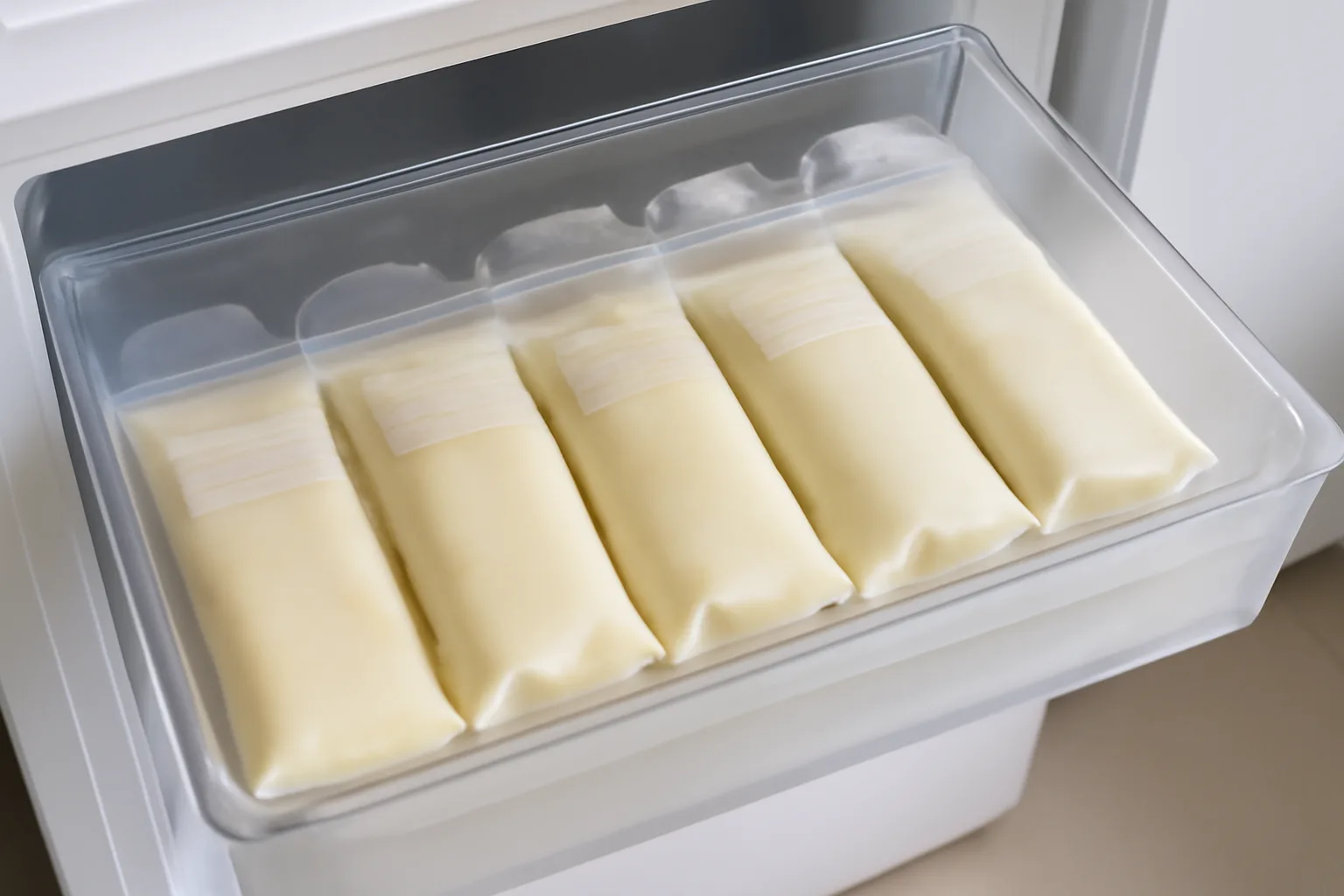
[Image: Labelled breast milk storage bags laid flat for freezing]
Every container should be labelled before it goes into the fridge or freezer. Write the date expressed and, if helpful, the time. If your baby goes to nursery or a childminder, add your baby’s name clearly. Use a waterproof pen on storage bags, or label the lid rather than the side of a bottle if condensation makes writing smudge.
Use the oldest milk first. A simple front-to-back system works well: newest milk at the back, oldest at the front. If several people feed the baby, make the system obvious. A small clear box in the fridge marked “use first” can prevent tired mistakes.
Freshly expressed milk can be added to milk already chilled in the fridge, but cool the new milk first. Do not pour warm freshly expressed milk directly into a container of cold milk, because it can warm the older milk. Chill the new portion separately, then combine if both were expressed on the same day and will be used within the correct time limit.
Freezer organisation is easier if bags are frozen flat. Lay a sealed bag on a clean tray until solid, then store the flat bags upright in a box or freezer pouch. This saves space and helps milk thaw evenly. Leave a little headroom in bags and containers before freezing, as breast milk expands.
How to freeze breast milk without wasting it
Freezing is useful, but a huge stash is not necessary for most families. Breast milk is at its best when fresh, and your milk changes over time as your baby grows. A modest freezer supply can still be very handy for appointments, nursery settling-in days, illness, work shifts, or a partner’s feed.
Freeze milk as soon as you know you will not use it within the fridge window. If you express at work, chill it promptly and move it to the freezer when you get home if you do not plan to use it soon. Keep the journey cool with an insulated bag and ice packs, and avoid leaving milk in a warm car.
Think about your real feeding pattern before freezing large amounts in full bottles. If your baby often takes 90 ml and sometimes wants another small amount, a freezer full of 180 ml bags may lead to waste. Freeze in mixed sizes: a few usual-feed portions and several small top-ups. This is especially helpful for breastfed babies who are still learning bottles, because their intake can vary from feed to feed.
Some frozen milk develops a soapy or metallic smell because of lipase activity. For many babies it is harmless and they drink it without fuss. If your baby refuses thawed milk that otherwise appears safely stored, try offering it mixed with fresh milk, starting with more fresh than frozen. If the smell is rancid or sour, or storage conditions were uncertain, discard it.
Thawing frozen breast milk safely
The safest routine is slow thawing in the fridge. Put the oldest frozen milk in the fridge the night before you need it, ideally inside a clean container or sealed bag in case of leaks. Once fully thawed, use it within 24 hours. If there are still ice crystals, it is not fully thawed yet.
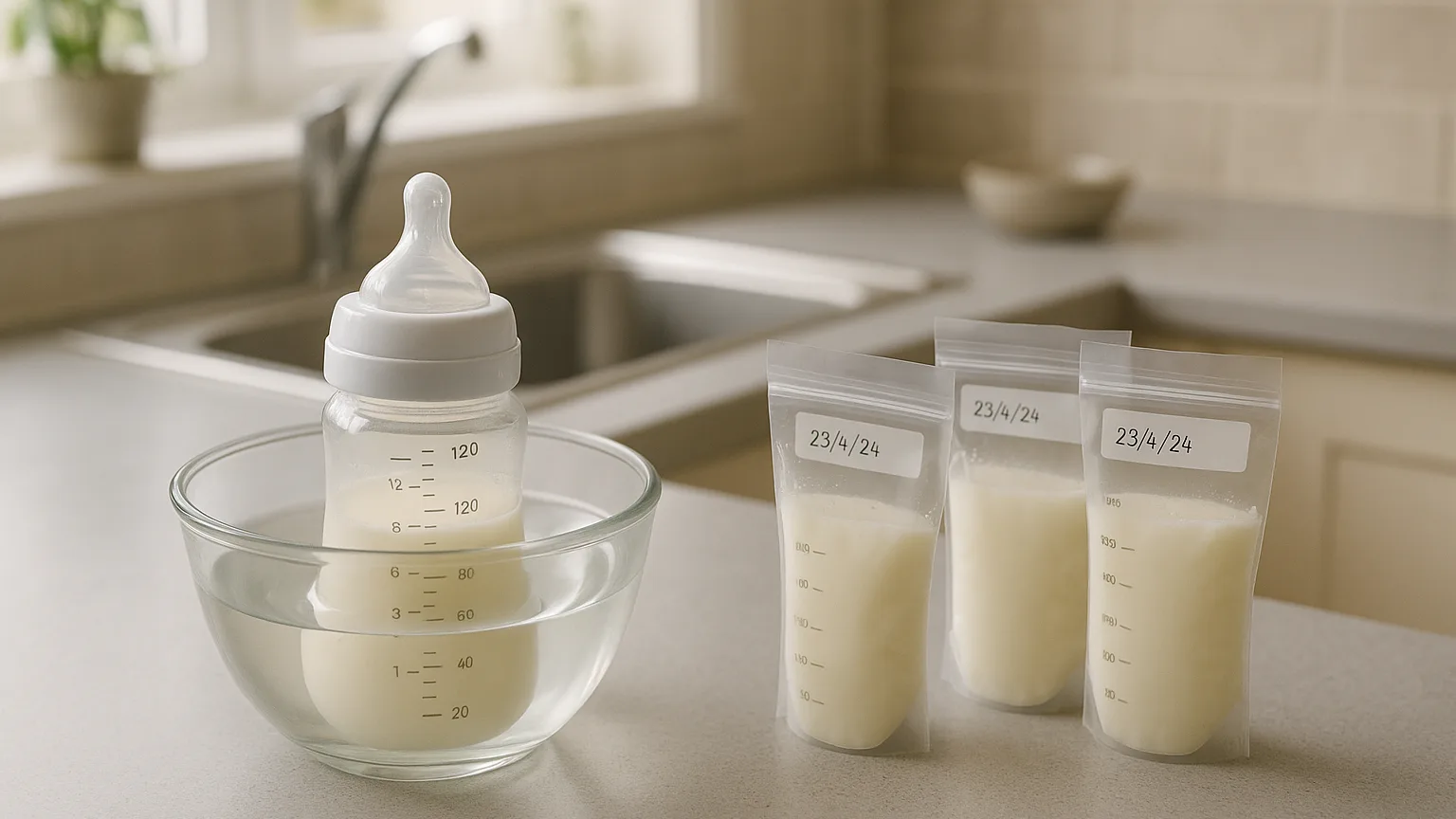
For a faster thaw, hold the sealed container under cool running water, then gradually warmer water, or place it in a bowl of warm water. Do not use boiling water. Do not thaw breast milk in a microwave. Microwaves heat unevenly, can create hot spots that burn a baby’s mouth, and may damage some of the protective qualities in the milk.
Thawed milk may separate into a creamy layer and a thinner layer. This is normal. Gently swirl the container to mix it. Do not shake aggressively; it is not necessary and can create extra froth, which some babies find uncomfortable.
If a storage bag has leaked during thawing, discard that milk, because water from the bowl may have entered the bag. To reduce the risk, thaw bags upright in a clean mug or container rather than loose in a sink.
Warming milk and offering a bottle
The bottle itself matters less than the hygiene routine around it, but practical kit can make tired feeds easier. Choose a bottle your baby can manage calmly, and keep cleaning steps simple enough that they still happen properly during night feeds.
[Image: Baby bottle warming gently in a bowl of warm water]
Breast milk does not have to be warm. Some babies take it chilled or at room temperature, which can make outings and night feeds simpler. If your baby prefers warm milk, stand the bottle or sealed container in a bowl of warm water for a few minutes, then swirl gently. Test a few drops on the inside of your wrist; it should feel lukewarm, not hot.
Avoid leaving bottles sitting in warm water for long periods. Once milk is warm, offer it promptly. If your baby starts a feed and does not finish, bacteria from the baby’s mouth can enter the milk. The current NHS advice is to throw away leftover milk after feeding, so the simplest UK rule is not to save a partly drunk bottle for later. If a bottle has been warmed, left out, handled unclearly or you are unsure how long it has been around, throw it away.
Use a teat flow that suits your baby. A very fast teat can make a breastfed baby gulp, cough or take more than they want before their body catches up. Paced bottle feeding, with pauses and the bottle held more horizontally, can help a baby stay in control. If you are choosing bottles for expressed milk, our best baby bottles guide covers anti-colic options and slower-flow choices.
Families who mix breastfeeding and bottles often find routines need adjusting over time. If bottles become a regular part of the week, keep an eye on how often milk is being removed from the breast as well as how neatly the freezer stash is labelled.
Taking expressed milk out of the house
If expressed milk is part of a mixed feeding routine, our guide to combination feeding with breast and bottle covers the wider handover between breastfeeding, bottles and family help. For sleep transitions, gentle night-feed weaning methods may also be useful later, once feeding is established and age-appropriate.
For short trips, take only what you expect to use, plus a small spare if needed. Chilled milk should travel in an insulated cool bag with frozen ice packs. Keep the bag closed as much as possible, and place it out of direct sun. If milk warms up during travel, do not put it back into long-term fridge storage and pretend the clock has not changed.
For nursery, ask exactly how they want milk supplied. Many settings prefer labelled bottles prepared for each feed, while others accept storage bags and prepare bottles on site. Give them the expressed date and any thawing date if relevant. If sending frozen milk, agree how it will be kept frozen or safely thawed.
For longer journeys, plan around reliable refrigeration. Hotel mini-fridges can be warmer than expected, so a thermometer helps. If you are travelling by train or car, keep milk in the main cabin rather than a hot boot where possible. For air travel, check the airport and airline rules before you leave; allowances for baby milk are usually more flexible than standard liquid rules, but staff may need to screen containers.
Night feeds, tired brains and reducing mistakes
The most common storage mistakes happen when everyone is exhausted: using tomorrow’s nursery milk overnight, warming two bottles by accident, or forgetting how long a bottle has been out. Build a routine that is easy to follow with half-open eyes.
- Put night milk in one clearly marked fridge box, separate from nursery or work milk.
- Use a phone alarm if a bottle has been warmed but your baby falls back asleep before feeding.
- Write large labels, not tiny neat ones, if more than one adult feeds the baby.
- Keep a clean bowl or jug ready for warming so bottles are not placed in a sink with dirty dishes.
- If you thaw milk overnight, move only the amount you expect to use the next day.
If night feeds are becoming hard to manage and your baby is old enough for changes, adjust things gradually rather than treating the freezer stash as a shortcut. Do not rush this for a young baby or where weight gain has been a concern; speak to your health visitor, GP or feeding team if you are unsure.
Common problems: colour changes, separation and odd smells
Breast milk varies in colour. It may look blue-white, creamy, yellowish, or slightly green depending on your diet, supplements and the stage of feeding. Colostrum and early milk are often more golden. A pink or rusty tint can sometimes come from small amounts of blood due to cracked nipples or “rusty pipe” syndrome in the early days. If bleeding is heavy, persistent, painful, or you are worried, ask your midwife, health visitor or GP.
Separation is normal. Fat rises to the top during storage, so chilled milk can look layered. Swirl gently until it comes together. Small white flecks of fat may cling to the container, especially after freezing. That alone is not a sign the milk has gone off.
Spoiled milk usually smells distinctly sour or unpleasant, not merely soapy. Trust your storage times before your nose, though: milk can be unsafe because it has been left too long even if it does not smell dramatic. Equally, safely stored high-lipase milk can smell soapy and still be acceptable if your baby drinks it and there are no storage concerns.
If your baby repeatedly refuses thawed milk, test one small frozen portion before building a big stash. Some parents discover the issue only after freezing dozens of bags. Offering freshly expressed milk, then a small mix of fresh and thawed, can show whether it is a taste preference rather than a bottle problem.
If your baby is premature, unwell or in hospital
Hospital and neonatal units often have stricter expressing and storage rules than home guidance. They may supply sterile containers, set shorter fridge times, ask for exact expression times, or require milk to be transported in a particular way. Follow their advice even if it differs from general online guidance, because it is tailored to babies with higher infection risks.
If you take medication, have mastitis, notice blood in milk, or are expressing during illness, ask a healthcare professional if you are unsure about feeding expressed milk. Most common situations do not mean breast milk must be discarded, but it is better to check promptly than to rely on social media advice.
For healthy full-term babies at home, the basics are consistent: clean equipment, label everything, keep milk cold, freeze what you will not use in time, thaw gently, never microwave, and avoid refreezing thawed milk. Once those habits are in place, expressing tends to feel much less complicated.
Frequently Asked Questions
Can I mix breast milk expressed at different times? Yes, if it has been handled safely, but cool freshly expressed milk before adding it to already chilled milk. Do not pour warm milk straight into cold stored milk. Use the storage time from the oldest milk in the combined container.
How long can breast milk stay in the fridge before I freeze it? NHS guidance allows up to 8 days in a fridge at 4°C or colder. If you are not confident your fridge stays that cold, use the milk within 3 days or freeze it sooner. Freezing earlier is sensible if you already know it will not be used.
Can I refreeze breast milk if it still has ice crystals? The safest home rule is to follow the NHS advice: never re-freeze defrosted milk. If a bag has started to thaw, keep it cold, let it finish thawing in the fridge if needed, and use it promptly once thawed. If you are unsure how warm it became or how long it was out, discard it.
Is it safe to warm breast milk in a bottle warmer? It can be, if the warmer is designed for baby bottles and you follow the instructions. The milk should be warmed gently, not overheated, and used promptly. Swirl the bottle and test the temperature before feeding. Never use a microwave.
Why does my frozen breast milk smell soapy? A soapy or metallic smell can be linked to lipase, an enzyme in breast milk that breaks down fat. It is not automatically unsafe if the milk was stored correctly, but some babies dislike the taste. A sour or rancid smell, or any doubt about storage, is different and the milk should be thrown away.
Do I need to sterilise storage bags? Purpose-made breast milk storage bags are supplied ready to use; do not wash and reuse disposable bags. Bottles, teats and reusable containers should be washed and sterilised according to UK baby-feeding guidance and the manufacturer’s instructions.