The right time to switch is usually when your child can sit well, nap less in the pushchair, and your biggest daily problem has become carrying the pushchair rather than supporting the child. If you are weighing up an umbrella stroller vs full-size pushchair switch, do not decide by age alone; look at sleep, terrain, storage, public transport and how much kit you still carry every time you leave the house. My short answer: keep the full-size pushchair for newborns, long naps and rougher walks, then add or switch to an umbrella stroller once your toddler mostly wants a seat between bursts of walking.
In This Article
- Umbrella Stroller vs Full-Size Pushchair Switch: The Quick Answer
- What Actually Changes Between the Two
- Age, Weight and Sleep Readiness
- Daily Life Signs You Are Ready to Switch
- Where a Full-Size Pushchair Still Wins
- Costs, Models and What I Would Buy
- The Biggest Switching Mistakes
- Final Verdict
- Frequently Asked Questions
Umbrella Stroller vs Full-Size Pushchair Switch: The Quick Answer
Switch when the full-size pushchair has become more annoying than useful. That sounds blunt, but it is the most honest test. If your child is walking more, sleeping mostly at home, and you are folding the pushchair for nursery runs, buses, cafés, car boots and holidays, a lighter stroller starts making sense.
Do not switch just because your child has turned one. Some 14-month-olds still need a proper recline, shade, suspension and a basket that carries half the house. Some two-year-olds only need a lightweight seat for the school run. Age helps, but behaviour tells you more.
My Rule of Thumb
For most UK families, the useful pattern is:
- Birth to around 6 months: use a lie-flat pram, carrycot or fully reclining newborn-safe pushchair.
- 6 to 18 months: a full-size pushchair is usually easier because naps, weather cover and storage still matter.
- 18 months to 3 years: this is the main switching window, especially for nursery, travel and quick errands.
- 3 years plus: many families keep only a lightweight stroller for tired legs, holidays and long days out.
The NHS baby equipment advice says young babies need a pushchair that fully reclines so they can lie flat, and suggests waiting until a baby can sit by themselves before using another type of pushchair. That is the safety line I would not fudge to save boot space.
What Actually Changes Between the Two
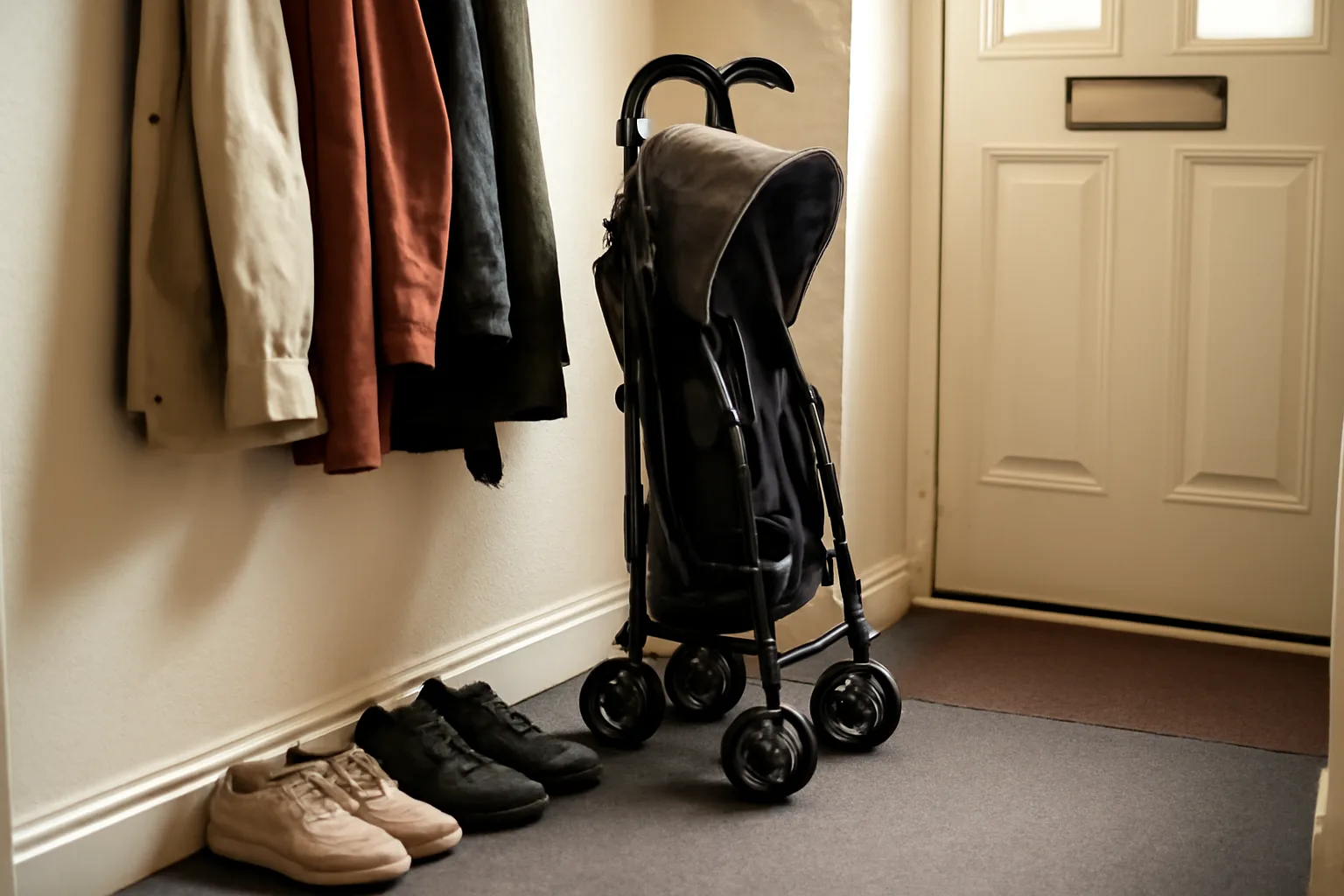
An umbrella stroller is not just a cheaper pushchair. It is a different compromise. You get a lighter frame and a slimmer fold, but usually give up some ride comfort, basket space, weather protection and seat support.
The Trade-Offs That Matter
Here is the real difference in daily use:
- Fold: umbrella strollers often fold long and narrow, around 105-110cm long. Compact travel strollers fold smaller and squarer. Full-size pushchairs vary wildly.
- Weight: lightweight strollers often sit around 6-8kg. Full-size pushchairs can be 9-14kg once the seat, wheels and accessories are fitted.
- Ride: full-size models usually handle cracked pavements, parks and kerbs better because of larger wheels and stronger suspension.
- Seat support: full-size seats tend to feel deeper and more padded. Basic umbrella strollers can feel hammock-like.
- Storage: full-size baskets are usually much better for changing bags, coats, snacks and supermarket extras.
- Travel: lightweight strollers are easier on trains, buses, taxis and holiday transfers.
This is why the decision is not “which is best?” It is “which irritation are you willing to live with?” If you hate lifting the pushchair into the car more than you need a big basket, switch. If you use the basket every day and walk over rough ground, keep the full-size one.
Age, Weight and Sleep Readiness
Start with physical readiness. An umbrella stroller is usually forward-facing, less supportive and less suitable for young babies unless it has a proper lie-flat seat and the manufacturer says it is suitable from birth.
Sitting and Napping
If your baby cannot sit steadily, do not treat a lightweight stroller as the main pushchair. A newborn-safe full recline or carrycot matters because babies need a flat, supported position. The Lullaby Trust baby sleeping products advice also warns against babies sleeping in inclined positions because it can affect breathing, so long naps in a shallow stroller recline are not something to be casual about.
For toddlers, ask three questions:
- Can they sit upright comfortably for the full trip? If they slump sideways after 20 minutes, the lighter stroller is too early for main use.
- Do they still nap in the pushchair most days? If yes, seat recline and shade still matter more than fold size.
- Are they close to the weight limit? Check the actual model limit, not a vague age label. Many strollers now go to 22kg, but cheaper models may stop at 15kg.
Our pushchair weight limits guide is worth reading before buying a stroller for a tall or heavy toddler. A three-year-old who is well within one model’s limit may be too heavy for another.
Safety Checks Before You Buy
RoSPA’s child safety advice notes that pushchairs and buggies are generally safe, but brakes should work correctly, the buggy should be properly unfolded, and children should be kept away while folding to avoid trapped fingers. That last point matters more with compact strollers because the fold mechanisms can be quick and tempting for toddlers to “help” with.
Daily Life Signs You Are Ready to Switch
The switch is usually triggered by friction, not a birthday. The full-size pushchair starts feeling like a pram from a previous stage of family life: useful, sturdy, and somehow always in the way.
The Good Signs
You are probably ready for an umbrella stroller or compact stroller if:
- Your child walks part of every outing: the stroller is now a backup seat, not the main transport.
- You fold it several times a day: nursery, car, bus, café, friend’s house, repeat.
- You avoid taking the pushchair because it is too bulky: that is a sign the current one is no longer serving you.
- Your boot is permanently full: especially if you also carry scooters, school bags or sports kit.
- You travel by train or bus: a 7kg stroller feels very different from a 12kg travel system on station steps.
- Your child rarely sleeps on the move: less need for a deep recline and huge hood.
The strongest sign is when you start using the full-size pushchair badly. If you hang bags from the handle because the basket is full, half-fold it into the hallway because you cannot be bothered, or leave it in the car because it is too much effort, a lighter setup will probably get used more safely.
For families who fly, the question changes again. A compact travel stroller may be better than a traditional umbrella fold because it can be much shorter when folded. Our flying with a pushchair guide covers gate-checking, airline rules and travel bags in more detail.
Where a Full-Size Pushchair Still Wins
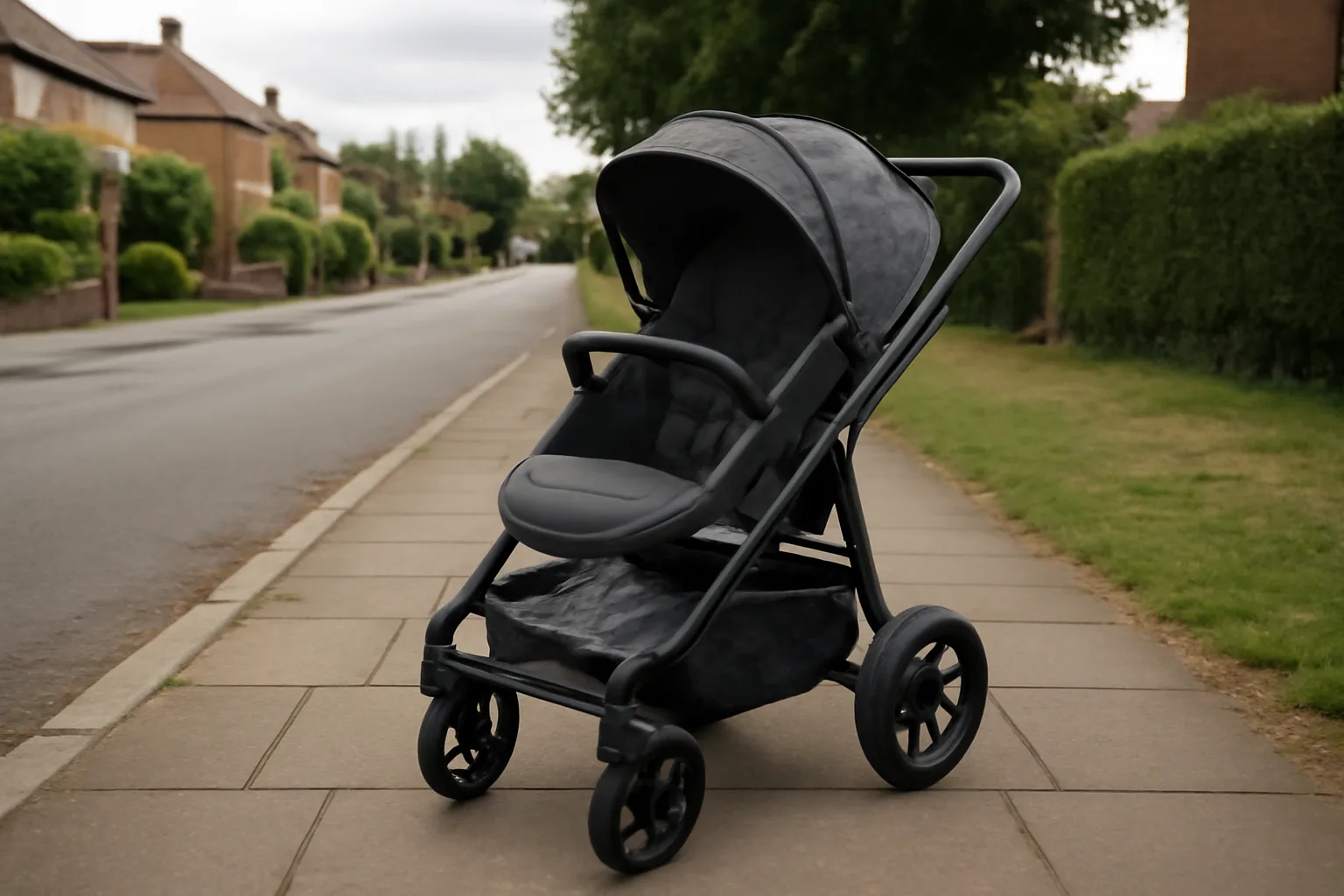
Full-size pushchairs get mocked for being bulky, but the good ones earn their space. If you walk a lot, use parks, carry shopping, or need reliable naps, they still make life easier.
Keep the Bigger Pushchair If…
Keep the full-size pushchair as your main one if:
- Your child naps in it daily: recline, hood coverage and seat depth are worth the extra weight.
- You walk on poor pavements or paths: small stroller wheels rattle badly on cracked slabs, gravel and muddy shortcuts.
- You need a big basket: nursery bags, rain covers, coats and shopping quickly overwhelm tiny stroller baskets.
- You have a younger baby coming soon: selling the full-size pushchair too early can be a false economy.
- You use a buggy board: many lightweight strollers feel less stable with extra load behind them.
- You are tall: fixed umbrella handles can be too low, which gets irritating fast.
This is why I like a two-pushchair period for some families. Keep the full-size model for long walks and bad weather, then buy a lightweight stroller for car trips, nursery and holidays. It sounds excessive until you stop wrestling a big pushchair into a packed boot for a ten-minute errand.
If rough ground is part of your week, read our guide to pushing a pushchair on sand, gravel and muddy paths before downsizing. Small wheels are fine in shopping centres and airports; they are less fun on wet grass.
Costs, Models and What I Would Buy
You can spend £60 or £450 on the smaller option, and the right answer depends on the job: spare stroller or everyday pushchair.
Real UK Price Bands
Useful current UK price bands look like this:
- Budget umbrella stroller: about £60-£100. Joie Nitro-style models often sit around £70-£90 at Argos and similar retailers.
- Better umbrella stroller: about £120-£220. Silver Cross Pop-style strollers are often in this bracket, with a stronger hood and better recline.
- Compact travel stroller: about £250-£450. Stokke YOYO³, Bugaboo Butterfly 2 and Joolz Aer+ sit here, depending on colour, bundle and offers.
- Full-size pushchair: about £300-£1,200. Premium systems cost more because of frames, carrycots, car-seat adapters and brand ecosystems.
For a cheap spare, I would look at a Joie Nitro E type stroller at about £80. Argos lists the Joie Nitro E at 7.52kg with a 15kg child limit and a long umbrella fold, so it is better as a spare or travel buggy than a forever pushchair. For a better all-round umbrella stroller, the Silver Cross Pop is more appealing because Argos lists it at 7.5kg with a 25kg suitability and lie-flat seat, though the long 107cm fold still takes boot length.
If I had to use the smaller pushchair every day, I would spend more on a compact travel stroller. The Bugaboo Butterfly 2 specifications list a 7.3kg fully assembled weight, 22kg seat capacity and 8kg basket capacity, which is a useful balance for city use. It has recently been around £364-£435 at UK nursery retailers, so it is not cheap, but it is much easier to justify if it becomes your main stroller.
The Stokke YOYO³ is the classic compact travel pick. John Lewis and nursery retailers commonly show YOYO³ 6+ bundles around £364-£435, with a 6.2kg weight and a 52 x 44 x 18cm fold on many listings. I would pick it for public transport and holidays, but not for muddy dog walks.
For broader options, compare against our best pushchairs guide and pushchairs under £200 guide. The switch article tells you when to downsize; those guides help choose the actual model.
The Biggest Switching Mistakes
The biggest mistake is switching too early and then resenting the smaller stroller for not being a full-size pushchair. A lightweight stroller is brilliant at being light. It is not magic.
Mistake and Fix
- Mistake: buying only for folded size. Fix: push it one-handed, check the brake, look at the hood, and imagine a tired toddler in it for 45 minutes.
- Mistake: ignoring handle height. Fix: taller parents should try before buying. Many umbrella handles are fixed and low.
- Mistake: assuming “from birth” means good for newborn life. Fix: check recline, head support, airflow and manufacturer guidance.
- Mistake: forgetting winter. Fix: check if a rain cover, footmuff or liner is included. Accessories can add £25-£120.
- Mistake: selling the full-size pushchair immediately. Fix: keep both for a month if space allows, then see which one you actually use.
- Mistake: buying a tiny basket for a child who still needs loads of kit. Fix: test with your real changing bag, coats and snacks.
Also check second-hand condition carefully. Brakes, harness, folding locks, wheels and sharp edges matter more than the colour. Our used pushchair safety guide covers what to inspect before passing one on or buying used.
Final Verdict
Switch to an umbrella stroller when your pushchair is mainly a convenience seat for a toddler, not a sleep space, newborn support system or all-terrain load carrier. For many families, that lands somewhere between 18 months and three years.
If you only need a spare for holidays or nursery runs, a £70-£120 umbrella stroller is enough. If it will become your main pushchair, skip the flimsy bargain option and buy a better umbrella stroller or compact travel model. My own pick for most UK families would be a two-stage approach: keep the full-size pushchair until naps and storage needs calm down, then move to a compact stroller with a good recline, decent hood and real basket.
The final answer is simple: switch when the smaller stroller solves more daily problems than it creates. If you still need comfort, storage and bad-pavement stability every day, you are not late. You are just still in the full-size pushchair phase.
Frequently Asked Questions
What age should you switch from a full-size pushchair to an umbrella stroller? Many families switch between 18 months and three years, but readiness matters more than age. Your child should sit well, fit safely within the stroller limit, and no longer need long lie-flat naps in the pushchair.
Can a newborn use an umbrella stroller? Only if the manufacturer states it is suitable from birth and it gives a proper lie-flat position. For most newborns, a carrycot, pram or fully reclining newborn-safe pushchair is the better option.
Is an umbrella stroller better for holidays? Usually, yes, if your child is old enough. A compact stroller is often better than a traditional umbrella fold for flying because it folds shorter, but airline cabin rules vary.
Should I keep my full-size pushchair after buying a stroller? If you have space, keep it for a month. Use the lightweight stroller for quick trips and the full-size pushchair for naps, parks and bad weather, then decide which one still earns its place.
How much should I spend on a lightweight stroller? Spend around £70-£120 for a spare, £120-£220 for a better umbrella stroller, or £250-£450 for a compact travel stroller you plan to use daily.
What is the biggest downside of switching too early? You lose comfort, storage and support before your child is ready. That usually means worse naps, more carrying, and a stroller that feels cheap even if it was the wrong tool rather than a bad product.