You’ve spent £200 on a car seat that your child loves, the flight is tomorrow, and you have no idea whether you can actually take it on the plane. The airline’s website says “check with us,” which helps nobody. The cabin crew’s answer depends on who’s working. And the internet is full of American advice that doesn’t apply to UK flights. Let’s sort this out properly.
In This Article
- Can You Use a Car Seat on a Plane in the UK
- What the UK Regulations Actually Say
- Which Car Seats Are Approved for Aircraft Use
- Airline-Specific Policies: UK Carriers
- Booking a Seat for Your Child
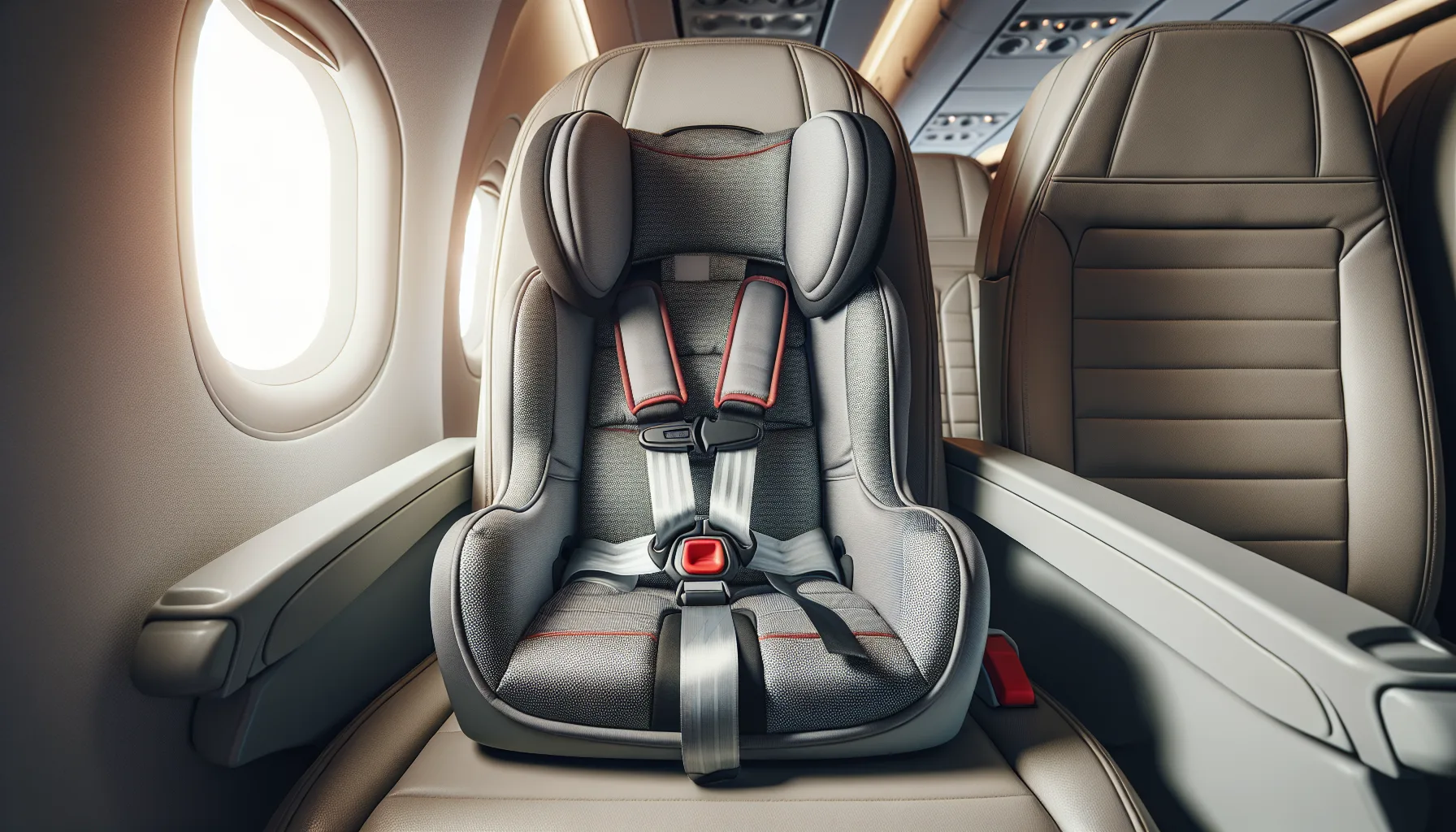
- Installing a Car Seat on an Aeroplane
- Rear-Facing vs Forward-Facing on Aircraft
- ISOFIX and i-Size Seats on Planes
- The CARES Harness Alternative
- What to Do with the Car Seat at the Airport
- Protecting Your Car Seat During Travel
- Our Top Picks for Travel-Friendly Car Seats
- Frequently Asked Questions
Can You Use a Car Seat on a Plane in the UK
Yes — but with conditions. The short answer is that most airlines allow approved car seats on aircraft, provided you’ve purchased a seat for your child (lap infants sitting on your knee can’t use one). The longer answer involves regulations, approval stickers, seat widths, and airline-specific rules that vary more than they should.
I’ve flown with car seats on six different airlines over the past three years — some seamless, some involving a heated 10-minute debate with an easyJet check-in agent at Gatwick who didn’t know their own airline’s policy. The single most important thing I can tell you: print the airline’s car seat policy and carry it with you. Don’t rely on staff knowing the rules.
What the UK Regulations Actually Say
UK aviation rules are governed by the Civil Aviation Authority (CAA), which sets the framework that airlines operate within.
Children Under 2 (Infants)
Infants can fly as lap passengers using a supplementary loop belt that attaches to the adult’s seatbelt. This is free on most airlines. However, the CAA acknowledges that a child restraint device (car seat) in its own purchased seat is safer. There’s no legal requirement for infants to have their own seat — it’s a parental choice.
Children Aged 2 and Over
Children aged 2+ must have their own seat. They can use the aircraft seatbelt alone, a CRS (child restraint system/car seat), or a CARES harness. Again, the car seat is the safest option, but it’s not mandatory.
The Approval Sticker
For a car seat to be used on a UK or EU flight, it must carry one of these approval marks:
- UN ECE R44/03 or R44/04 — the standard red-orange sticker on the back or side
- UN R129 (i-Size) — the newer regulation standard
- For the Skies label — a specific aviation approval used by some manufacturers
- FAA approval (for US airlines or US-registered aircraft)
If your car seat has the orange ECE R44 sticker or the UN R129 marking, it’s approved for aircraft use on European airlines. Check the sticker — it’s usually on the back or base of the seat. If you can’t find it, check the manual or the manufacturer’s website.
Which Car Seats Are Approved for Aircraft Use
Not every car seat works on a plane. The seat needs to meet two criteria: regulatory approval (the sticker above) and physical compatibility (it needs to fit in an economy seat).
Seats That Work Well
- Maxi-Cosi CabrioFix i-Size (about £130 from John Lewis) — lightweight at 3.2kg, fits easily in aircraft seats, i-Size approved. This is the seat I’ve used most frequently for flying with a baby — it took under 60 seconds to install on a BA flight to Lisbon and the cabin crew didn’t blink.
- Joie i-Snug 2 (about £100 from Halfords) — another lightweight infant carrier at 3.1kg with i-Size approval
- Cosatto Zoomi 2 i-Size (about £130 from Amazon UK) — a group 1/2/3 seat that works for toddlers through to children around 36kg
Seats That Don’t Work
- Swivel/rotating car seats: These are too wide for aircraft seats and the rotation mechanism isn’t designed for the different force angles in aviation
- Most ISOFIX-only seats without a belt path: If the seat can ONLY be installed via ISOFIX and has no seatbelt routing option, it won’t work on a plane (no ISOFIX points on aircraft seats)
- Bulky side-impact protection seats: Some seats with extended side wings are wider than the 42 cm aircraft seat width in economy
Width Check
Standard economy aircraft seats are 42-44 cm wide (measured between armrests). Measure your car seat at its widest point. If it’s over 42 cm, it may not fit without lifting the armrests — and some airlines don’t allow raised armrests with a CRS installed.
Airline-Specific Policies: UK Carriers
Every airline has slightly different rules. I’ve compiled the current policies for major UK airlines (verified April 2026 — always recheck before travelling as policies change).
British Airways
- Car seats allowed in purchased seats
- Must have UN ECE R44 or R129 approval
- Child must be under 36kg
- Notify BA at booking or call customer service
- Maximum width: 42 cm between armrests
easyJet
- Car seats allowed in purchased seats
- UN ECE R44/03 or later, or R129 approval required
- Must be forward-facing or rear-facing within the seat width
- Don’t need to pre-notify, but it’s recommended
- Check-in staff may inspect the approval label
Ryanair
- Car seats allowed but MUST be notified at time of booking
- Only approved CRS systems accepted (R44/03+ or R129)
- The seat must fit within the aircraft seat without the armrest being raised
- Ryanair charges for the child’s seat — no free infant-on-lap for children with CRS
Jet2
- Car seats accepted on all flights
- R44/03 or later, or R129 approval
- Recommend contacting Jet2 before travel to confirm
- No additional charge beyond the child’s ticket
TUI
- Car seats allowed with advance notification
- Must have appropriate approval markings
- TUI recommends bringing the car seat label to check-in for verification
Virgin Atlantic
- Car seats permitted in a purchased seat
- Must carry FAA approval or UN ECE R44/R129
- Rear-facing seats allowed in a window seat only
- Pre-notification required
Booking a Seat for Your Child
If you want to use a car seat on the plane, your child needs their own seat — whether they’re 6 months or 6 years old.
For Infants Under 2
Normally infants fly free or at a reduced fare on a parent’s lap. To use a car seat, you’ll need to purchase a seat at the child fare (usually 75-100% of the adult fare depending on the airline). This is an additional cost, but it’s the safest option. For a related angle, see our Car Seat Accessories: Mirrors, Protectors & Sunshades Worth Buying guide.
Seat Selection
- Window seat for rear-facing car seats — most airlines require this so the seat doesn’t block the aisle for emergency evacuation
- Any seat for forward-facing car seats, though airlines may restrict exit row and bulkhead seats
- Book the child’s seat next to yours — obvious, but booking systems sometimes seat you apart
The Financial Reality
A car seat on a plane means buying an extra seat. For a family of four with a toddler, that’s a significant cost on top of the ticket price. Weigh it against the alternatives: holding an infant on your lap for 4 hours (uncomfortable and less safe), or using a CARES harness (lighter, cheaper to transport, approved by most airlines). For our thoughts on portable options, see our best portable car seats for travel roundup.
Installing a Car Seat on an Aeroplane
Installation uses the aircraft lap belt — not ISOFIX, which doesn’t exist on planes. The process varies slightly by seat type.
Forward-Facing Installation
- Place the car seat on the aircraft seat facing forward
- Extend the aircraft lap belt to its maximum length
- Route the lap belt through the car seat’s belt path (the same path you’d use for a car seatbelt in a vehicle without ISOFIX)
- Buckle the lap belt and pull it tight — very tight. The seat shouldn’t move more than 2-3 cm in any direction
- Check the belt is routed correctly through the seat’s guide, not just over the top
- Place your child in the seat and fasten the harness straps
Rear-Facing Installation
- Place the car seat on the aircraft seat facing the back of the plane (toward the seatback in front)
- The seat should be on a window seat so it doesn’t block the aisle
- Route the aircraft lap belt through the rear-facing belt path
- Tighten firmly
- Check that the car seat doesn’t press against the seat in front — there needs to be enough recline space
Common Problems
- Belt too short: Economy lap belts are usually 110-120 cm. If your car seat needs more belt length, ask the cabin crew for a belt extension. Not all airlines carry them for CRS use, so check before flying.
- Armrest interference: You may need to raise one armrest to fit the car seat in. Ask cabin crew before doing this — some airlines require both armrests down during taxi and takeoff.
- Seat recline blocked: The car seat may prevent the seat behind from reclining. Apologise to the person behind you. There’s no good solution for this.
Rear-Facing vs Forward-Facing on Aircraft
This is where aviation and road safety advice diverge.
On Roads
UK safety guidance strongly recommends rear-facing for as long as possible — ideally until age 4 or when the child exceeds the seat’s weight/height limit. The i-Size regulation (R129) requires rear-facing until at least 15 months. Rear-facing provides substantially better protection in frontal collisions, which are the most common type of serious car accident.
On Aircraft
The physics are different. Aircraft deceleration in a survivable incident is typically forward (like a car crash) but the forces are spread differently, and the seat orientation matters less than in a car. Most safety experts still recommend rear-facing as it protects the child’s head and neck better, but:
- Rear-facing must be in a window seat (airline requirement)
- Takes up more legroom in front of the seat behind
- Harder to tend to the child during the flight
- Some airlines only permit forward-facing CRS
If your child is under 15 months, rear-facing is the safest option and worth the inconvenience. For older toddlers, forward-facing is acceptable and much more practical on a plane.
ISOFIX and i-Size Seats on Planes
The ISOFIX Problem
Aircraft seats don’t have ISOFIX anchor points. Full stop. If your car seat can ONLY be installed via ISOFIX — no seatbelt routing option — it cannot be used on a plane.
How to Check
Look at your car seat’s manual or underside:
- Has a seatbelt routing path AND ISOFIX connectors: Works on planes (use the seatbelt path)
- Has ISOFIX connectors only: Won’t work on planes
- Is an ISOFIX base + carrier combo: The carrier alone often has a seatbelt option — check if the carrier can be used without the base using the seatbelt route
i-Size Seats
i-Size (R129) is a safety standard, not an installation method. Many i-Size seats use ISOFIX, but some also have seatbelt installation options. The i-Size approval mark is valid for aircraft use. Check whether your specific i-Size seat offers a seatbelt installation route — if it does, you’re fine for flying. For more on safety ratings and what the different standards mean, see our car seat safety ratings explained guide.
The CARES Harness Alternative
The CARES (Child Aviation Restraint System) harness is a lightweight alternative to bringing a full car seat on the plane. It’s a fabric harness that loops over the aircraft seatback and creates an additional upper-body restraint for children who’ve outgrown the infant seat but are too small for just the lap belt.
How It Works
- Straps loop over the top of the aircraft seat and clip to the headrest
- The child sits in the aircraft seat with the lap belt fastened
- The CARES harness adds shoulder straps that hold the upper body, similar to a car seat harness
- Approved for children 1-4 years old, weighing 10-20kg
Pros
- Weighs 450g — compared to 3-10kg for a car seat
- Fits in a handbag — no checked baggage needed
- FAA and EASA approved — accepted on most airlines
- Quick installation — about 60 seconds once you’ve done it once
Cons
- Less protective than a car seat — no side impact protection, no energy-absorbing shell
- Only for children 10-20kg — narrow weight range
- Costs about £75 from specialist retailers like In Car Safety Centre
- Not all airlines know what it is — carry the approval documentation
Our View
After using both a car seat and CARES harness on multiple flights, the CARES harness wins for convenience but the car seat wins for protection. For short European flights (2-3 hours), the CARES harness is usually the better practical choice. For longer flights (4+ hours) or if your child sleeps on planes, the car seat provides a familiar environment they’ll settle in more easily.
What to Do with the Car Seat at the Airport
You’ve got a pushchair, a car seat, hand luggage, and a toddler. The logistics of getting through the airport deserve a section of their own.
At Check-In
- If using the car seat on the plane: Carry it through security and to the gate. It’s classed as a child safety device and doesn’t count toward your hand luggage allowance on most airlines.
- If checking the car seat: Hand it over at check-in (some airlines have oversized baggage desks). It usually flies free as a child’s equipment item.
- Gate-check option: Some airlines let you use the car seat to the gate, then it goes in the hold. Useful if you want to contain the child in the car seat during the airport wait but don’t need it on the plane.
At Security
Car seats go through the X-ray machine like any other item. Remove the child, fold the pushchair, send everything through. It takes longer than you think — budget an extra 15 minutes. Also check our guide to flying with a pushchair for the pushchair side of airport logistics.
At the Gate
If you’re taking the car seat on the plane, board during family/priority boarding (most airlines offer this). You’ll need the extra time to install the seat before other passengers board.
Protecting Your Car Seat During Travel
If your car seat goes in the hold (either checked at the desk or gate-checked), it will be treated the same as any other luggage — thrown, stacked, potentially rained on.
Car Seat Travel Bags
A padded travel bag (about £25-40 from Amazon UK) protects against scratches, dirt, and minor impacts. Look for:
- Padded sides — not just a fabric cover
- Wheels or backpack straps — you’ll be carrying this through the airport
- Water-resistant material — luggage gets rained on during loading
- Clear ID pocket — so baggage handlers can see it’s a car seat, not just a black bag
Without a Bag
If you don’t have a travel bag, wrap the car seat in a bin liner or cling film to protect the fabric from dirt. Tape a “FRAGILE” label on it — it won’t guarantee gentle handling, but it doesn’t hurt.
Checking for Damage After the Flight
After every flight, inspect the car seat before using it:
- Check the shell for cracks — even hairline cracks compromise safety
- Test the harness mechanism — ensure it tightens and releases properly
- Check ISOFIX connectors if applicable — ensure they click and lock
- Inspect the base for any dents or warping
- If anything is damaged, do not use the seat. A car seat that’s been damaged in transit may not protect properly in a crash. If your seat is expired or damaged, replace it before your next car journey.
Our Top Picks for Travel-Friendly Car Seats
Best for Infants (Birth to 12-15 Months): Maxi-Cosi CabrioFix i-Size
- Weight: 3.2kg (one of the lightest)
- Width: 44 cm (tight fit in some aircraft seats — check)
- Installation: Seatbelt route available without base
- Price: About £130 from John Lewis
- Why: Lightweight, well-known brand that cabin crew recognise, easy seatbelt install. We’ve flown with this more than any other seat.
Best for Toddlers (9 Months to 4 Years): Joie i-Spin 360
- Weight: 13kg (heavier — this is the trade-off for versatility)
- Width: 44 cm
- Installation: Has seatbelt route option alongside ISOFIX
- Price: About £250 from Halfords
- Why: Rear and forward-facing capability means it works for the full toddler age range. Check seatbelt installation is possible before buying for air travel.
Best Budget Travel Seat: Cosatto Zoomi 2 i-Size
- Weight: 5.3kg
- Width: 44 cm
- Installation: Seatbelt only (no ISOFIX — which is actually an advantage for planes)
- Price: About £130 from Amazon UK
- Why: Seatbelt-only installation makes it simpler for aircraft use. Covers groups 1/2/3 so it grows with the child.
Best Alternative: CARES Harness
- Weight: 450g
- Width: N/A (uses aircraft seat)
- Installation: Loops over seatback, 60-second install
- Price: About £75 from In Car Safety Centre
- Why: When carrying a car seat through the airport is genuinely impractical (connecting flights, solo travelling with children, limited mobility)
Frequently Asked Questions
Do airlines charge extra if I bring a car seat on the plane? The car seat itself is free to bring — it’s classified as essential child equipment on all major UK airlines. However, you need to purchase a seat for your child to put the car seat in. If your child is under 2 and would otherwise fly on your lap for free, using a car seat means buying an additional ticket at child fare (typically 75-100% of adult fare depending on the airline).
Can I use my car seat on a plane if the approval sticker has worn off? Technically, cabin crew may refuse a car seat without a visible approval label. If your sticker has worn off, print the approval certificate from the manufacturer’s website (most offer downloadable PDFs) and carry it with you. Some parents write the approval number in permanent marker on the seat base as a backup. Contact the manufacturer — many will send a replacement sticker free of charge.
What happens to my car seat if I gate-check it? Gate-checked car seats go in the aircraft hold during the flight and are returned to you at the gate when you land (or sometimes at the baggage carousel — it varies by airport). The seat will be handled by baggage staff, so protect it with a travel bag or wrapping. It travels free of charge on virtually all airlines.
Can I install a car seat in business or first class? Generally yes, and it’s easier because the seats are wider. However, some airlines restrict CRS use in premium cabins with lie-flat seats, pods, or unusual configurations. Check with the airline before booking. Business class seats are typically 48-52 cm wide, so most car seats fit comfortably.
Is it worth buying a separate car seat just for flying? Only if you fly frequently (more than 3-4 times a year) and your everyday car seat is too heavy or too wide for aircraft use. A dedicated travel seat like the Cosatto Zoomi 2 (5.3kg, seatbelt-only) or the CARES harness (450g) makes airport logistics much easier. For occasional flyers, your existing car seat works fine — the inconvenience of carrying it is temporary.