Imagine it’s Sunday night and you’re eyeing a pile of fresh British carrots, sweet potatoes, and apples, wondering how to keep your baby’s meals healthy, safe, and varied through another busy week. If you’re like most UK parents, you want to offer nutritious, homemade food but don’t have the luxury of daily cooking. That’s where a meal prep baby food batches guide makes all the difference—helping you prepare, portion, and store baby meals in advance, so you save time, reduce stress, and always know exactly what’s in your child’s food.
In This Article
- Why Batch Prep Baby Food?
- Essential Kit for Batch Cooking Baby Food
- Food Safety: What UK Parents Need to Know
- Choosing Ingredients: Nutrition & Allergens
- Step-by-Step: Batch Cooking Baby Food
- Cooling, Portioning, and Storing
- Freezing and Defrosting Baby Food
- Reheating: What’s Safe, What’s Not
- Texture Stages: Adapting as Baby Grows
- Sample Batch Prep Plans
- Cleaning Up: Hygiene Tips
- Frequently Asked Questions
- Bottom Line
Why Batch Prep Baby Food?
Batch prepping baby food is a practical, budget-friendly approach for UK families who want to provide home-cooked meals without spending hours daily in the kitchen. By preparing food in larger quantities, you can:
- Ensure your baby eats a variety of fresh, seasonal ingredients.
- Save money compared to branded baby food pouches (for example, a 1kg bag of Tesco carrots at 45p can make over a dozen portions).
- Reduce daily washing up and kitchen mess.
- Introduce new flavours and textures at your own pace.
- Avoid last-minute reliance on processed or convenience foods.
Batch cooking is especially helpful for working parents, those with multiple children, or anyone juggling a busy schedule. It also lets you plan meals around supermarket offers, farm shop finds, or even homegrown produce, stretching your budget further.
Essential Kit for Batch Cooking Baby Food
You don’t need a specialist baby food maker to get started, but having the right tools makes the job quicker, safer, and less stressful.
Essential Tools
- Steamer basket or saucepan with lid: Steaming preserves nutrients, but boiling is fine if you don’t have a steamer.
- Blender, stick blender, or food processor: For smooth purées. A stick blender (£15–£25 at Argos or John Lewis) is compact and easy to clean.
- Sharp knife and chopping board: Use separate boards for meat and veg to avoid cross-contamination.
- Freezer-safe containers or ice cube trays: Silicone trays (from £3 at Sainsbury’s or Boots) are easy to pop out portions.
- Labels and marker pen: Essential for tracking dates and contents.
- Silicone spatula: Helps scrape every last bit from bowls and blenders.
Nice-to-Have Extras
- Baby food masher: Ideal for chunkier textures as your baby grows (Tommee Tippee and NUK both offer options under £10).
- Reusable baby food pouches: Handy for meals on the go; look for BPA-free versions.
- Mini glass or BPA-free pots: For fridge storage or sending meals to nursery.
If you’re on a tight budget, basic ice cube trays and small food storage tubs from supermarkets or Wilko work just as well as pricier baby-specific options.
Food Safety: What UK Parents Need to Know
Food safety is properly crucial when batch prepping baby food. Babies are more vulnerable to foodborne illness, so strict hygiene and correct storage are non-negotiable. Always follow guidance from the NHS and the Food Standards Agency.
Key Safety Rules
- Wash hands thoroughly before and after handling food.
- Use separate chopping boards for raw meat and vegetables to avoid cross-contamination.
- Cook all food thoroughly—meat should be piping hot with no pink, eggs should be fully cooked unless they have the British Lion mark.
- Cool cooked food quickly—ideally within 1–2 hours—to prevent bacteria growth.
- Never refreeze food that’s already been defrosted.
- Label all containers with the date and meal type.
- Store in small portions to minimise waste and reduce the risk of contamination.
Common Mistakes and Fixes
Mistake
Leaving cooked baby food out to cool for too long.
Fix
Divide into shallow containers and place in the fridge as soon as it’s cool enough (within 2 hours).
Mistake
Using the same knife for raw chicken and veg.
Fix
Always wash knives and boards thoroughly between uses, or use colour-coded sets.
Mistake
Forgetting to label containers.
Fix
Keep a permanent marker in your kitchen drawer just for baby food.
For more details, see the NHS and Food Standards Agency resources linked above.
Choosing Ingredients: Nutrition & Allergens
Picking the Best Produce
Aim for a rainbow of UK-grown vegetables and fruits for maximum nutrition—think carrots, parsnip, sweet potato, broccoli, peas, apples, and pears. Choose produce in season for the best value and taste (e.g., British apples in autumn, root veg in winter). For protein, try well-cooked lentils, chicken, or boneless white fish. Grains like oats and rice add bulk and texture.
Where possible, buy loose veg to reduce packaging, or check your local greengrocer for weekly deals. Organic is optional; washing and peeling is more important for safety.
Introducing Allergens
Current NHS advice recommends introducing common allergens (peanuts, egg, dairy, fish, wheat) one at a time from around six months, not before four months, and only when your baby is developmentally ready for solids. Start with a small amount and wait three days before introducing another allergen. If there’s a family history of allergies, consult your GP or health visitor before batch prepping meals with allergens.
Foods to Avoid
- Honey (risk of botulism, avoid before 12 months)
- Whole nuts (choking hazard)
- Added salt, sugar, or stock cubes (babies’ kidneys can’t process salt)
- Uncooked eggs (unless British Lion-stamped and safe for babies)
- Raw shellfish (risk of food poisoning)
- Swordfish, shark, marlin (too much mercury)
Check food labels for hidden salt and sugar, especially in tinned or packaged ingredients.
Step-by-Step: Batch Cooking Baby Food
A good batch-prep session is easier when the process is simple. Plan the meals first, cook safely, then cool, portion and store everything before you tidy up.
- Plan your menu: Choose 2-4 purées or meals for the week, such as sweet potato and carrot, apple and pear, chicken with potato and leek, or lentil and courgette.
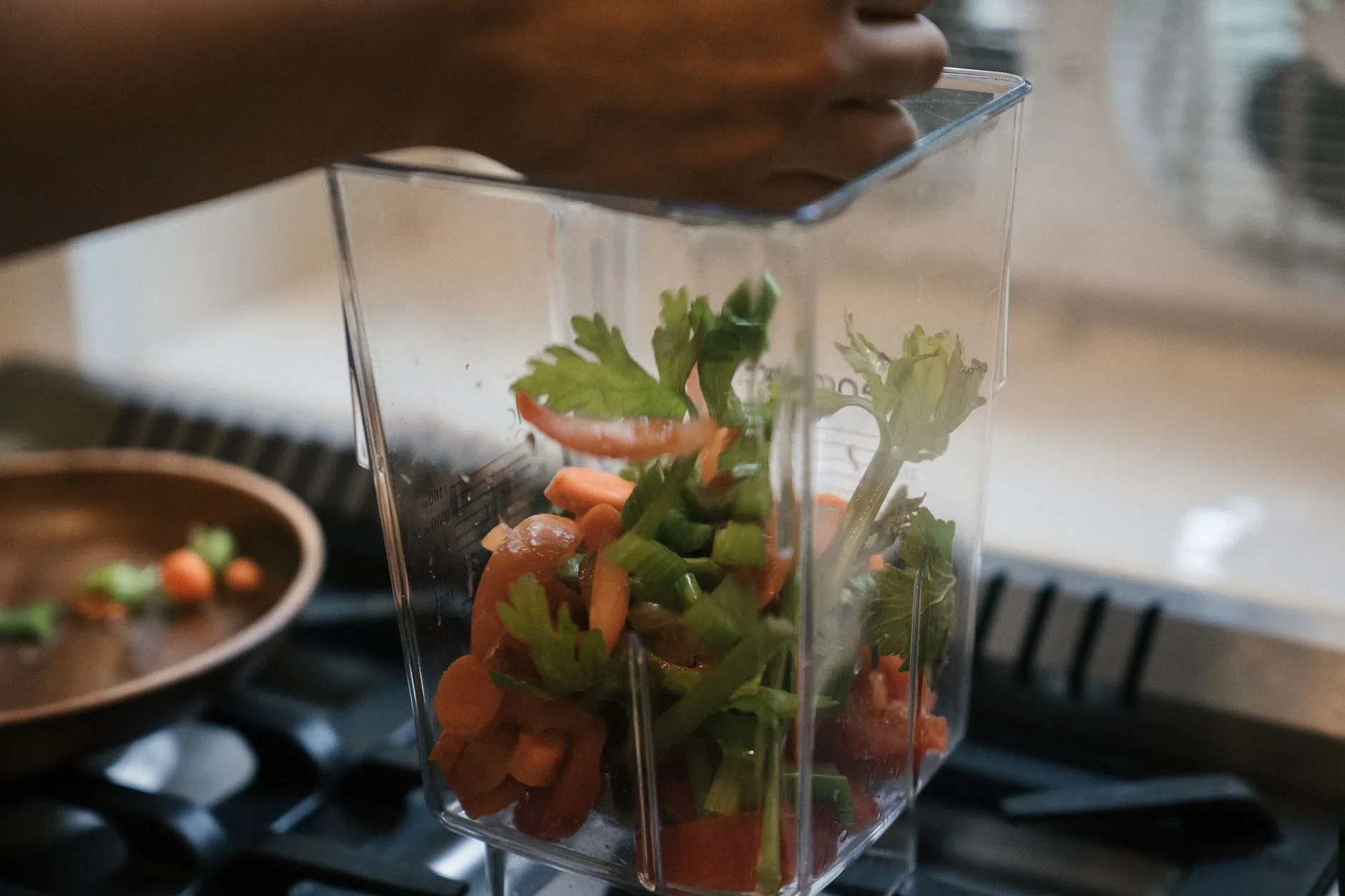
- Shop and prep: Wash, peel and chop fruit and vegetables, trim meat, remove bones from fish and set up clean boards, knives and bowls.
- Cook thoroughly: Steam or boil vegetables until soft, cook meat until no pink remains, and follow packet timings for grains or pulses.
- Blend or mash: Blend first tastes until smooth, using cooled boiled water, breastmilk or formula to loosen the texture. Mash older-baby meals more roughly.
- Cool quickly: Spread hot food in a shallow tray or dish, keep it covered, and never leave it out for more than 2 hours.
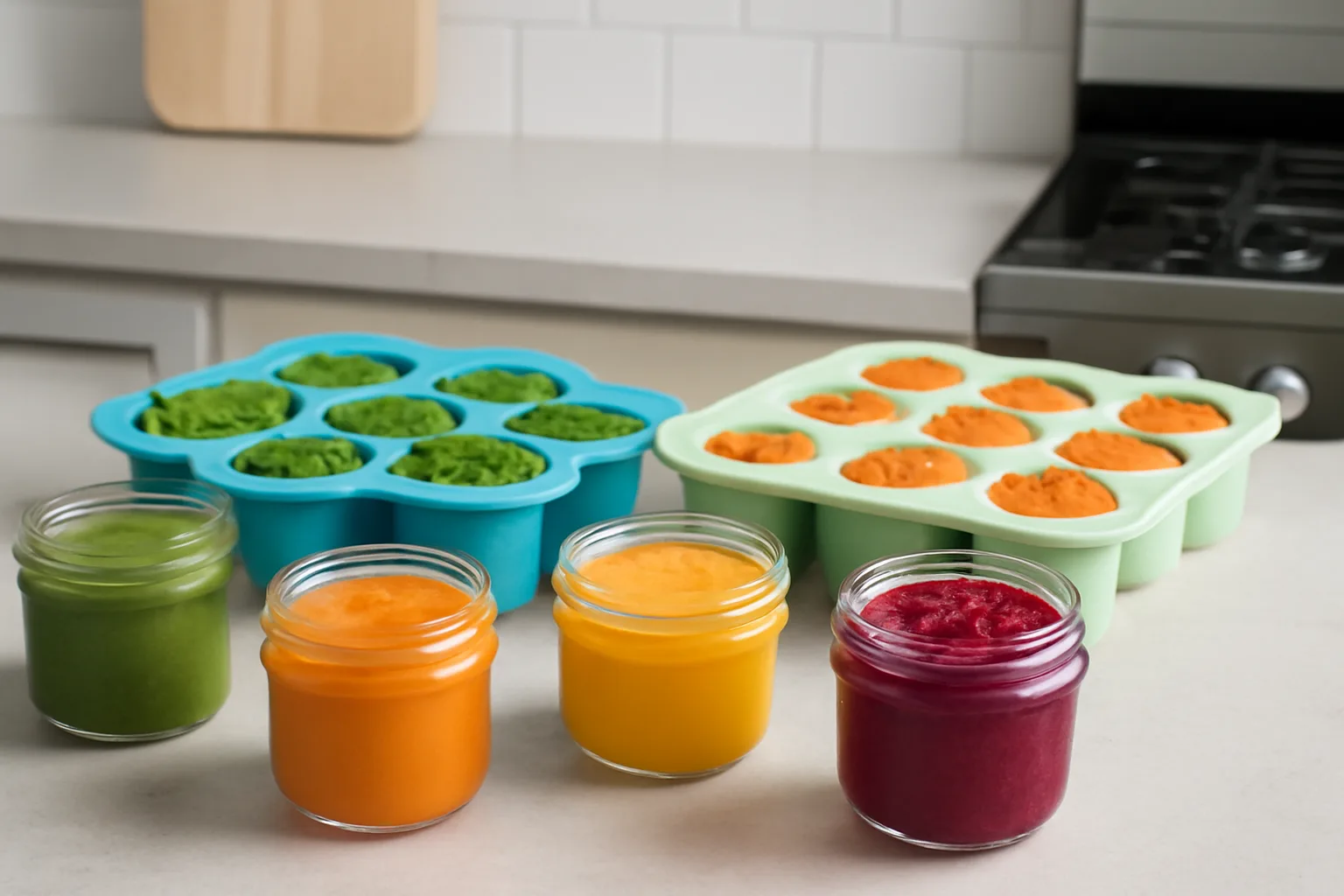
- Portion clearly: Spoon food into ice cube trays or small containers. Use 30-60ml portions for new eaters and larger 60-120ml pots as appetite grows.
- Store safely: Label each portion with the date and contents, refrigerate what you will use within 48 hours and freeze the rest straight away.
Cooling, Portioning, and Storing
This is the part that matters most for safety. Treat cooling, portioning and storage as one joined-up routine rather than three separate jobs.
- Cool quickly: Divide hot food into shallow containers or spread it on a clean baking tray so it reaches room temperature faster.
- Portion for real meals: Ice cube trays work well for first tastes. Larger pots are better once your baby eats bigger mixed meals or nursery portions.
- Store within the safe window: Keep homemade baby food in the fridge for up to 48 hours at 5°C or below, or freeze fruit and vegetable purées for up to 2 months.
- Label every container: Add the meal name and date before it goes into the fridge or freezer. Guessing later is where waste and safety mistakes creep in.
If you prep carrot and sweet potato purée on Sunday, keep two labelled portions in the fridge for Monday and Tuesday, then freeze the rest for later in the week.
Texture Stages: Adapting as Baby Grows
Babies’ needs change quickly, so your freezer stash should change too. Aim for a gradual move from smooth purées to thicker textures and then soft family-style foods.
- 6-7 months: Very smooth, single-ingredient purées such as carrot, parsnip or apple. Thin with breastmilk or formula if needed.
- 7-9 months: Thicker purées, mashed meals and simple combinations such as sweet potato with chicken, lentils, rice or soft pasta.
- 9-12 months: Minced or finely chopped meals, soft finger foods, steamed vegetable sticks and family meals adapted with no added salt or sugar.
Keep choking hazards out of batch-prepped meals: no whole grapes, cherry tomatoes, whole nuts or large firm lumps. Cut food small and supervise meals.
Sample Batch Prep Plans
Use these as starting points rather than strict recipes. The useful habit is making two or three freezer-friendly options at once, then rotating them through the week.
- For 6-7 months: Carrot and parsnip purée, apple and pear compote, and pea and potato mash.
- For 9-12 months: Chicken and vegetable casserole, lentil and sweet potato stew, and broccoli pasta made without added salt.
Freezing and Defrosting Baby Food
Freezing Tips
- Use freezer-safe, BPA-free containers or silicone trays.
- Leave space at the top for expansion.
- Freeze flat in bags for space-saving storage (especially handy in small UK freezers).
- Label everything with the date and contents.
Defrosting Safely
- Defrost overnight in the fridge for best results.
- For a quicker option, use the microwave defrost setting, stirring halfway through.
- Never defrost baby food at room temperature—this encourages bacteria.
Once defrosted, use within 24 hours and never refreeze.
Common Edge Cases
- Forgotten to defrost: If you’re caught short, microwaving from frozen is fine—just stir well and check for hot spots.
- No freezer space: Prioritise fridge storage and plan to use up food within 48 hours, or batch prep smaller quantities.
Reheating: What’s Safe, What’s Not
How to Reheat
- Only reheat what you need for that meal.
- Microwave or heat in a saucepan until piping hot throughout (at least 75°C). Stir well to avoid hot spots.
- Let food cool to a safe serving temperature—test with a clean spoon on the inside of your wrist.
Foods to Be Cautious With
- Rice: Cook and cool quickly; reheat only once. Discard any leftovers.
- Eggs: Only reheat if fully cooked and mixed into dishes (like omelette strips).
- Fish: Reheat thoroughly; use within 24 hours of defrosting.
Never reheat baby food more than once, as bacteria multiply rapidly on repeated cooling and reheating.
Mistakes and Fixes
Mistake
Microwaving without stirring, leading to hot spots.
Fix
Always stir thoroughly and check the temperature before serving.
Mistake
Reheating a large batch and saving the rest.
Fix
Only heat what you’ll use in one sitting.
Extra Batch Ideas
If you are cooking for a baby and a toddler, make one plain base batch, then blend part for the baby and mash or chop the rest for the older child. You can also mix frozen cubes for variety, such as carrot with peas, apple with oats, or sweet potato with chicken.
- Simple weekly shop: carrots, sweet potatoes, frozen peas, apples, pears, chicken, red lentils and baby pasta can cover several freezer-friendly meals for under about £10, depending on the supermarket.
- Useful freezer combinations: carrot and parsnip purée, apple and pear compote, pea and potato mash, chicken and vegetable casserole, and lentil with sweet potato.
Cleaning Up: Hygiene Tips
- Wash all equipment in hot soapy water or use a dishwasher if available.
- Sterilise containers for babies under six months (Milton cold water steriliser is a popular UK choice).
- Wipe down kitchen surfaces before and after prep.
- Dry all containers thoroughly before filling to prevent condensation and bacteria growth.
- Regularly check your fridge temperature (aim for 5°C or below).
Extra UK Tips
- If you use a dishwasher, run it on the hottest cycle for best results.
- For quick sterilising, boiling containers in a pan for 5 minutes works in a pinch.
- Keep a separate washing-up brush for baby items to avoid grease transfer.
Frequently Asked Questions
How long can I keep homemade baby food in the fridge?
Homemade baby food can be stored in the fridge for up to 48 hours at 5°C or below. Always check for signs of spoilage—such as off smells, mould, or unusual separation—before serving.
Can I freeze baby food containing meat, fish, or dairy?
Yes, you can freeze meals with cooked meat, fish, or dairy. Use within one month and reheat thoroughly until piping hot. Never refreeze once thawed.
How do I safely introduce allergens when batch prepping?
Introduce one allergen at a time, starting with a tiny amount and waiting three days before trying another. Avoid batch prepping large amounts of new allergen foods until you know your baby tolerates them. If in doubt, consult your GP or health visitor.
What’s the best way to portion baby food for freezing?
Use ice cube trays or small pots (30–120ml) for single servings. This lets you defrost only what you need and mix flavours for variety. Silicone trays are easy to use and widely available in UK supermarkets and baby stores.
Is it safe to microwave baby food?
Yes, microwaving is safe as long as you stir thoroughly and check for hot spots before serving. Let food cool to a safe temperature and always test with a clean spoon on your wrist.
Bottom Line
Batch prepping baby food is a genuine time-saver for UK families, making it easier to serve healthy, home-cooked meals even on the busiest days. By following this meal prep baby food batches guide, you’ll feel confident about food safety, nutrition, and adapting to your baby’s changing needs. Remember, hygiene is key—always wash hands, label everything, and store food correctly. As your baby grows, keep exploring new textures and flavours to support their development. For more tips on transitioning your baby to new routines, see How to Transition Your Baby Out of Swaddling or learn about safe sleepwear in How to Choose the Right TOG for Your Baby’s Room Temperature.
Other baby safety jobs to batch or plan ahead include checking your car seat setup—see How to Choose a Baby Car Seat: The Complete UK Safety Guide for a thorough checklist. Happy prepping!