Baby led weaning vs spoon feeding evidence is less dramatic than the arguments online make it sound. The best method is usually the one that lets your baby practise self-feeding, keeps meals calm, and still gets enough iron-rich food into them. For most UK families, that means a mixed approach: finger foods on the tray, a spoon when it helps, and no guilt either way.
In This Article
- Baby-Led Weaning vs Spoon Feeding Evidence: The Short Version
- What Baby-Led Weaning Does Better
- What Spoon Feeding Still Does Better
- Safety, Choking and Gagging: Where Parents Need to Be Sensible
- Nutrition, Iron and Actually Getting Enough Food In
- Mess, Cost and Kit: The Real-Life Difference
- A Mixed Approach Is Usually the Best Starting Point
- Frequently Asked Questions
Baby-Led Weaning vs Spoon Feeding Evidence: The Short Version
The evidence does not say baby-led weaning is automatically better than spoon feeding. It also does not say spoon feeding is the proper, serious method and finger food is a messy trend. The sensible reading is quieter: babies can start solids with finger foods, spoon-fed mashed food, or a combination, as long as they are developmentally ready and the food is safe.
The NHS guidance on first solid foods says some parents prefer baby-led weaning, some prefer spoon feeding, and some combine both. The main point is not the label. It is variety, nutrition, safe texture, and letting your baby learn.
What the evidence is actually comparing
Most of the argument comes down to four things:
- Self-regulation: baby-led feeding may give babies more control over pace and appetite cues.
- Texture practice: finger foods expose babies to lumps, squish, resistance and chewing practice early.
- Nutrition: spoon feeding can make it easier to offer iron-rich purees and know roughly what has been eaten.
- Family practicality: baby-led meals can be easier if the baby eats adapted family food, but harder if mess or anxiety takes over.
That is why the “which is best?” question needs a careful answer. If your baby happily gums toast fingers, soft broccoli and strips of omelette, baby-led weaning gives them useful practice. If they are tired, hungry, poorly, premature, slow to gain weight or just not interested yet, spoon feeding can be the calmer route. If you use both, you are not cheating. You are parenting in the real world.
My view
I would not choose one method as a badge of honour. I would start with both on the table. Offer safe finger foods so your baby can touch, squash and bring food to their mouth. Keep a spoon available for yoghurt, porridge, lentils, mashed beans and soft veg. The baby still leads the pace if you watch their cues and stop when they are done.
What Baby-Led Weaning Does Better
Baby-led weaning is strongest when you treat it as skill practice, not as proof that your baby is a tiny food critic. At six months, a lot of eating is messy exploration. That is not wasted time. It teaches grip, texture, smell, mouth mapping and confidence.
It gives babies proper texture practice
Purees have their place, but they do not teach a baby much about how toast behaves compared with avocado, or why banana slides around, or how much pressure is needed to squash a steamed carrot stick. Finger foods make those differences obvious.
Good first finger foods are soft enough to squash between finger and thumb, cut into easy-to-hold shapes, and large enough that a baby can grip part of the food in their fist. Think steamed carrot batons, ripe pear wedges, omelette strips, soft pasta spirals, thick Greek yoghurt on a loaded spoon, or toast fingers spread thinly with smooth peanut butter if allergens are being introduced safely.
For a fuller age-by-age list, the existing LittleGearUK guide to best first foods for weaning is a useful companion because it separates early textures from foods that are better left until later.
It can make family meals feel less separate
The best bit of baby-led weaning is that it can reduce the feeling of cooking a second dinner for someone who mainly wants to throw it on the floor. If you are having pasta, the baby can have soft pasta with sauce before you add salt. If you are having roast vegetables, the baby can have a few soft pieces. If breakfast is porridge, they can practise with a pre-loaded spoon.
That matters because the habit you are building is not just “eat this puree”. It is “sit with us, explore food, join the meal”. In real family routines, that is where baby-led weaning earns its keep. It turns food into a shared routine rather than a separate project.
It respects appetite cues
Baby-led feeding makes it physically harder to push more food in after a baby has lost interest. That can help parents notice signs of fullness:
- Turning away: the baby keeps moving their head from the food.
- Hands up: they block the spoon or sweep food away.
- Slowing down: they play more than eat and stop bringing food to their mouth.
- Fussing: they are tired, bored or overwhelmed rather than hungry.
The same respect can happen with spoon feeding, but it takes restraint. The old “just one more spoon” reflex is powerful, especially when you have cooked lentils, cleaned the highchair and would quite like something to show for it.
What Spoon Feeding Still Does Better
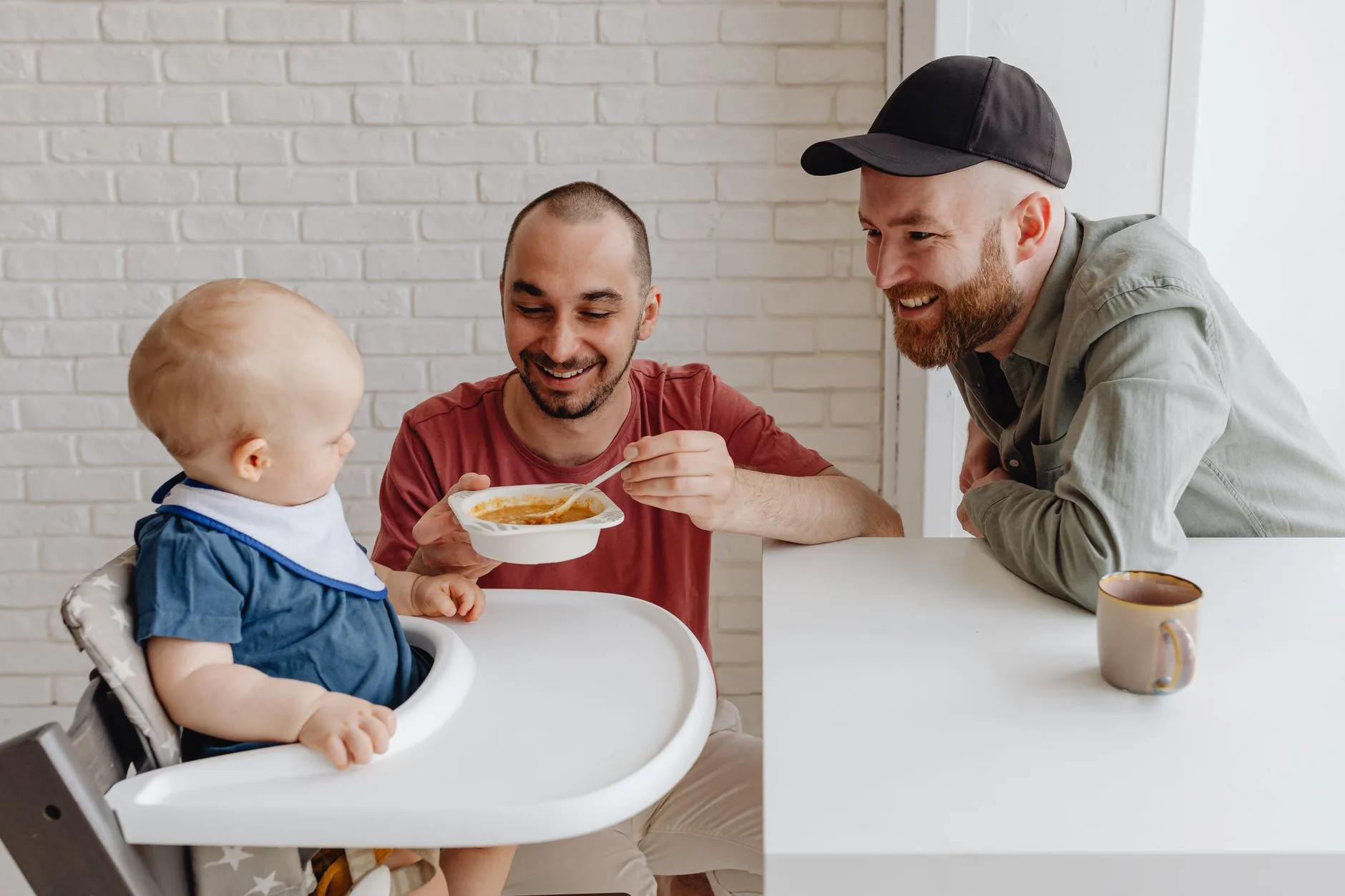
Spoon feeding gets unfairly dismissed in some baby-led weaning circles. Done badly, yes, it can become parent-led shovelling. Done well, it is just another way to offer food. It is useful for textures that do not work neatly as finger food and for babies who need a slower start.
It is easier for iron-rich foods
Iron is one of the big reasons solids matter from around six months. Finger food can cover it, but many iron-rich foods are simply easier on a spoon: lentil dhal, mashed beans, minced beef in tomato sauce, porridge with nut butter, scrambled egg, mashed sardine, or soft stewed meat.
If you only offer large finger foods at first, the baby may get lots of practice but not much intake. That is normal in the early days, but it can make parents anxious. A spoonful of lentils alongside finger food is not a failure of baby-led weaning. It is a sensible nutritional bridge.
LittleGearUK already has a separate guide on meal prepping baby food in batches, and that method works best for spoon-friendly foods: lentils, veg mash, fish pie filling, mild curry bases and fruit compotes frozen in small portions.
It can be calmer for tired babies
Some babies love the theatre of feeding themselves. Others get frustrated when the food slips, breaks, or takes too long. Spoon feeding can be kinder at the end of the day, especially if your baby is hungry and tired.
The trick is to keep it responsive. Load the spoon, bring it near, wait for the baby to open their mouth or lean forward, then stop when they turn away. A spoon is not the problem. Ignoring the baby’s signal is the problem.
It suits runny foods
There is no moral victory in trying to turn yoghurt into a finger food. Some foods belong on a spoon:
- Porridge: good for breakfast and easy to mix with fruit, nut butter or full-fat yoghurt.
- Plain Greek yoghurt: useful for protein and fat, and easy to serve with mashed fruit.
- Lentil dhal: cheap, iron-rich and freezer-friendly.
- Mashed avocado or beans: soft, quick and easy to spread on toast fingers too.
Pre-loaded spoons sit nicely between the two methods. You load the spoon, place it on the tray, and let your baby grab it. It is messier than parent-led spoon feeding, but it gives them control.
Safety, Choking and Gagging: Where Parents Need to Be Sensible
Safety is where the debate needs less confidence and more care. Babies gag. Gagging is noisy, dramatic and horrible to watch, but it is usually part of learning to move food around the mouth. Choking is different: quiet, dangerous and urgent. Every parent starting solids should know the difference and should never leave a baby alone with food.
The NHS says babies are usually ready for first foods from around six months, when they can stay sitting, hold their head steady and coordinate eyes, hands and mouth. The NHS Start for Life guidance also explains that finger foods can be offered from around six months when prepared safely.
Food shape matters more than method
Baby-led weaning is not “give the baby whatever is on your plate”. It means offering safe, soft, developmentally suitable food. The foods I would be most cautious with are round, hard, sticky or rubbery.
Avoid or adapt:
- Whole grapes and cherry tomatoes: quarter lengthways.
- Raw apple and carrot: cook until soft or grate finely.
- Whole nuts: avoid for babies and young children; use smooth nut butter thinned or spread very thinly.
- Sausage coins: cut lengthways and into small pieces because round slices are the wrong shape.
- Large clumps of sticky food: thick nut butter, compact bread balls and sticky rice can be hard to manage.
Spoon feeding has safety rules too. Do not push food into a baby’s mouth when they are crying, laughing hard, turning away or lying back. Keep them upright, strapped into the highchair, and focused on the meal.
The kit that helps safety
You do not need a cupboard full of gadgets, but three things are worth buying:
- A stable highchair: the IKEA Antilop is still hard to beat at about £19, though you may want a footrest add-on for another £15-£25.
- Soft weaning spoons: Tommee Tippee or Munchkin sets are usually £4-£7 from Boots, Tesco, Argos or Amazon UK.
- A sleeved bib: Bibado-style coverall bibs are about £15-£20 and save more clothes than they have any right to.
If you are still choosing a chair, the LittleGearUK guide to best highchairs in the UK is useful because foot support and easy cleaning matter more for weaning than fancy recline settings.
Nutrition, Iron and Actually Getting Enough Food In
The weakest version of baby-led weaning is all cucumber sticks, rice cakes and fruit. The weakest version of spoon feeding is endless sweet puree with no texture progression. Neither is ideal. The goal is varied food, iron-rich meals, allergen exposure where appropriate, and steady progress with texture.
What to prioritise from the first month
Milk remains the main source of nutrition at the start, but solids should not be nutritionally empty. A good week includes:
- Iron-rich foods: lentils, beans, egg, fish, meat, fortified baby cereal or nut butter used safely.
- Vegetables: not just sweet ones; broccoli, courgette, cauliflower and spinach can all work.
- Energy-dense foods: avocado, full-fat yoghurt, olive oil mixed into mash, and smooth nut butter.
- Texture variety: mash, soft lumps, finger foods, loaded spoons and family foods adapted without salt.
This is where spoon feeding and baby-led weaning complement each other. A baby can self-feed omelette strips and soft pear, then take a few responsive spoonfuls of lentil dhal. The tray does the exploring; the spoon fills some gaps.
Allergen introduction needs calm repetition
Allergens are another reason not to get too rigid. Smooth peanut butter, egg, wheat, dairy and fish can be introduced in safe forms, one at a time, when your baby is ready for solids. If there is eczema, known allergy, prematurity or medical complexity, ask your health visitor or GP first.
Practical examples:
- Peanut: a tiny amount of smooth peanut butter thinned into porridge or yoghurt.
- Egg: well-cooked omelette strips or mashed hard-boiled egg mixed with yoghurt.
- Dairy: plain full-fat yoghurt on a spoon or pre-loaded spoon.
- Fish: soft flakes carefully checked for bones and mixed into potato or veg mash.
If you are also breastfeeding or combination feeding, the LittleGearUK guide to combination feeding with breast and bottle is worth keeping open because solids do not replace milk overnight.
Mess, Cost and Kit: The Real-Life Difference
Baby-led weaning is usually cheaper on food but more expensive in laundry, floor wipes and patience. Spoon feeding is tidier at first, but it can nudge you toward pouches and tiny pots if you are tired. Neither has to be expensive.
What I would buy
For a sensible UK setup, I would keep it boring:
- Highchair: IKEA Antilop, about £19, or a Joie Mimzy-style chair if you want padding and folding, usually £55-£90.
- Spoons: two packs of soft-tipped weaning spoons, about £5 each from Boots, John Lewis, Argos or Amazon UK.
- Bibs: one coverall bib and a couple of wipe-clean bibs, about £20-£30 total.
- Cups: a small open cup or free-flow cup, usually £3-£8. The guide to sippy cups and straw cups covers the next stage.
- Freezer tray: silicone baby-food trays or small lidded pots, roughly £8-£15 from Lakeland, John Lewis or Amazon UK.
The item I would not overspend on is the plate. Suction plates can help, but many babies treat them as a strength test. A clean highchair tray is fine at the start.
Pouches are useful, not a strategy
Ready-made pouches cost roughly £1-£1.60 each in UK supermarkets. They are handy for travel, childcare and days when nobody has slept. Used every meal, they get expensive and can keep textures too smooth for too long.
Batch-cooked food is cheaper. A pot of red lentils, carrots and mild spices can make several baby portions for a few pounds. Finger foods from family meals cost even less if you adapt before salting. The best budget approach is not pure baby-led or pure spoon feeding; it is planned leftovers plus a freezer drawer that rescues bad evenings.
Cleaning is part of the decision
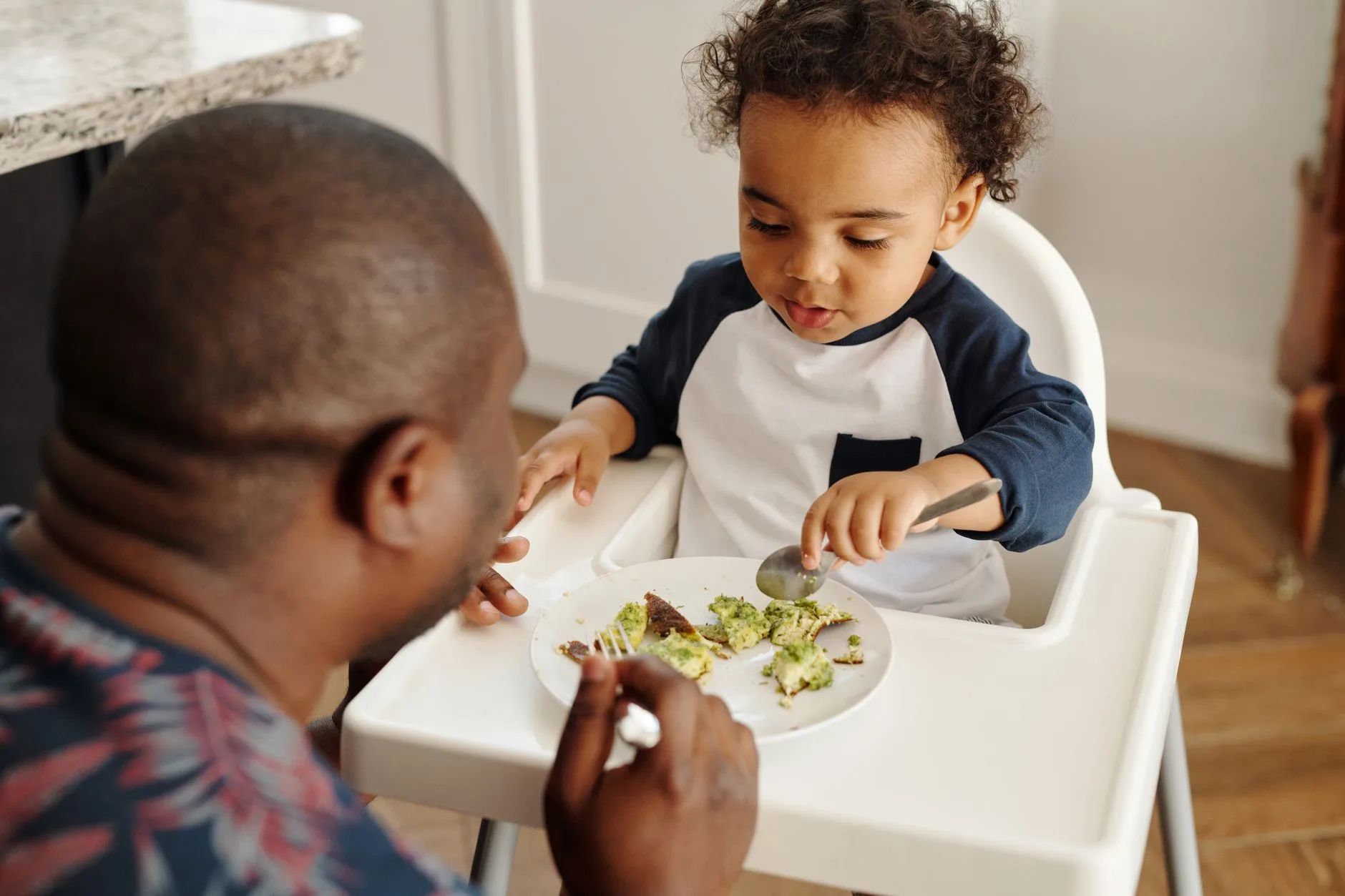
Baby-led weaning mess is not a small detail. It affects whether you stick with it. If cleaning the floor three times a day makes you resent mealtimes, use the spoon more. If spoon feeding turns every meal into a negotiation, put more safe finger foods on the tray.
There is no prize for suffering through the method that looks best on Instagram. The good method is the one you can repeat calmly.
A Mixed Approach Is Usually the Best Starting Point
If someone asked me to choose one method for a first baby, I would choose mixed feeding from day one. It gives the baby texture practice, keeps nutrient-dense foods easy, and gives parents more ways to respond when a meal goes sideways.
A simple first-week plan
Keep the first week small and low pressure:
- Day 1: offer soft steamed carrot sticks and a few spoonfuls of plain yoghurt or porridge.
- Day 2: try avocado wedges and a pre-loaded spoon with mashed beans.
- Day 3: offer omelette strips and a little mashed sweet potato.
- Day 4: try soft broccoli florets and lentil dhal on a spoon.
- Day 5: offer toast fingers with a thin spread and fruit mashed into yoghurt.
- Day 6: repeat one meal that went well rather than chasing novelty.
- Day 7: sit down with the family meal and adapt one safe component for the baby.
The point is not volume. The point is calm exposure. If your baby eats very little, that is normal at first. If they are ravenous and frustrated, offer a spoon. If they only want to squash food, let some of that happen, then end the meal before everyone gets cross.
When spoon feeding is the better lead method
I would lean more heavily on spoon feeding if:
- Your baby tires quickly: they may not have the stamina for long self-feeding meals yet.
- Weight gain is being watched: you need clearer intake and health visitor guidance.
- You are very anxious about gagging: safe finger foods can still be offered slowly, but panic helps nobody.
- Childcare needs consistency: some nurseries and relatives are more comfortable with spoon-fed textures at first.
When baby-led weaning deserves more space
I would lean more heavily on baby-led weaning if your baby sits well, reaches for food, handles soft textures confidently, and seems annoyed by being fed. Some babies want control early. Letting them practise can make meals smoother.
Still, I would keep spoons in the mix for yoghurt, porridge, lentils and sauces. The most useful answer to baby led weaning vs spoon feeding evidence is not “pick a side”. It is “use the strengths of both, watch your baby, and keep the food safe”.
Frequently Asked Questions
Is baby-led weaning better than spoon feeding? Not automatically. Baby-led weaning is useful for self-feeding and texture practice, while spoon feeding can help with iron-rich foods and tired babies. A mixed approach is usually the most practical starting point.
Can I combine baby-led weaning and spoon feeding? Yes. Combining them is normal and often easier. You can offer soft finger foods on the tray and use a responsive spoon for yoghurt, porridge, lentils, mash or sauces.
Does baby-led weaning increase choking risk? Safe preparation matters more than the label. Babies must sit upright, be supervised, and only be offered developmentally suitable food. Avoid round, hard, sticky and rubbery foods unless they are adapted safely.
What equipment do I need for weaning? Start with a stable highchair, soft weaning spoons, a sleeved bib, a small cup and a few freezer pots. You do not need expensive plates or specialist gadgets in the first month.
What if my baby eats very little at first? That is common. Early weaning is partly about learning. Keep milk feeds going, offer varied foods calmly, and speak to your health visitor if intake, weight gain or development worries you.