Your baby has just turned six months. The health visitor mentioned something about starting solids, your mum is insisting she gave you rusks at four months and you turned out fine, and you’re standing in the Tesco baby aisle staring at tiny pots of puréed sweet potato wondering where on earth to begin. The NHS says six months. Your WhatsApp mum group says baby-led weaning. The internet says both. And your baby is sitting there chewing their own foot, blissfully unaware they’re about to discover the chaos of broccoli.
In This Article
- Signs Your Baby Is Ready for Weaning
- Purées vs Baby-Led Weaning: Which Approach?
- Essential Equipment You Actually Need
- Week 1: First Tastes (Days 1-7)
- Week 2: Expanding Flavours (Days 8-14)
- Week 3: Adding Texture (Days 15-21)
- Week 4: Building Meals (Days 22-28)
- Foods to Avoid Before 12 Months
- Introducing Allergenic Foods Safely
- Gagging vs Choking: What Every Parent Must Know
- Milk Feeds During Weaning: What Changes
- Frequently Asked Questions
Signs Your Baby Is Ready for Weaning
The NHS Start for Life guidance recommends waiting until around six months before introducing solid foods. Not a rigid date — but close to it. Before six months, your baby’s digestive system and kidneys aren’t mature enough to handle anything other than breast milk or formula.
Three signs that your baby is developmentally ready:
- They can sit up and hold their head steady — without slumping to one side or needing you to prop them. This is critical for safe swallowing
- They’ve lost the tongue-thrust reflex — when you put a spoon near their mouth, they don’t automatically push it back out with their tongue
- They can coordinate eyes, hands, and mouth — they can look at food, grab it, and bring it to their mouth themselves
All three need to be present. Not one. Not two. All three. Waking up at night, chewing fists, or watching you eat don’t count — those are normal developmental behaviours that happen at four months regardless.
What If My Baby Seems Ready at Five Months?
I hear this a lot. The honest answer is: probably not. What looks like interest in food at five months is usually just your baby being curious about everything — your phone, the TV remote, the cat. The gut maturity issue isn’t something you can see from the outside. If your baby was born prematurely, speak to your health visitor about adjusted age timing.
Purées vs Baby-Led Weaning: Which Approach?
This is the debate that divides parent Facebook groups more than sleep training. Here’s the reality: both work fine, and most parents end up doing a combination whether they planned to or not.
Traditional Weaning (Spoon-Fed Purées)
You make or buy smooth purées, spoon them into your baby, and gradually increase the texture over weeks. It’s predictable, less messy (relatively), and you know roughly how much they’ve eaten.
Baby-Led Weaning (BLW)
You skip purées entirely and offer soft finger foods from the start. Your baby feeds themselves. It’s messier — much messier — but it encourages independence and lets your baby explore textures at their own pace.
The Combination Approach (What Most People Actually Do)
Start with some spoon-fed purées to get the basics in, offer finger foods alongside for exploration, and gradually shift toward more self-feeding as their coordination improves. I found this was the least stressful route — you’re not locked into a philosophy, you’re just feeding your baby.
The Key Difference That Actually Matters
It’s not purées vs fingers. It’s whether your baby learns to enjoy a wide variety of flavours early. Whichever method you choose, variety matters more than technique. A baby who eats fifteen different purées will likely have a broader palate than one who only self-feeds three foods they like.
Essential Equipment You Actually Need
You don’t need much. The baby aisle will try to sell you a steamer-blender combo, speciality weaning spoons in five colours, a suction plate that costs £20, and a silicone bib that’s apparently “life-changing.” Here’s what you actually need:
- A highchair — the IKEA Antilop (about £20) is the standard recommendation from virtually every weaning expert. It’s cheap, wipeable, and the tray goes in the dishwasher. We used one for both kids
- A few soft-tipped spoons — Munchkin ones from Boots (about £3 for a pack) are fine. Your baby will mainly use them as drumsticks for the first few weeks
- A coverall bib — long-sleeved, wipeable, catches food. The BabyBjörn Long Sleeve Bib (about £14) is excellent but the supermarket own-brand versions work too
- Ice cube trays — for batch-cooking and freezing purée portions. Standard silicone ones from any supermarket
- A basic hand blender — you probably already own one. No need for a dedicated baby food maker
Skip the weaning kits, the themed plate sets, and the £40 suction bowls. A normal plastic bowl and a damp cloth are all you need alongside the above. If you’re bottle-feeding, you’ll also want to check our guide to sterilising baby bottles — getting that right before weaning starts saves a lot of confusion later.
Week 1: First Tastes (Days 1-7)
This week is about introduction, not nutrition. Your baby is still getting everything they need from milk. Solid food at this stage is purely about getting used to the experience — the feel of a spoon, the sensation of something other than milk in their mouth, the concept that food exists. For a related angle, see our Best First Foods for Weaning: A UK Guide by Age guide.
What to Offer
Start with single-ingredient vegetable purées:
- Day 1-2: Sweet potato purée (naturally sweet, smooth texture, almost universally accepted)
- Day 3-4: Butternut squash purée
- Day 5-6: Carrot purée
- Day 7: Broccoli purée (start introducing green vegetables early — babies who try them later often reject them)
How to Prepare
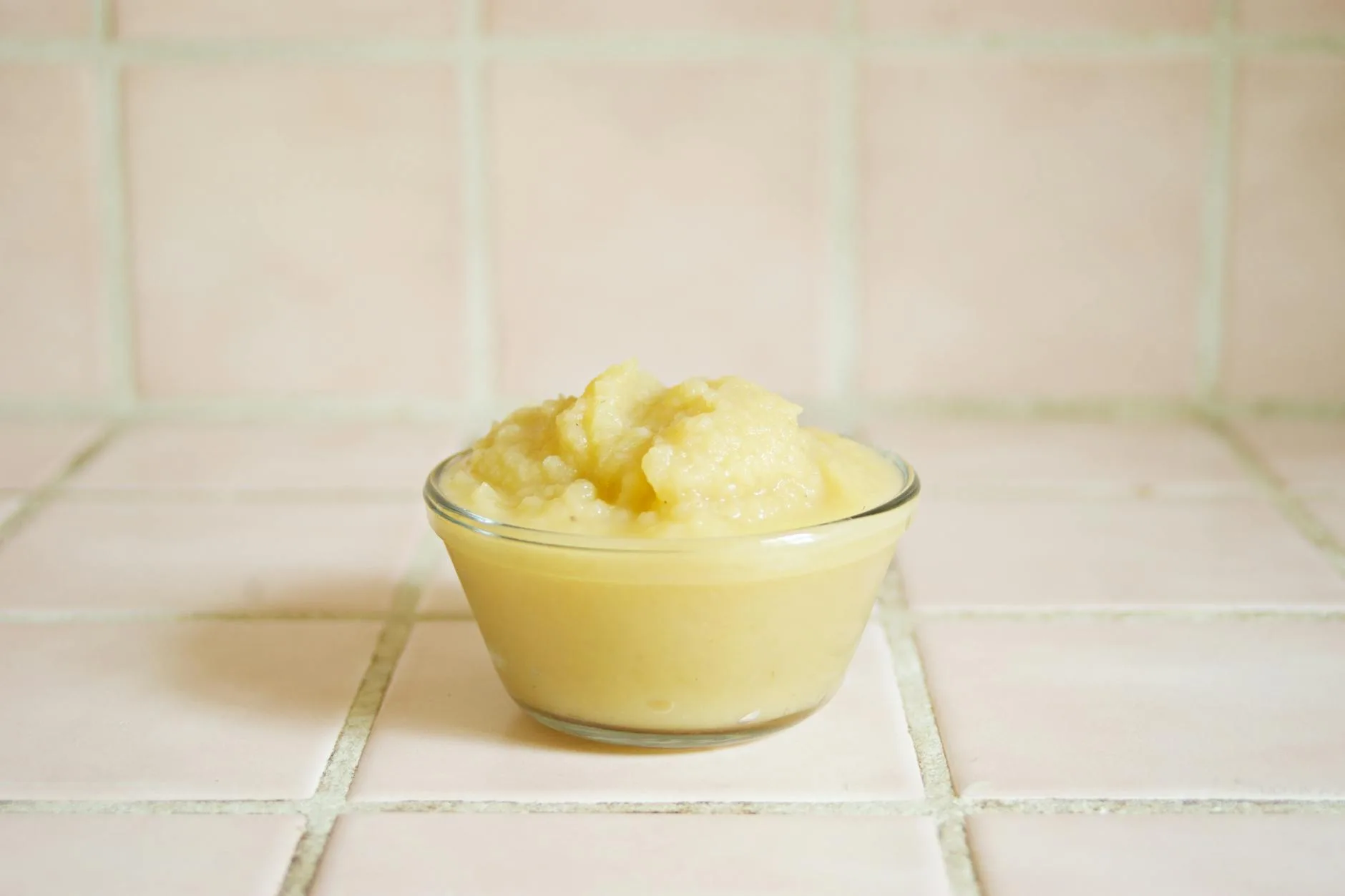
Steam until completely soft, blend with a little of the cooking water or your baby’s usual milk until smooth. The consistency should be runnier than you’d expect — almost like thick soup.
How Much
One to two teaspoons. That’s it. If your baby eats half a teaspoon and then turns their head away, that’s a successful first meal. No forcing, no airplane noises, no “one more bite.” They’re learning, not fuelling.
When in the Day
Mid-morning or lunchtime works best — your baby is alert but not tired or starving. Offer milk first (about an hour before), so they’re not desperately hungry when they sit down to this confusing new experience.
Week 2: Expanding Flavours (Days 8-14)
Now you’re building on week one. Your baby has the general idea — spoon approaches mouth, food goes in (or gets smeared across face, which counts as progress).
New Foods to Introduce
- Pea purée — bright green, slightly sweet, and a different texture
- Courgette purée — very mild, good base for mixing later
- Parsnip purée — naturally sweet, a different flavour profile from the root vegetables in week one
- Apple purée — first fruit introduction. Cook it (don’t serve raw) and blend smooth
- Pear purée — another gentle fruit
Building Combinations
By mid-week two, you can start mixing purées you’ve already introduced:
- Sweet potato and broccoli
- Carrot and parsnip
- Apple and pear
Only combine foods your baby has already tried individually. This way, if they react to something, you know which food caused it.
Introducing Finger Foods (If Doing Combination Weaning)
Alongside purées, offer one or two soft finger foods per meal:
- Steamed broccoli florets (the stem makes a natural handle)
- Steamed carrot batons (finger-length, soft enough to squish between your fingers)
- Banana — cut lengthways and rolled in a little ground porridge oats so tiny hands can grip it
Expect most of this to end up on the floor. That’s normal. Your baby is learning to grip, bring food to their mouth, and chew — even without teeth, their gums are surprisingly effective.
Week 3: Adding Texture (Days 15-21)
This is where things get more interesting. Your baby has tried a range of vegetables and fruits, they understand the basic mechanics, and now you can start introducing more variety and texture.
Moving Beyond Smooth Purées
Start making purées slightly lumpier — mash with a fork instead of blending. This is an important step. Babies who stay on ultra-smooth purées for too long can struggle with texture later. You want a gradual progression from smooth to lumpy to soft pieces.
New Food Groups to Introduce
- Porridge — baby porridge mixed with your baby’s usual milk. Readybrek (about £1.50 from any supermarket) is fine, or you can use standard oats blended to a fine powder
- Plain yoghurt — full-fat, unsweetened. Not fromage frais with added sugar. Asda and Tesco own-brand natural yoghurt works perfectly
- Well-cooked pasta — tiny shapes like stelline or orzo, cooked until very soft
- Rice — mashed or blended into other purées
- Lentils — red lentils cooked until very soft, mashed into vegetable purées
Protein Introduction
Start introducing protein sources:
- Chicken — poached until very tender, blended into a purée with vegetables
- Fish — white fish like cod, steamed and flaked (check meticulously for bones)
- Eggs — well-cooked scrambled egg. Eggs are allergenic — see the allergen section below
The NHS allergen introduction guidance recommends introducing allergenic foods one at a time from six months, which is exactly what you’re doing here.
Week 4: Building Meals (Days 22-28)
By now your baby has tried a good range of foods across all the main groups. Week four is about starting to structure something that resembles actual meals rather than isolated tastes.
Moving to Two Meals a Day
If you’ve been doing one solid meal, add a second. Breakfast and lunch works well for most families. Dinner can come in week five or six — no rush.
Meal Ideas
Breakfast options:
- Porridge with mashed banana
- Scrambled egg with toast fingers (cut into strips)
- Plain yoghurt with puréed fruit
Lunch options:
- Chicken and vegetable purée with mashed potato
- Lentil and sweet potato mash
- Fish pie (cod, potato, broccoli, all mashed together)
- Pasta with a simple tomato and vegetable sauce
Portion Sizes
Still small. A few tablespoons per meal is plenty. Your baby’s stomach is roughly the size of their fist — which at six months isn’t very big. Milk is still the primary nutrition source. The NHS recommends around 500-600ml of breast milk or formula daily at this stage, dropping to about 400ml by 12 months as solids increase. Our Best Highchairs 2026 UK: From 6 Months to Toddler guide is useful alongside this.
Self-Feeding Progress
By the end of week four, if you’ve been offering finger foods, your baby should be getting more confident at bringing food to their mouth. The pincer grip (thumb and forefinger) usually develops around 8-9 months, so right now they’re using a whole-hand grab. Cut food into batons or strips they can hold in their fist with some sticking out the top to gnaw on.
Foods to Avoid Before 12 Months
Some foods are genuinely dangerous for babies under one. This isn’t about preference — it’s about safety and developmental readiness.
- Honey — risk of infant botulism. Not even in cooked foods. Not even “just a tiny bit.” The Lullaby Trust and NHS are clear on this: no honey before 12 months
- Whole nuts — choking hazard. Ground nuts and nut butters are fine (and encouraged for allergen exposure)
- Salt — under 1g per day before 12 months. Don’t add salt to your baby’s food. Check labels on stock cubes and bread
- Sugar — no added sugar. Fruit provides natural sweetness
- Whole grapes, cherry tomatoes — must be cut lengthways (not across) into quarters to prevent choking
- Raw shellfish — food poisoning risk
- Certain fish — avoid shark, swordfish, and marlin (mercury levels). Limit tuna to once a week
- Cow’s milk as a drink — fine in cooking and on cereal from six months, but not as a main drink until 12 months
- Rice drinks — contain arsenic, not suitable for under-fives
Introducing Allergenic Foods Safely
This section matters more than any other. The old advice was to avoid allergens until later. Current NHS guidance is the opposite — introduce them from six months, because early exposure reduces allergy risk.
The Main Allergens
- Cow’s milk (in cooking/yoghurt)
- Eggs (well-cooked)
- Peanuts (smooth peanut butter, never whole nuts)
- Tree nuts (ground or as butter)
- Wheat (bread, pasta, cereals)
- Soya (tofu, soy sauce in cooking)
- Fish and shellfish (cooked thoroughly)
- Sesame (tahini, hummus)
How to Introduce
- Introduce one new allergen at a time
- Give it early in the day (so you can observe for reactions during waking hours)
- Start with a tiny amount — a quarter teaspoon of peanut butter mixed into porridge, for example
- Wait two to three days before introducing the next allergen
- Once introduced with no reaction, keep including it regularly in your baby’s diet. Don’t introduce it once and forget about it
What to Watch For
Mild reactions (watch and discuss with your health visitor):
- Mild rash around the mouth
- Slight redness
- Minor swelling
Seek immediate medical attention (call 999):
- Swelling of lips, tongue, or throat
- Difficulty breathing or wheezing
- Vomiting repeatedly
- Becoming floppy or unresponsive
Gagging vs Choking: What Every Parent Must Know
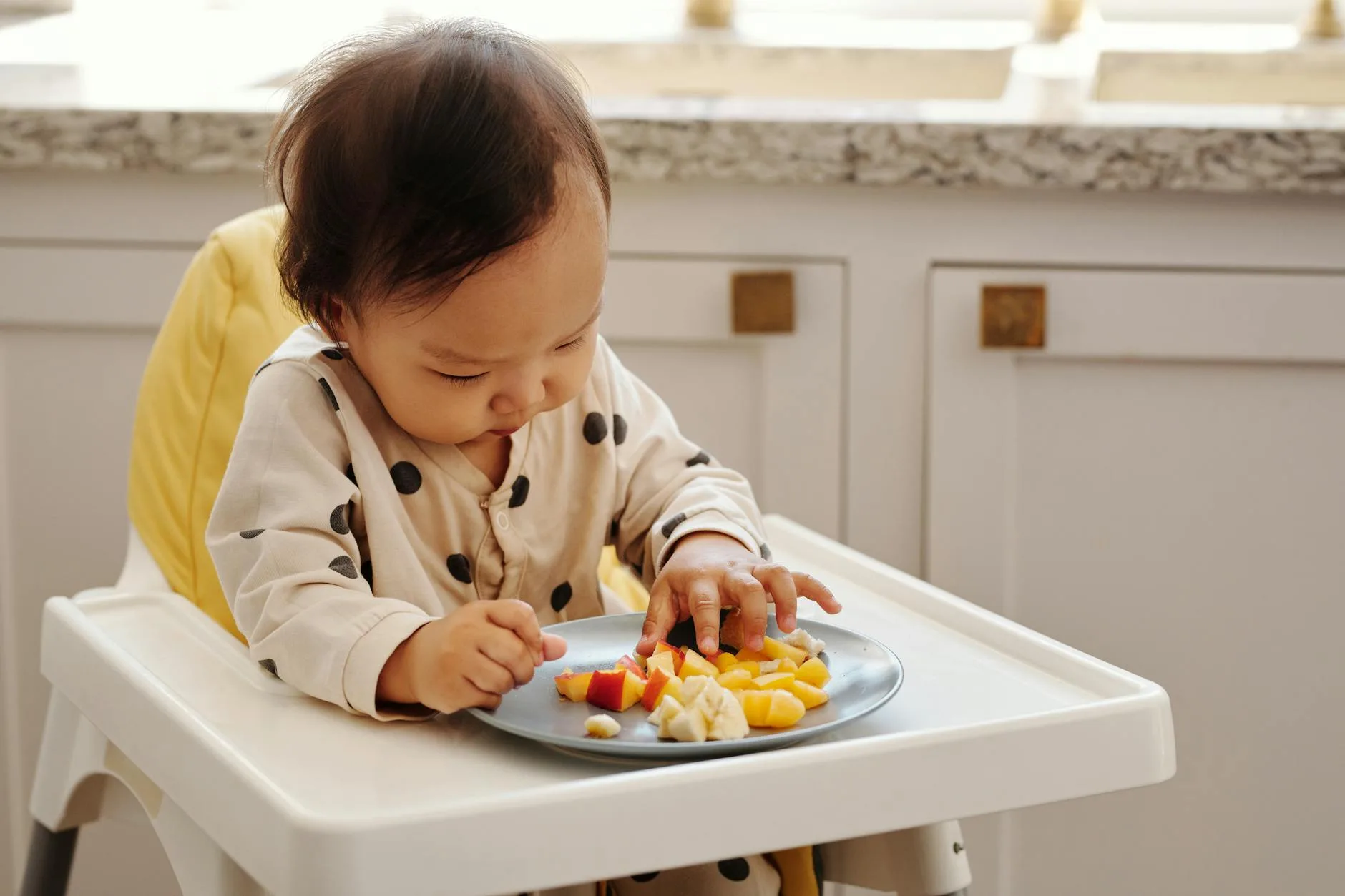
This is the section that terrifies every new parent. The distinction between gagging and choking is probably the most important thing you’ll learn in the entire weaning process.
Gagging
Gagging is normal, safe, and expected. It’s a protective reflex — your baby’s body preventing food from going too far back before they’re ready to swallow it. A gagging baby will:
- Make retching or coughing sounds
- Go red in the face
- Push food forward with their tongue
- Look surprised but not distressed
Do not intervene. Let them work it out. Gagging happens frequently in the first few weeks and decreases as your baby learns to manage food in their mouth. Babies have a very sensitive gag reflex positioned further forward on the tongue than adults — it’s designed to keep them safe.
Choking
Choking is silent. That’s what makes it dangerous. A choking baby will:
- Make no sound (or very faint sounds)
- Be unable to cry or cough
- Turn blue around the lips
- Look panicked
This is a medical emergency. Every parent and carer should know infant first aid before starting weaning. The NHS baby safety guidance is an excellent free resource — watch the video and practise the technique.
Reducing Choking Risk
- Always supervise meals — never leave a baby eating alone (and no, a baby monitor doesn’t count as supervision during meals)
- Make sure your baby is sitting upright in a highchair
- Cut round foods (grapes, cherry tomatoes, sausages) lengthways into quarters
- Avoid hard foods (raw apple, raw carrot) until your baby has molars
- Remove stones from fruit
- Never let your baby eat in a car seat or while crawling around
Milk Feeds During Weaning: What Changes
Solid food doesn’t replace milk — it gradually supplements it. This transition happens over months, not days.
6-7 Months
Milk is still the primary nutrition source. Offer breast or bottle before solids so your baby isn’t starving when they sit down to eat. Most babies have 4-5 milk feeds plus 1-2 small solid meals per day.
7-9 Months
Solids become more established. You can start offering solids before milk at some feeds. Three small meals plus 3-4 milk feeds is typical. Water from an open cup or free-flow sippy cup should be offered with meals (not juice — water only).
9-12 Months
Three meals a day with 2-3 milk feeds. Your baby is eating more substantial amounts now. The NHS recommends around 400ml of breast milk or formula daily at this stage.
After 12 Months
Full-fat cow’s milk can replace formula as a drink. Breast milk can continue as long as you and your baby want. Around 300ml of dairy (including milk in cooking, cheese, yoghurt) is the recommendation from 12 months.
I found the milk-to-food transition the hardest bit to navigate — our first went off bottles quite quickly once food was established, but our second clung to their bedtime bottle until well past a year. Both are perfectly normal.
Frequently Asked Questions
My baby keeps spitting food out. Should I be worried? Not at all. Spitting food out is how babies learn to manage texture. It’s a motor skill, not a rejection. Keep offering. Most babies go through a phase of pushing food out with their tongue — it can take ten to fifteen exposures to a new food before they accept it willingly.
Can I give my baby the same food we eat? Yes — with adjustments. Family meals are great for weaning because your baby sees you eating the same thing. Just set aside a portion before adding salt, and cut or mash it to an appropriate texture. Spicy food is fine in small amounts; chilli won’t harm your baby, though they might pull some entertaining faces.
How do I know if my baby is eating enough? Follow their lead. Babies are very good at regulating their own intake. As long as they’re gaining weight appropriately (your health visitor tracks this), having wet and dirty nappies, and seem content, they’re getting enough between milk and solids.
What if my baby refuses everything? Take a breath. It’s temporary. Some babies take longer to warm up to solids. Try different textures — some babies hate purées but love finger food, or vice versa. Eat with your baby so they see you enjoying food. And remember: before 12 months, milk is still providing the bulk of their nutrition. Food is for fun until one, as the saying goes.
Should I worry about iron? From six months, your baby’s iron stores from birth start to deplete, which is one reason weaning is recommended at this age. Include iron-rich foods regularly: red meat, dark poultry meat, lentils, beans, fortified cereals, and green vegetables. Vitamin C helps iron absorption — offer fruit or vegetables alongside iron-rich foods.