It’s 2am, your toddler is screaming, and you’re standing in their doorway trying to decide whether switching on the night light will settle them or make things worse. Every parent has been here. The night light debate divides families like nothing else — some swear their child can’t sleep without one, others are convinced any light in the room disrupts sleep. The truth, as usual, is somewhere in the middle, and it depends far more on the type of light and your individual child than on any universal rule.
Night lights for toddlers are a £30 million market in the UK, and manufacturers would obviously like you to believe every child needs one. Some children genuinely do — the ones who wake terrified in the dark, who need to see their surroundings to feel safe, who are at the age where imagination turns shadows into monsters. Others sleep better in complete darkness, and adding a night light creates a new problem. Working out which camp your child falls into is more important than which night light you buy.
In This Article
- What the Research Says
- When Night Lights Help
- When Night Lights Hinder
- Choosing the Right Night Light
- Colour Matters More Than Brightness
- Types of Toddler Night Lights
- Best Night Lights for Toddlers UK
- Sleep Training and Night Lights
- When to Introduce a Night Light
- Alternatives to Night Lights
- Frequently Asked Questions
What the Research Says
The Melatonin Question
Melatonin is the hormone that signals to your child’s brain that it’s time to sleep. Light suppresses melatonin production — that’s why we feel alert during the day and sleepy at night. The key variable is light colour and intensity. Research published in the Journal of Clinical Endocrinology & Metabolism found that blue and white light suppress melatonin most aggressively, while red and amber light have minimal effect.
This means a bright white night light is working against your child’s sleep biology. A dim red or amber one barely registers on the melatonin system. The colour of the light matters far more than whether you use one at all.
What the Lullaby Trust Says
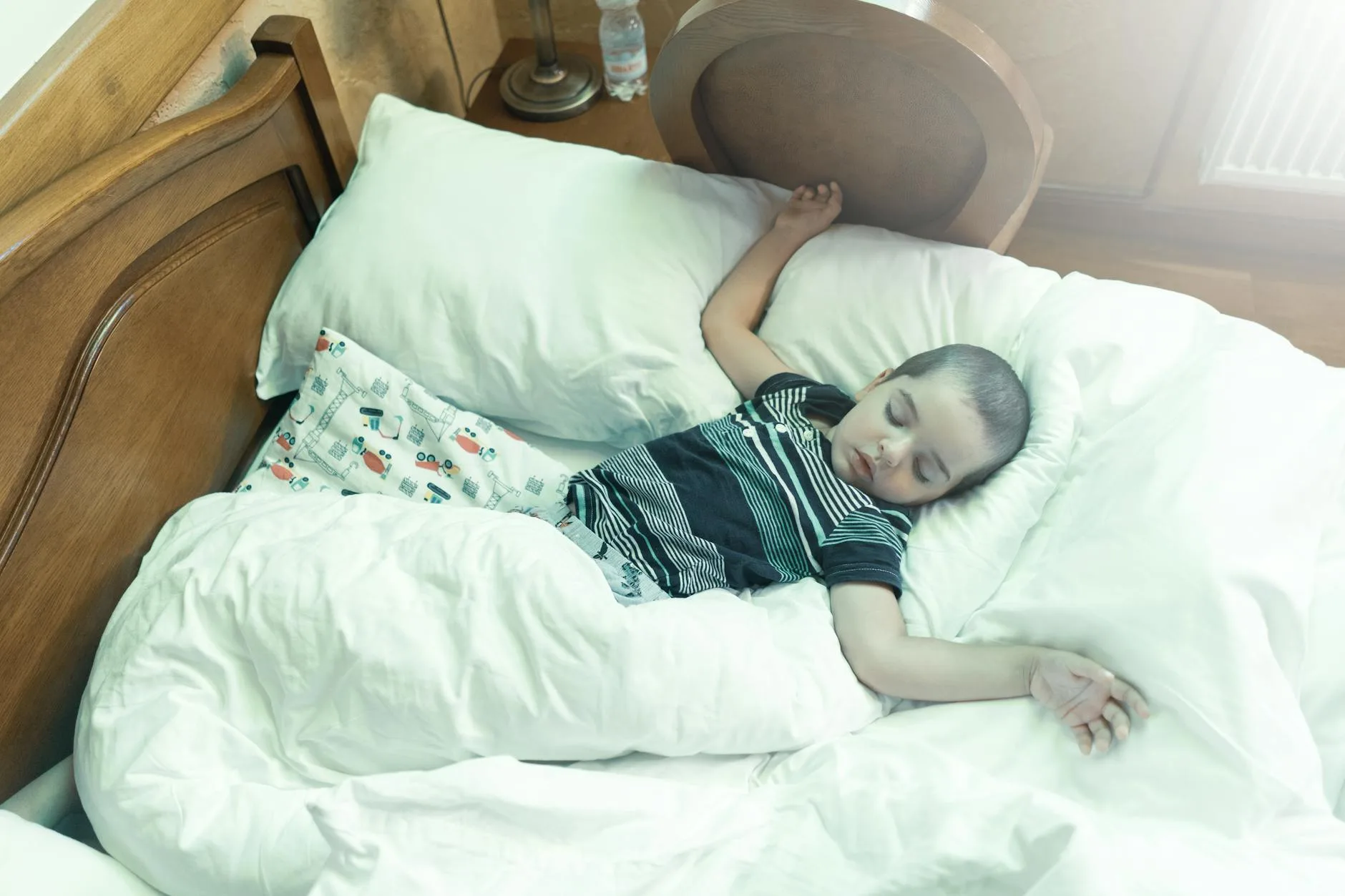
The Lullaby Trust, the UK’s leading safe sleep charity, recommends that babies sleep in a dark room. For toddlers, they acknowledge that a dim night light can be helpful for comfort and safety (navigating the room for toilet trips), provided it’s not bright enough to stimulate wakefulness. Their guidance focuses on keeping the room dark enough to support sleep while addressing the practical realities of toddlerhood.
When Night Lights Help
Fear of the Dark
Fear of the dark typically develops between ages 2 and 4, when imagination develops faster than the ability to distinguish between real and imaginary. Your toddler isn’t being dramatic — their brain is generating genuine fear responses to perceived threats in the dark. A night light that provides just enough illumination to see the room’s familiar shapes can prevent the fear from escalating into a full wake-up.
Night-Time Toilet Training
If your toddler is learning to use the toilet at night, some visibility is practical. Navigating from bed to the bathroom in complete darkness is hard enough for adults — for a half-asleep three-year-old, it’s a recipe for accidents and injuries. A dim hallway light or a low night light in the bedroom gives enough visibility for safe movement.
Room Sharing
If siblings share a room — particularly when an older toddler shares with a baby — a very dim night light can help the older child move quietly without disturbing the younger one. It also makes middle-of-the-night checks easier for parents without switching on the main light.
Bedtime Routine Transition
A night light can serve as a signal in the bedtime routine. Main lights off, night light on, story time, sleep. The consistent transition cue helps toddlers understand that the day is ending and sleep is coming. The light itself isn’t the sleep aid — the routine around it is.
When Night Lights Hinder
Too Bright
The most common mistake. Parents buy a cute projector night light that throws colourful stars across the ceiling — stimulating, engaging, and completely counterproductive. If your child is lying in bed watching the ceiling show, the night light is entertainment, not a sleep aid. If it’s bright enough to read by, it’s too bright.
Wrong Colour
White and blue-toned lights suppress melatonin. Many popular night lights — particularly novelty character ones — emit cool white light that actively interferes with sleep onset. Even at low brightness, the wavelength matters. For a related angle, see our Baby Monitor Battery Life: How Long Do They Last? guide.
Creating Dependency
Some children develop a sleep association with the night light — they literally cannot fall asleep without it. This becomes a problem when the light fails, the batteries die, or the family stays somewhere without it. If your child already sleeps well without a light, introducing one creates a dependency that didn’t need to exist.
Newborns and Young Babies
Babies under 6 months don’t fear the dark — they don’t have the cognitive development for it. Using a night light for a young baby is almost always for the parent’s convenience rather than the child’s need. While this is fine, be aware that any light in a baby’s room can interfere with the developing circadian rhythm. The room temperature guide matters more than lighting at this age.
Choosing the Right Night Light
Brightness
Less is more. You want enough light to see the outline of furniture — enough to prevent bumping into things — but not enough to read, play, or engage with the room. Most sleep consultants recommend under 10 lumens, which is roughly the brightness of a single candle. Many night lights are adjustable; start at the dimmest setting and only increase if your child specifically tells you they can’t see.
Colour Temperature
- Red/amber (1,800-2,200K) — best for sleep; minimal melatonin suppression
- Warm white (2,700-3,000K) — acceptable if dimmed very low
- Cool white (4,000K+) — avoid; suppresses melatonin even at low brightness
- Blue — the worst possible choice for sleep; maximum melatonin suppression
- Colour-changing/RGB — avoid unless it can be locked to red/amber
Timer vs Always-On
A timer that switches the light off after 30-60 minutes is ideal. Your child falls asleep with the light on, then sleeps in darkness for the rest of the night. This gives the comfort of the light during the transition to sleep without the melatonin suppression all night long. If your child wakes and the light is off, they learn to resettle in the dark — a valuable skill.
Types of Toddler Night Lights
Plug-In Night Lights
Plug directly into a wall socket. Simple, cheap (£5-15), and always powered. Good for hallways and landings. The downside: fixed position (wherever the socket is), and some run warm after extended use.
Portable Battery Night Lights
Rechargeable or battery-powered lights that sit on a bedside table or shelf. More flexible positioning and often dimmable. Prices range from £10-40. The best ones last 8-12 hours on a single charge — enough for a full night.
Projector Night Lights
Project patterns (stars, animals, shapes) onto the ceiling. Visually engaging, which is both the appeal and the problem. Good for settling anxiety during the wind-down period if used with a timer (30 minutes then off). Bad if left on all night, because the moving patterns stimulate visual attention. Our How to Wean Off Night Feeds: Gentle Methods guide is useful alongside this.
Wake-Up Clocks with Night Light
Combined devices that glow dimly at night and change colour (usually to green) when it’s acceptable to get up. The Groclock is the most popular UK example. These work well for toddlers who wake too early — the colour change teaches them to stay in bed until “morning.” The night light function is usually dim amber, which is appropriate.
Best Night Lights for Toddlers UK
- Best overall: Tommee Tippee Sleepee (about £20) — dim amber light, rechargeable, portable, adjustable brightness. Simple and effective
- Best for anxious toddlers: VAVA Night Light (about £18) — warm white, touch-activated brightness control, soft silicone housing that toddlers can cuddle
- Best wake-up clock: Groclock (about £25 from John Lewis or Amazon UK) — the UK standard for sleep training clocks, with a dim blue night light and green morning indicator
- Best budget: Auraglow plug-in (about £8) — dusk-to-dawn sensor, warm amber, auto on/off. Perfect for hallways
- Best for babies transitioning to a cot: GroEgg2 (about £15) — colour-changing room thermometer that doubles as a night light
Sleep Training and Night Lights
Night Lights as Part of Sleep Training
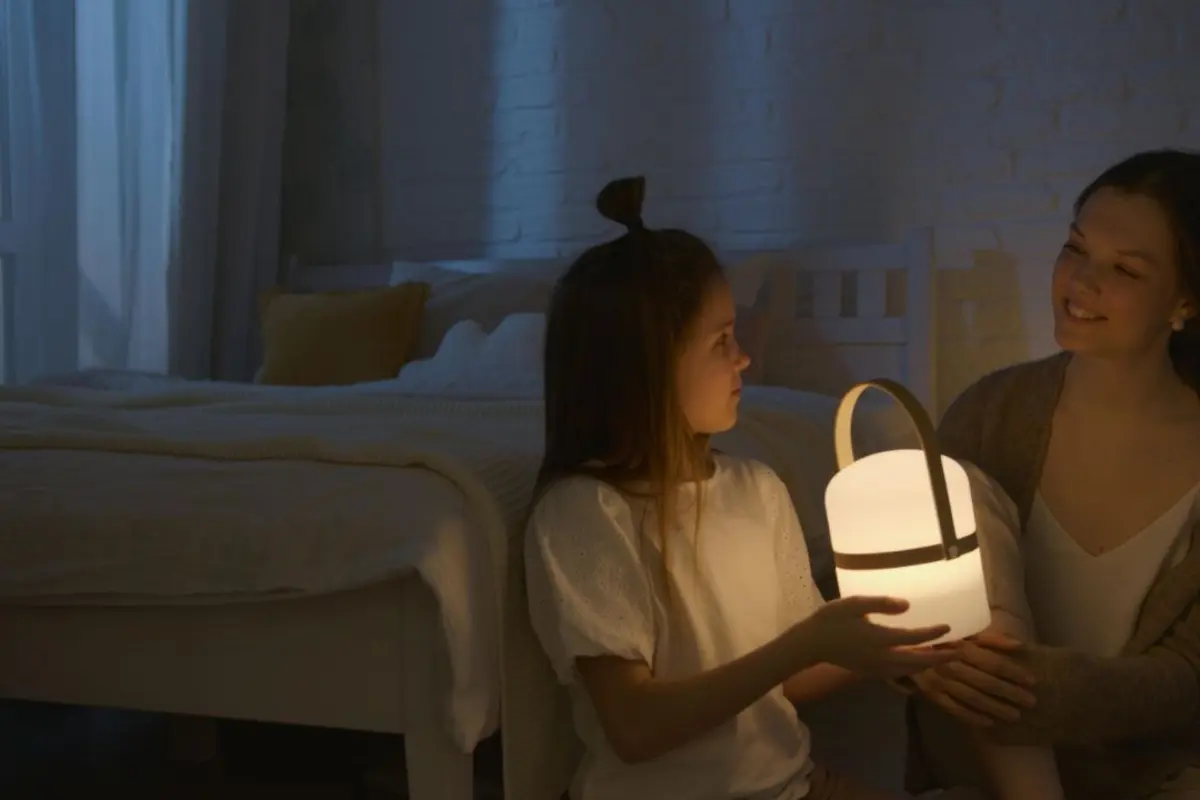
If you’re working on independent sleep (teaching your toddler to fall asleep without you in the room), a night light can be a useful transitional comfort object. It gives them something to focus on that isn’t you leaving. The key is making the light boring — a steady dim glow, not a dancing star projector.
Gradual Withdrawal
Some sleep consultants recommend starting with a brighter night light and gradually dimming it over weeks until the child sleeps in darkness. This works well for children who’ve become dependent on a bright light — sudden removal causes distress, but gradual reduction lets them adjust.
The Toddler’s Perspective
Children between 2 and 4 don’t understand the science of melatonin. What they understand is: “I feel scared in the dark and safe when I can see my teddies.” Respecting that feeling while gently guiding them toward darker sleeping conditions is the balanced approach. Nobody wins a battle against a toddler’s fear by turning off all the lights and closing the door.
When to Introduce a Night Light
Age Guidelines
- 0-6 months: Not recommended. Dark room, white noise, appropriate sleeping bag TOG rating. Night light only for parent’s nighttime feeds (use red/amber)
- 6-18 months: Only if needed for practical reasons (night feeds, nappy changes). Keep it dim and red/amber
- 18 months-3 years: Introduce if your child shows fear of the dark. Start with a timer so it switches off after sleep onset
- 3-5 years: The peak fear-of-dark age. A dim night light is completely reasonable and often helpful
- 5+: Most children grow out of needing a night light by school age, but there’s no rush — some adults sleep with one too
Signs Your Child Might Need One
- They resist going to bed specifically because of the dark (not general bedtime resistance)
- They call out or cry within minutes of lights-off, specifically mentioning being scared
- They sleep well with a light on but poorly without one
- They’ve started having nightmares that involve darkness
Alternatives to Night Lights
Blackout Curtains with a Dim Hallway Light
Keep the bedroom dark but leave a dim light in the hallway with the bedroom door ajar. This gives a sliver of light without putting a light source inside the room. Works well for children who need to see the doorway but don’t need to see the whole room.
Glow-in-the-Dark Stickers
Small glow-in-the-dark stars on the ceiling give a faint, comforting glow that fades naturally over 30-60 minutes. No batteries, no blue light, no dependency — just a gentle fade to darkness. Surprisingly effective for mild anxiety.
Comfort Objects
A favourite teddy or blanket provides psychological comfort without any light at all. For many toddlers, the issue isn’t darkness — it’s feeling alone. A comfort object addresses the emotional need without the melatonin trade-off.
Night routines often include water beside the bed, so spill-proof cups matter too. Our guide to the best sippy cups and straw cups compares toddler-friendly options.
Frequently Asked Questions
Do night lights affect toddler sleep quality? It depends on the light. Bright white or blue lights suppress melatonin and can reduce sleep quality. Dim red or amber lights (under 10 lumens) have minimal effect on melatonin and are unlikely to affect sleep. The colour and brightness matter far more than whether a light is present.
What colour night light is best for toddlers? Red or amber. These wavelengths have the least effect on melatonin production, meaning they provide comfort without interfering with the biological drive to sleep. Avoid blue, cool white, and colour-changing lights for overnight use.
Should I leave the night light on all night? Ideally, use a timer that switches the light off 30-60 minutes after your child falls asleep. This provides comfort during the transition to sleep while allowing the deepest sleep phases to occur in darkness. If your child wakes and is distressed without the light, a very dim always-on light is the next best option.
At what age do children stop needing night lights? Most children outgrow the need for a night light between ages 5 and 7, as their understanding of the world develops and fear of the dark diminishes. Some children never need one, and some use one well into primary school — both are normal. There’s no age at which you should force removal.
Can a night light help with nightmares? A night light can help a child orient themselves after waking from a nightmare — seeing familiar surroundings is reassuring. However, it doesn’t prevent nightmares, which are a normal part of brain development in toddlers and young children. If nightmares are frequent and distressing, speak to your health visitor or GP.