You can buy a decent everyday pushchair for under £200 in the UK, but you have to be clear about what you are giving up. The best budget pushchairs under £200 are usually lighter strollers and simple everyday buggies, not plush travel systems with huge wheels, carrycots and car-seat adaptors.
In This Article
- What Under £200 Can and Cannot Buy
- Best Budget Pushchairs Under £200
- How to Judge Safety, Fold and Everyday Handling
- Match the Pushchair to Your Child and Routine
- Where the Hidden Costs Appear
- Should You Buy Used Instead?
- Frequently Asked Questions
What Under £200 Can and Cannot Buy
The under-£200 pushchair market is better than it used to be. You can now get a lie-flat seat, a usable basket, a rain cover and a compact fold without buying something flimsy. What you cannot usually get is the smooth ride, deep suspension and modular newborn setup of a £700-£1,200 travel system.
That trade-off is fine if your expectations match the price. A £120 stroller can be brilliant for nursery runs, buses, holidays and grandparents’ cars. It is less convincing as your only pushchair for muddy parks, cobbled high streets and long newborn naps.
The sensible budget brief
For most families, a budget pushchair should do four things well:
- Fold without a fight: if you use buses, taxis or a small boot, the fold matters every day.
- Recline enough for naps: a near-flat or full lie-flat seat is useful for younger babies and tired toddlers.
- Steer cleanly on pavements: supermarket aisles and school gates should not feel like wrestling.
- Include the basics: rain cover, hood, basket and adjustable harness should not all cost extra.
If you need off-road performance, a parent-facing seat, a carrycot, car-seat compatibility and a one-hand fold, under £200 becomes tight. That is when you either buy used, wait for a sale, or step up to the £250-£450 bracket.
For a broader view of what changes as prices rise, our Best Pushchairs 2026 UK guide covers premium and mid-range models too. This article is deliberately narrower: budget pushchair choices under £200 for parents trying to keep the spend down without buying junk.
What I would not compromise on
Do not compromise on harness security, brake feel, frame stability or returns policy. A weak basket or basic hood is annoying. A brake that feels vague is a deal-breaker.
I would also avoid mystery marketplace brands with no clear UK support, no spare parts trail and no proper product page. Saving £30 is not worth it if you cannot get a replacement wheel or speak to anyone when the folding latch starts sticking.
Best Budget Pushchairs Under £200
Prices move quickly, especially during Argos, Boots, Smyths, John Lewis and Amazon UK promotions, so treat these as realistic UK price bands rather than permanent RRPs. The important part is the type of pushchair each one suits.
Best overall: Graco Myavo, about £150-£180
The Graco Myavo is the one I would check first if you want a light everyday stroller that still feels like a proper pushchair. It is usually around £150-£180 from Argos, Amazon UK and baby retailers, and Graco’s own Myavo product page positions it as a quick-folding travel stroller.
The reason it works is simple: it folds quickly, stands when folded, and is light enough for car boots and trains without feeling like a throwaway holiday buggy. It is not a rough-ground pushchair, but for pavements, shopping centres, nursery runs and travel, it hits the sweet spot.
Best for: families who want one budget stroller for everyday pavements and travel.
Watch out for: basket size and wheel comfort if you regularly walk on broken paths.
If I had under £200 and wanted a new pushchair rather than second-hand, this is the first model I would shortlist.
Best roomy stroller: Silver Cross Pop 2, about £195
The Silver Cross Pop 2 often sits right on the budget line at about £195. Silver Cross lists the Pop 2 Space stroller with a lie-flat seat, umbrella fold, 22kg suitability and included rain cover, which is a strong spec for the money.
The Pop 2 makes sense if your child is tall, you want a more established UK brand, or you prefer an umbrella-style stroller that feels familiar. It is not the smallest fold, but it is roomy and practical.
Best for: toddlers, taller children and parents who want a known-brand stroller under £200.
Watch out for: the umbrella fold is long, so measure your boot if you drive a small car.
At £195 it is not the cheapest option, but the included rain cover and higher weight limit help the value stack up.
Best cheap-and-cheerful second buggy: Joie Nitro, about £80-£120
The Joie Nitro is often seen around £80-£120 depending on colour and retailer. It is the kind of stroller that works well as a second pushchair for holidays, grandparents, nursery pickup or occasional town use.
Do not expect luxury. The handles, wheels and fabrics feel more basic than a £180 stroller. But Joie generally does sensible, practical baby kit, and the Nitro’s appeal is that it is light, simple and easy to stash.
Best for: a spare stroller, travel backup or occasional use.
Watch out for: comfort on longer walks and rough paths.
If this is your only pushchair and you walk daily, I would spend more if you can. If it is a backup, it can be a very useful buy.
Best supermarket/Argos-style bargain: Cuggl and own-brand strollers, about £45-£90
Argos’ Cuggl strollers and similar own-brand models can dip below £70. They are not glamorous, and nobody will mistake them for a Bugaboo, but some are perfectly serviceable for short trips.
The big caveat is longevity. Cheap wheels, thin padding and basic hoods show their limits quickly if you use the pushchair every day. I would only buy one as a temporary solution, holiday buggy or grandparent spare.
Best for: occasional use where low cost matters more than comfort.
Watch out for: small wheels, short handles and missing accessories.
If the difference between £70 and £150 is manageable, I would rather buy the better stroller once. If the budget is fixed, buy from a retailer with easy returns and inspect the brake, fold and wheels the moment it arrives.
Best if you spot a sale: Ickle Bubba, Kinderkraft or Hauck models, about £120-£200
Ickle Bubba, Kinderkraft and Hauck often have pushchairs and compact strollers in the £120-£200 range. The exact model matters more than the brand. Some are good-value travel strollers; others are bulky for what they offer.
Look for the included kit. A £179 stroller with rain cover, bumper bar and good basket may beat a £149 stroller that needs £50 of extras. Also check the folded size in centimetres, not just the word “compact”.
Best for: sale hunters who can compare specs patiently.
Watch out for: vague retailer listings that omit weight, folded size or age suitability.
This is where screenshots help. Save the model name, price and included accessories before buying, because sale pages change and returns conversations are easier when you can prove what was listed.
How to Judge Safety, Fold and Everyday Handling
A budget pushchair should still feel safe and predictable. Cheap does not have to mean wobbly.
Check the brake like you mean it
In a shop, put the brake on and rock the pushchair gently. It should engage clearly and release without sticking. If you are buying online, test it indoors before cutting off tags or using the pushchair outside.
The brake pedal should be easy to use in trainers and sensible shoes. Tiny, stiff pedals are a pain when you are holding a changing bag and trying to stop the buggy rolling on a sloped pavement.
Look at the harness and recline
A five-point harness is standard, but the feel varies. Check that the straps adjust easily and that the buckle is not so fiddly you dread using it. Babies grow quickly, and a harness that is annoying on day one rarely becomes charming later.
For younger babies, recline matters. A full lie-flat or near-flat seat is better for naps and early months. If the stroller is only suitable from six months, do not use it for a newborn just because the price is tempting.
For car-seat rules and age-stage safety, our UK baby car seat safety guide is worth reading alongside pushchair research if you are building a whole travel setup.
Fold it with one hand, then fold it when annoyed
A pushchair fold that looks easy in a product video can be irritating in real life. Try the fold while holding a bag. Try lifting it into the boot. Check whether it stands up, locks shut, or flops open.
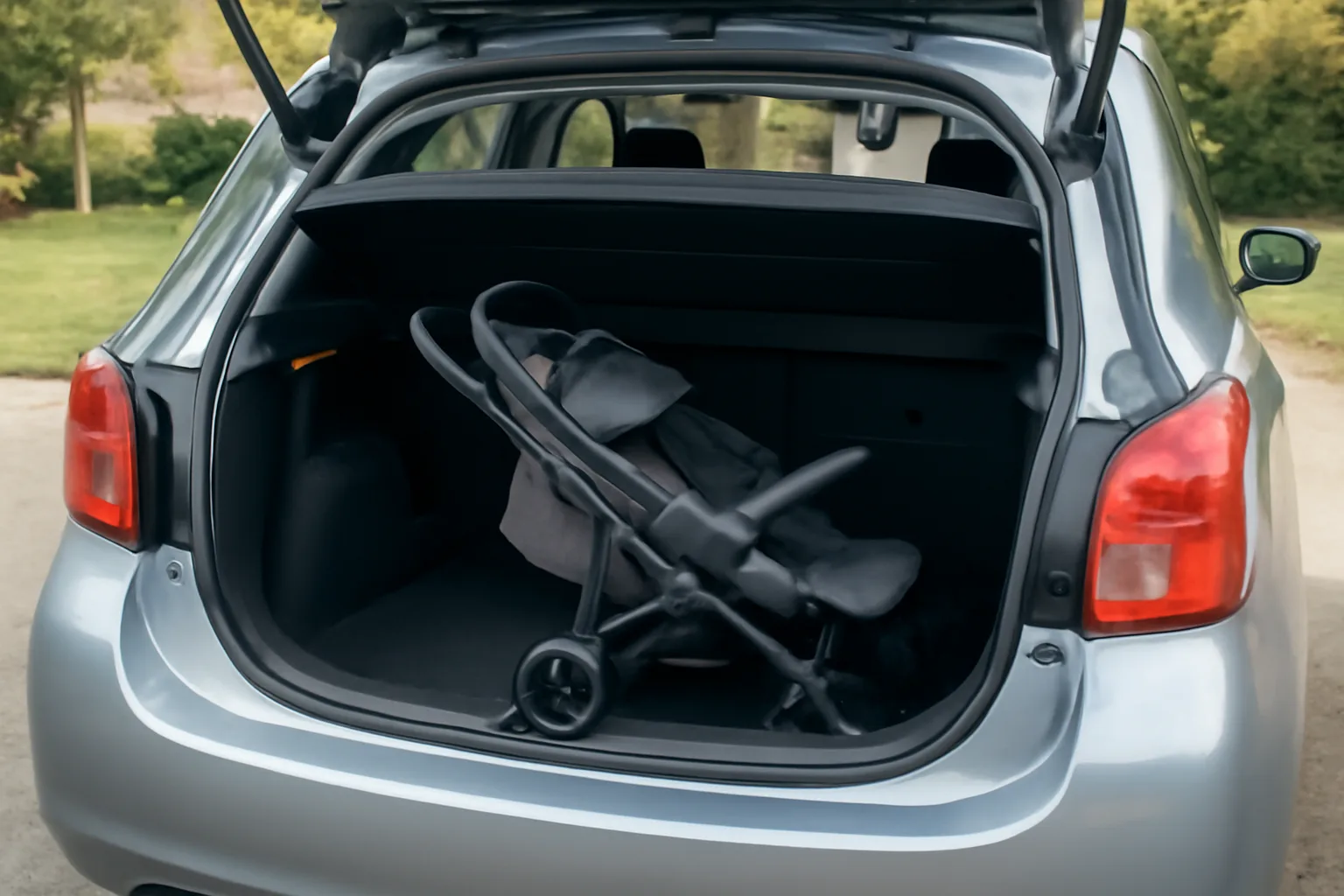
If you use buses or trains, weight matters more than you think. The difference between 6kg and 9kg is obvious when you are carrying the buggy up station steps. For daily car use, folded size may matter more than weight.
Wheel size tells you where it belongs
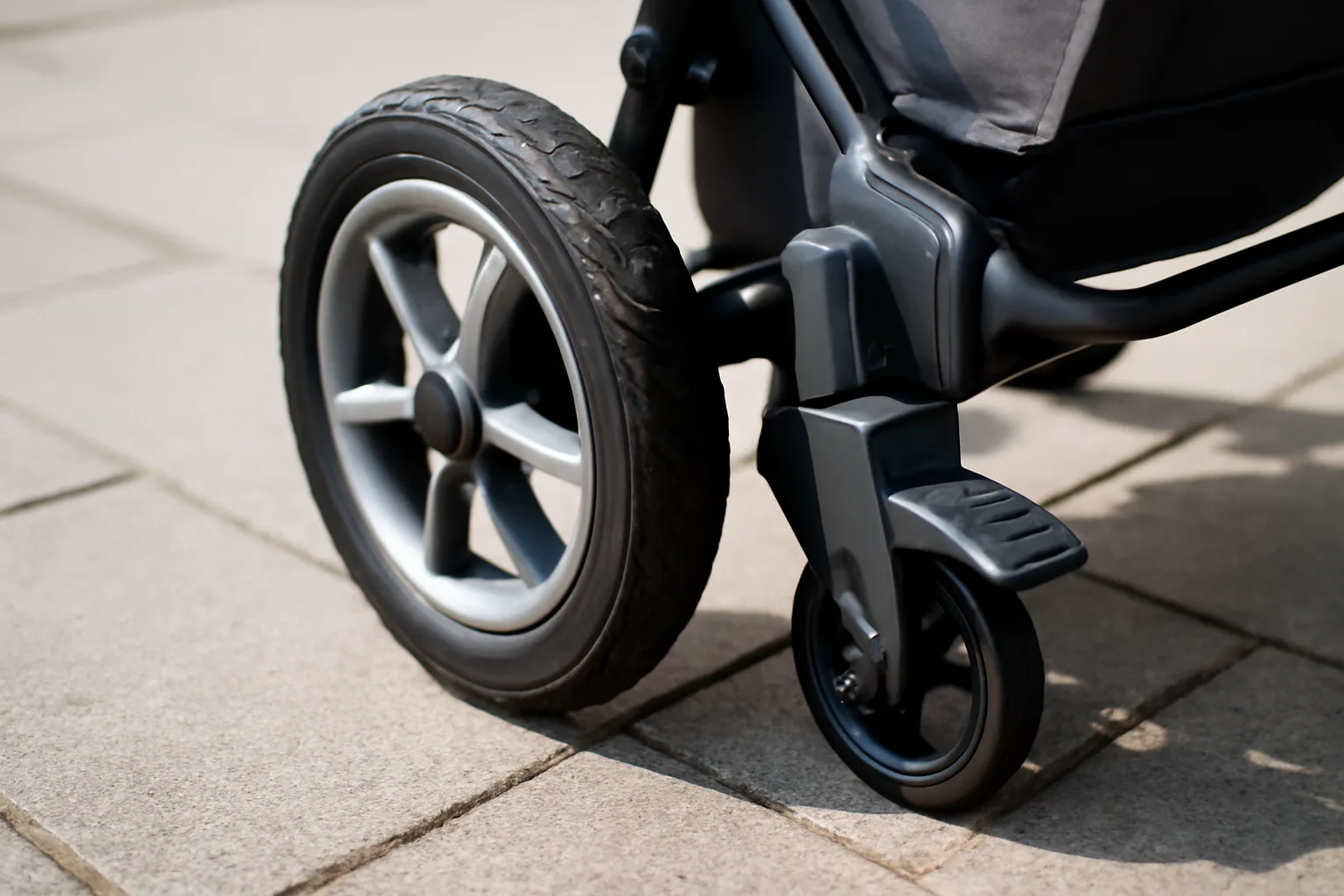
Small wheels are fine for smooth pavements, shops and travel. They are poor on gravel, grass, potholes and winter paths. Bigger wheels and better suspension cost more, so be realistic about where you walk.
If you regularly use parks, rural lanes or beach paths, read our all-terrain pushchair guide before buying a cheap stroller. A budget city buggy will not magically become an all-terrain pushchair because the marketing says “adventure”.
Match the Pushchair to Your Child and Routine
The best under-£200 pushchair depends less on the product score and more on your daily pattern. A nursery-run buggy and a newborn main pushchair are not the same brief.
Newborns need more than a cheap seat
If your baby is newborn or under six months, check age suitability carefully. Some budget strollers lie flat and are suitable from birth; others are not.
You may be better with a second-hand travel system from a reputable brand if you need parent-facing use, carrycot naps and car-seat adaptors. Buy the car seat new unless you know its full history, but a used frame and carrycot can make sense if they are clean, complete and not damaged.
Our first-time pushchair checklist covers those bigger decisions in more detail. Under £200 is possible for some newborn setups, but it is not the easiest route.
Toddlers need seat space and weight capacity
For toddlers, look at the maximum child weight and the seat back height. Many good strollers now go up to 22kg, which helps if you have a tall three-year-old who still naps on longer days out.
Footrest support matters too. A tired toddler with dangling legs gets grumpy quickly. The Silver Cross Pop 2 is strong here because it is roomy and has a supportive seat for the price.
Travel needs a different checklist
For holidays, the key questions are folded size, carry strap, weight and whether you need cabin-size compatibility. Many under-£200 strollers are travel-friendly but not airline cabin-approved.
If flying is part of the plan, check the airline rules before buying. Our guide to flying with a pushchair explains gate-checking, bags and what usually happens at UK airports.
Do not buy purely for a holiday if it will annoy you for the other 50 weeks of the year. A slightly larger stroller that works every day is better value than a tiny travel buggy that feels poor at home.
Where the Hidden Costs Appear
A pushchair listed at £149 is not always cheaper than one listed at £189. Accessories, delivery, returns and spare parts can change the real cost.
Check what is in the box
Before buying, check whether the price includes:
- Rain cover: often £20-£35 if bought separately.
- Bumper bar: useful for toddlers, often £20-£40.
- Footmuff: nice in winter, usually £35-£80.
- Cup holder or organiser: optional, but still £10-£30.
- Travel bag: useful for flights, often £20-£50.
UK weather makes a rain cover close to non-negotiable. If a £160 pushchair includes one and a £135 model does not, the cheaper one may not be cheaper for long.
Retailer support matters
Buying from Argos, John Lewis, Boots, Smyths or a known baby retailer gives you a clearer returns route than buying from a random marketplace seller. That matters with budget pushchairs because small defects are more common: wheel wobble, stiff fold, missing rain cover, scratched frame.
Open the box carefully, assemble it indoors and check every moving part before using it outside. Once the wheels have pavement marks, returns become harder.
Spare parts are part of value
Budget pushchairs live hard lives. Wheels wear, rain covers split, baskets tear and handle foam gets chewed by car boots.
Before buying, search for the model name plus “spare wheel”, “rain cover” and “manual”. If nothing useful appears, that is a warning sign. A £170 stroller with spare parts available can outlast a £120 bargain that becomes landfill when one wheel fails.
For cleaning and keeping fabric usable, our guide to cleaning and maintaining your pushchair will save you money later. Dirt and grit make cheap folds feel worse than they are.
Should You Buy Used Instead?
Used pushchairs can be excellent value. A £500 model at £150-£220 used may give you a smoother ride, better fabrics and stronger accessories than a new budget stroller.
The risk is condition. Pushchairs hide wear in wheels, folding joints, brakes and harnesses. A freshly wiped frame can still have a sticky fold or a brake that only half-engages.
Used makes sense when you can inspect it
Second-hand is worth considering if:
- You can see it in person: test the fold, brake, recline and steering.
- The seller has all parts: rain cover, bumper bar, adaptors, manuals and basket.
- The frame is not bent: check from front and side.
- The wheels run true: no wobble, grinding or flat spots.
- The harness is complete: no missing pads, frayed straps or broken buckle.
Facebook Marketplace and local parent groups can be good, but do not rush because a listing says “collection today”. There will be another pushchair.
New is better for warranty and simplicity
Buy new if you need a clear warranty, easy returns, clean fabric from day one, or a pushchair for a grandparent who does not want second-hand hassle.
New also makes sense if the price gap is small. A used stroller at £130 with no rain cover is not a bargain if the new version is £170 with the cover and warranty included.
My bottom line
If your maximum budget is £200, I would first look for a new Graco Myavo or Silver Cross Pop 2 deal. If you need a fuller newborn setup or rougher-ground performance, I would buy a used higher-tier pushchair frame from a known brand and inspect it carefully.
Do not let the price do all the thinking. The right budget pushchair is the one that fits your child, your boot, your pavements and your patience.
Frequently Asked Questions
Can you get a good pushchair for under £200? Yes, especially if you want a lightweight stroller for pavements, travel, nursery runs or a toddler. Under £200 is harder if you need a full newborn travel system, parent-facing seat or all-terrain wheels.
What is the best budget pushchair under £200? The Graco Myavo is the first one I would check for most families because it balances price, fold, weight and everyday use well. The Silver Cross Pop 2 is better if you want a roomier stroller and find it near £195.
Are cheap pushchairs safe? Cheap pushchairs can be safe if they come from a reputable brand or retailer, have a secure harness, stable frame and reliable brake. Avoid unknown listings with vague specs, no clear returns route and no spare parts support.
Should I buy a used pushchair or a new budget one? Buy used if you can inspect a better-quality model in person and all parts are included. Buy new if you want warranty cover, easy returns, clean fabric and less risk.
Can an under-£200 pushchair be used from birth? Some can, but only if the manufacturer says the seat is suitable from birth and it reclines properly. Many cheap strollers are better from six months, so check before buying for a newborn.
What extras should I budget for? Budget for a rain cover if it is not included, plus a footmuff for winter, a travel bag for flights and possibly a cup holder or organiser. Extras can add £30-£120 to the real cost.