A booster seat is doing its job only if the adult seatbelt sits on the strong parts of your child: shoulder, chest and pelvis. These booster seat fit checks – belt position first, head support second, then the real car you are using – take under a minute and catch most of the mistakes that make older-child seats less protective on UK journeys.
In This Article
- Booster Seat Fit Checks: Belt Position First
- Shoulder Belt Position: What Good Looks Like
- Lap Belt Position: Low, Flat and Not on the Stomach
- Head Support and Sleeping Slump Checks
- Car Compatibility Checks Before UK Trips
- Backless vs High-Back Boosters: The Sensible UK Choice
- Practical Products and What They Cost in the UK
- Frequently Asked Questions
Booster Seat Fit Checks: Belt Position First
The quick routine before you drive
The best check is boring, repeatable and done with the child actually sitting in the car, not standing next to the seat in the shop. Ask them to sit with their bottom right back, shoulders against the booster, knees bending naturally over the vehicle seat edge if possible, and feet resting somewhere stable.
Then look at the belt. The diagonal belt should cross the middle of the shoulder and chest. The lap belt should sit low across the pelvis, touching the tops of the thighs, not riding over the soft stomach. If either part looks wrong, the booster is not giving the adult belt the geometry it needs.
I would do the check in this order:
- Child sitting properly: bottom back, back upright, no twisting, no knees tucked up.
- Shoulder belt centred: not on the neck, not slipping off the shoulder, not trapped under the arm.
- Lap belt low: flat across the hip bones and upper thighs, never across the tummy.
- Head supported: ears within the headrest area, with the booster headrest adjusted for growth.
- Belt retracts freely: pull it out and let it feed back. It should not jam in the booster guide.
That is the whole point of a booster. It is not a cushion for height, even though cheap backless boosters can make it look that way. It is a belt-positioning device. If the belt is wrong, the seat is wrong for that child, that car, or that seating position.
Why the car matters as much as the booster
The same booster can fit well in one car and badly in another. Seatbelt anchor height, buckle stalk length, rear-seat slope and headrest shape all change the belt path. A booster that works in your Skoda Octavia might sit awkwardly in a grandparent’s Fiat 500, especially if the buckle is long and pushes the lap belt up.
This is why I would never buy a booster purely from an online listing without checking the vehicle fit list or trying it in the car. For the wider buying decision, our how to choose a baby car seat guide covers standards, stages and installation types. Booster fit is narrower: the child and adult belt have to work together in the actual seat position you will use.
UK law requires children to use a suitable child restraint until they are 12 years old or 135cm tall, whichever comes first, and the seat must be fitted correctly for the child. The RAC’s child seat law guide is useful for the legal baseline, including the 135cm rule and the warning that unsuitable or incorrectly fitted seats can lead to a fine of up to £500: RAC child car seat laws.
Shoulder Belt Position: What Good Looks Like
The belt should cross the shoulder, not the neck
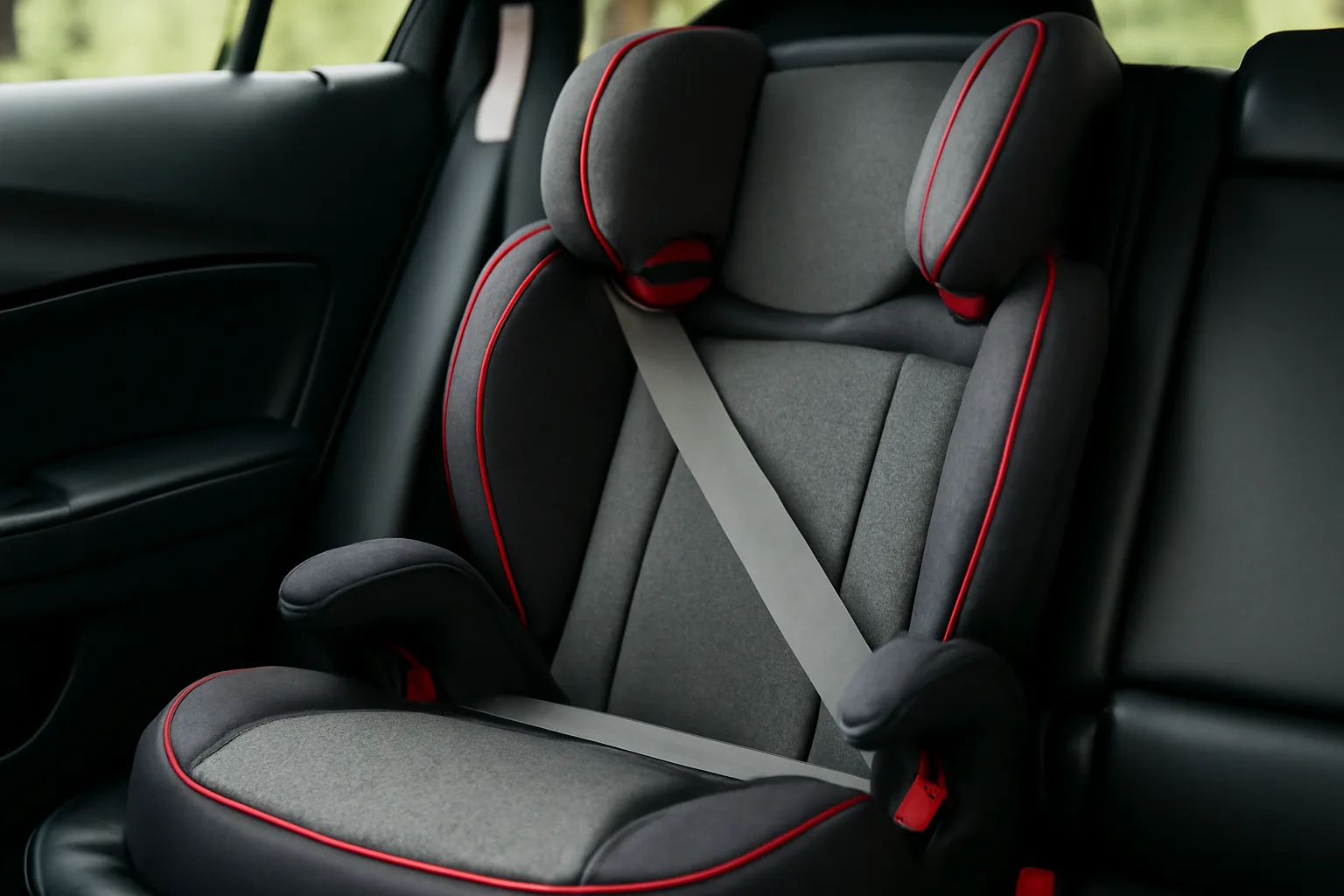
The diagonal belt should sit midway between the neck and the outside edge of the shoulder. It should lie flat across the collarbone and chest, then run down to the buckle without pulling the child sideways. If the belt is digging into the neck, most children will wriggle away from it. If it is sitting on the outer arm, it may not restrain the upper body properly in a crash.
The shoulder guide on a high-back booster is there to manage that path. Adjust the headrest until the guide is just above the shoulder, then thread the belt through the guide exactly as the manual shows. Too low and the belt can drag on the shoulder. Too high and the belt may float away from the chest.
Never allow the under-arm shortcut
The classic older-child trick is putting the shoulder belt under the arm because it feels less annoying. It is also one of the clearest signs the fit is wrong or the child is not ready to sit without reminders. Under-arm routing turns a three-point belt into something closer to a lap belt with a diagonal strap doing very little useful work.
For a child who keeps doing it, do not just nag. Check why:
- Belt rubbing neck: headrest or shoulder guide may be too low or the booster may not suit that car.
- Child slumping: the seat base may be too deep, or the child may need better head support for longer trips.
- Buckle awkward to reach: long buckle stalks can pull the belt path forward and make the belt uncomfortable.
- Seat too wide or narrow: some boosters hold smaller children poorly even when the height range looks right.
If the child cannot keep the belt on the shoulder for the whole journey, they still need a setup that does more of the positioning work for them. That might mean a different high-back booster, a different seating position, or waiting before moving out of a harnessed seat.
Lap Belt Position: Low, Flat and Not on the Stomach
The lap belt is the bit parents miss
Most parents check the shoulder belt because it is obvious. The lap belt is easier to overlook because it disappears across coats, school jumpers and hoodie pockets. It matters just as much.
The lap belt should sit low across the pelvis, not across the abdomen. The pelvis can handle belt force far better than the soft stomach area. RoSPA’s seatbelt advice says the lap belt should go over the pelvis, not the soft stomach, and fit as tightly as possible: RoSPA seatbelt advice factsheet.
In plain terms: if the belt is across the belly button, stop and fix it.
How to check it without making it a drama
Ask your child to lift their jumper or coat edge so you can see the belt, then place two fingers on each hip bone. The lap belt should run across that line, touching the top of the thighs. It should not be loose enough to pull forward into a big loop.
Watch for these problems:
- Booster too low: the belt still crosses the stomach, so the child may need a taller or better-shaped booster.
- Child sitting forward: the lap belt rides up as soon as the bottom comes away from the backrest.
- Bulky coat: padding hides slack and lets the belt sit higher than you think.
- Buckle stalk too long: the buckle pulls the lap belt up and away from the pelvis.
The coat issue is not just for babies in harnessed seats. Older children in boosters can create belt slack with thick puffa coats too. On cold UK school runs, I would rather heat the car for two minutes, belt the child over normal clothing, then put the coat backwards over them or use a blanket for the first part of the journey.
Head Support and Sleeping Slump Checks
High-back boosters protect more than the belt path
A high-back booster gives the adult belt a better route, but it also gives the child head and side support. That matters on longer trips because tired children slump. Once a child leans sideways or folds forward, the belt position you checked on the driveway may not be the belt position they have on the M4 an hour later.
The headrest should sit so the child’s head is protected by the side wings, with the shoulder belt guide close to shoulder height. A good quick check: the top of the ears should sit within the headrest area, not above it. If the child has shot up since you last adjusted the booster, the shoulder belt may be too low even though the seat still technically covers the right height range.
Sleep is the real test
Short school runs can hide a poor booster fit. Long trips expose it. If your child falls asleep and their head drops forward, the shoulder belt may move towards the neck or off the shoulder. Some premium boosters handle this better with a reclining headrest or better side wings.
This is where I have a strong preference: for regular motorway trips, I would choose a high-back booster with proper head support over a cheap backless booster every time. Backless boosters are legal for the right size child, but they do not give head support, side wings or a shoulder guide. They are better as emergency or occasional seats than the main family-car option.
For younger children still in rear-facing seats, our rear-facing car seat guide covers the separate question of when to turn forward. For booster-age children, the issue is different: they are using the adult belt, so their posture has to stay sensible for the whole journey.
Car Compatibility Checks Before UK Trips
Check every car, not just your own
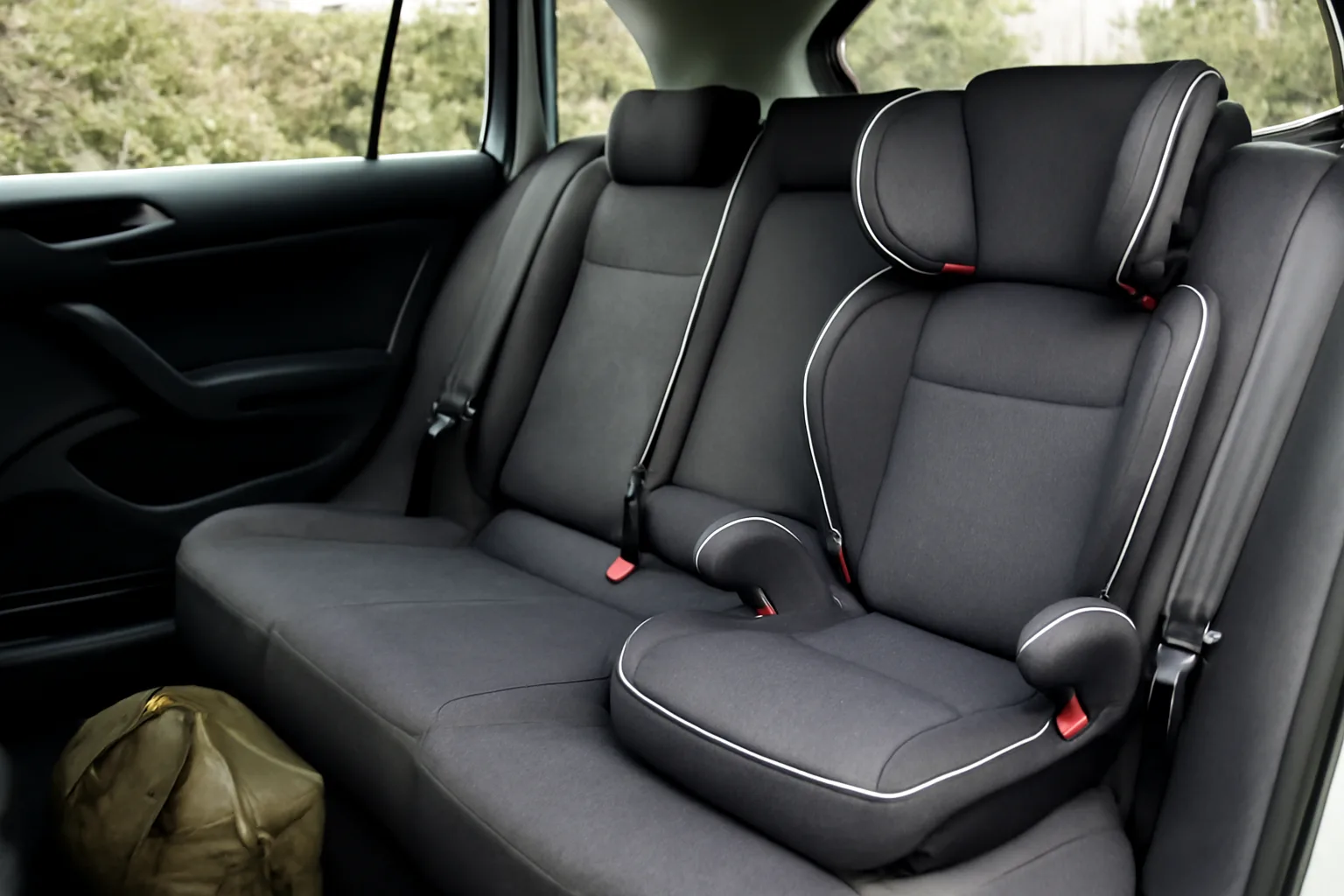
Booster problems often appear when the routine changes: grandparents collecting from school, a hire car on holiday, a taxi to the airport, or squeezing three children across the back for a weekend away. The seat that lives in your main car might be fine there and poor somewhere else.
Before a proper trip, do a five-minute test in the exact car:
- Seatbelt type: a booster needs a three-point lap-and-diagonal belt. A lap-only belt is not suitable for booster use.
- Buckle access: your child must be able to buckle without twisting the belt or trapping it under the booster.
- Headrest clash: vehicle headrests can push a high-back booster forward unless removed or adjusted, if the manual allows.
- Door-side risk: if the child sits behind the driver on a busy road, can they get in and out safely from the pavement side?
- Three-across pressure: neighbouring seats must not shove the booster sideways or block the belt buckle.
RoSPA says the middle rear seat is safest if it has a three-point belt and the child restraint maker allows that seating position, because it is furthest from the sides of the car. If it does not work, the rear passenger-side seat is often easier for pavement-side loading. That fits our practical experience too: a theoretically safer middle seat is not safer if the belt route is poor or the buckle is impossible to use.
If you are dealing with three seats across the back, read our three car seats across guide before buying another booster. Width, buckle stalks and ISOFIX points matter more than the product photos suggest.
Taxis, hire cars and holiday journeys
For UK taxis and minicabs, the law has exceptions when the driver does not provide the correct child restraint, but I would treat those exceptions as a fallback, not a plan. A compact travel booster can be useful for older children, provided it fits the child and the car belt properly.
For trips abroad, check the local rules before relying on a UK seat. Our guide on using a car seat on an aeroplane covers the flying side, but the car journey after landing is where booster fit often gets messy. Hire cars can have short belts, odd buckle positions and rear headrests that clash with high-back boosters.
Backless vs High-Back Boosters: The Sensible UK Choice
The legal answer is not the full answer
Backless boosters are legal for some older children, but that does not make them the best everyday choice. Since 2017, new backless boosters have only been approved for children who are taller than 125cm and weigh more than 22kg. That rule is about minimum approval, not best fit.
A high-back booster is usually the better main seat because it gives:
- Shoulder-belt guidance: helpful in cars where the belt comes from a high or awkward anchor point.
- Head support: useful when children sleep on longer journeys.
- Side-impact structure: extra protection around the head and upper body.
- More consistent posture: children are less likely to lean out of position.
The drawback is size. High-back boosters are bulkier, harder to move between cars and not always easy to fit three across. But for a primary family car, I would start with a high-back model and only use a backless booster when portability is the main constraint and the child is comfortably within the correct size range.
When a backless booster makes sense
A backless booster can make sense for a taller older child on occasional short trips: a friend’s parent doing school pickup, a taxi ride, or a holiday transfer where carrying a full high-back seat is unrealistic. It is not what I would choose for a 100cm child starting booster life.
The key is still fit. If the shoulder belt cuts across the neck or the lap belt sits on the stomach, the backless booster is not good enough in that car.
For broader seat comparisons, our ISOFIX vs seatbelt car seat guide is worth reading because ISOFIX on boosters is often misunderstood. On many high-back boosters, ISOFIX mainly holds the empty booster in place and improves stability; the adult belt still restrains the child.
Practical Products and What They Cost in the UK
The everyday family-car pick
For a main booster, my sensible pick is a high-back R129/i-Size model that covers roughly 100-150cm. The Britax Romer Discovery Plus 2 is a strong value option at about £139 direct from Britax, and its narrower shape makes it more realistic if you sometimes need two seats beside it. It is approved for 100-150cm and around 3.5 to 12 years.
The Cybex Solution G2 i-Fix is another good family choice at £129.95 from John Lewis at the time checked. It folds, which is useful if a booster moves between cars, and it still keeps the high-back structure I prefer for longer journeys.
If comfort and sleep posture matter more than compactness, the Cybex Solution T i-Fix is about £159.95 from John Lewis. It is wider than some rivals, so I would not buy it blind for a narrow rear bench, but the headrest and side support make sense for motorway-heavy families.
Budget and occasional-use options
At the budget end, the Halfords Sable R129 High Back Booster was listed at £34.99 in the current Halfords sale, with a usual price of £50. That is the kind of seat I would consider for a second car or grandparent car, as long as the fit check passes and the child sits well in it.
The Graco Junior Maxi i-Size is often around £47.99 on Amazon UK. It is not fancy, but cupholders and light weight make it parent-friendly, and the price is hard to argue with for occasional use.
For travel, inflatable or folding boosters such as BubbleBum-style products can be useful at roughly £30-£45, but I would reserve them for older children and short-term use. They solve luggage and taxi problems. They do not solve sleeping slump, shoulder guidance or side support as well as a proper high-back booster.
What I would avoid
I would avoid buying a backless booster for a child just because it is cheap. A £15 cushion-style booster may be legal for the right child, but it gives you very little help with head support or shoulder-belt positioning. If the child is still small enough that you are worrying about belt fit, spend the extra money on a high-back booster.
I would also avoid second-hand boosters unless you know the full history. A booster that has been in a crash, has missing belt guides, or is outside its usable lifespan is not worth saving £40 on. Our car seat expiry and recall checker explains how to inspect labels before reusing any child seat.
Common booster seat fit mistakes
Mistake 1: moving up too early. The worst time to move into a booster is when a child has only just scraped into the minimum height or weight range but still cannot sit correctly. Booster readiness is behavioural as well as physical. If they lean forward, put the belt under the arm, twist around to talk, or fall asleep in a heap, they may still be better in a harnessed seat that fits their size.
Mistake 2: treating ISOFIX as the restraint. On many boosters, ISOFIX does not replace the adult belt. It keeps the booster connected to the car, especially when empty, and can make the seat feel more stable. The vehicle belt still secures the child. That means the shoulder and lap belt checks still matter on every journey.
Mistake 3: ignoring buckle crunch. Buckle crunch is where the buckle or buckle stalk sits awkwardly against the booster shell or belt guide, rather than the belt webbing taking the load cleanly. It can happen in cars with long buckle stalks. If the buckle is being pulled up into the belt path, change seating position or try another booster.
Mistake 4: letting comfort accessories interfere. Aftermarket belt pads, clips, cushions and positioners can look harmless, but if they change how the belt sits, they can undermine the booster. Use only accessories approved by the booster manufacturer. For mirrors, protectors and other extras, our car seat accessories guide separates useful kit from things I would skip.
Mistake 5: failing to re-check after growth spurts. Children can outgrow a booster setting quickly. The seat may still be within its official range, but the headrest can be two clicks too low by the time you notice school trousers are suddenly short. Check the headrest and belt guide once a month, and always before a long journey.
The bottom line: a booster seat fit check is not a one-off job when you buy the seat. It is a quick habit. Child sits back, shoulder belt centred, lap belt low, head supported, belt moving freely. Do that every time the car or child changes, and you will avoid most of the real-world mistakes that make boosters less protective.
Frequently Asked Questions
What is the quickest booster seat fit check? Check that your child sits back, the shoulder belt crosses the middle of the shoulder and chest, the lap belt sits low on the hips, the head is supported, and the belt retracts freely through the guide.
Where should the lap belt sit on a booster seat? The lap belt should sit low across the pelvis and upper thighs, not across the stomach. If it crosses the belly, the booster, car seat position or child posture needs fixing before you drive.
Is a high-back booster better than a backless booster? For regular family-car use, yes. A high-back booster usually gives better shoulder-belt routing, head support and side protection. A backless booster is better kept for older children and occasional travel use.
Can a booster seat use a lap-only belt? No. A booster needs a three-point lap-and-diagonal belt because the adult belt restrains the child. A lap-only belt cannot provide the shoulder restraint a booster-age child needs.
How often should I adjust a high-back booster headrest? Check it monthly and before any long trip. The belt guide should sit just above the shoulder, and the child’s head should stay within the headrest protection area.
When can a child stop using a booster seat in the UK? UK law says children need a suitable child restraint until they are 12 years old or 135cm tall, whichever comes first. Some families keep using a high-back booster beyond the legal minimum if the adult belt still fits poorly.