Safe baby sleep is less about buying clever kit and more about getting the basics right every single time: a clear, flat, firm space, baby on their back, and no loose extras in the cot. The Lullaby Trust guidelines are reassuringly simple once you strip away the product noise, but shops make it easy to overbuy things that look cosy and add risk.
In This Article
- The Lullaby Trust Safe Sleep Basics
- Cot, Crib, Moses Basket or Bedside Crib?
- Mattress and Sheets: What Safe Really Means
- Bedding, Temperature and What Baby Should Wear
- Room Sharing and Where to Put the Sleep Space
- Products to Avoid, Even If They Look Helpful
- What a Safe Sleep Setup Costs in the UK
- Night and Nap Checklist
- Frequently Asked Questions
The Lullaby Trust Safe Sleep Basics
The safest setup is also the plainest one. The Lullaby Trust safer sleep advice says babies should sleep in their own clear, flat, firm, separate sleep space, in the same room as an adult for at least the first six months. That means a cot, crib or Moses basket with a suitable mattress. Not a sofa. Not a pod. Not a sleepyhead-style nest on top of your bed.
The headline rules are:
- Back to sleep: put your baby down on their back for every sleep, including daytime naps.
- Clear cot: no pillows, duvets, bumpers, loose toys, positioners or bulky bedding.
- Firm mattress: use a flat, firm, waterproof mattress that fits the sleep space properly.
- Same room: keep the sleep space in your room for the first six months, day and night where practical.
- Comfortable temperature: aim for a room that is neither chilly nor hot, with the Lullaby Trust commonly advising 16-20°C.
Those points matter more than brand choice. A £99 Chicco Next2Me Essential from John Lewis can be a safer setup than a £279 premium crib if the cheaper one is assembled correctly, has the right mattress, and is kept clear. The reverse is also true: an expensive crib becomes unsafe if it is filled with bumpers, pillows and a thick blanket.
The rule I would not bend
I would not use any product that asks a baby to sleep on an incline, in a soft nest, or held in one position unless a qualified medical professional has specifically told you to. That includes products sold with very soothing marketing. If the item is not a flat, firm sleep surface designed for unattended baby sleep, treat it as supervised-awake kit, not a cot substitute.
Cot, Crib, Moses Basket or Bedside Crib?
The right sleep space depends on your room size, budget and how long you need it to last. The safety principles stay the same, so the decision is mostly practical.
Bedside cribs
A bedside crib suits newborn months because it keeps the baby close without putting them in the adult bed. That helps with night feeds and settling, especially after a caesarean or a rough birth. Current UK prices sit roughly from £99 for a Chicco Next2Me Essential at John Lewis to about £199.95 for a SnuzPod 5, with Tutti Bambini CoZee Air bundles often around £279.
The downside is lifespan. Most bedside cribs are short-use products, commonly suitable until around six months or until baby can sit, roll strongly or push up, depending on the model. If money is tight, do not feel pushed into the plush version. A simpler bedside crib with a firm mattress and proper side locking is enough.
Moses baskets
A Moses basket is cheaper and easy to move between rooms. You can find basic baskets from about £35-£60 at Argos, Dunelm or Amazon UK, often with stands costing another £20-£35. They are useful for daytime naps in the same room while you are nearby.
Check the basket sits stable on its stand, the mattress is not sagging, and the handles do not flop into the sleep space. Older hand-me-down baskets can be tempting, but a new mattress is usually the sensible buy. Mattresses are not where I would save the last £20.
Full-size cots and cot beds
A cot or cot bed lasts much longer. A basic IKEA cot can be around £70-£120, while John Lewis, Mamas & Papas and Tutti Bambini cot beds can range from about £180 to £500+. If you have room for one beside your bed, a cot bed can avoid buying a separate short-term crib.
The trade-off is space. A 140 x 70cm cot bed can dominate a small bedroom. Measure the route from your side of the bed to the door, because midnight feeds are not the time to discover you have created a furniture obstacle course.
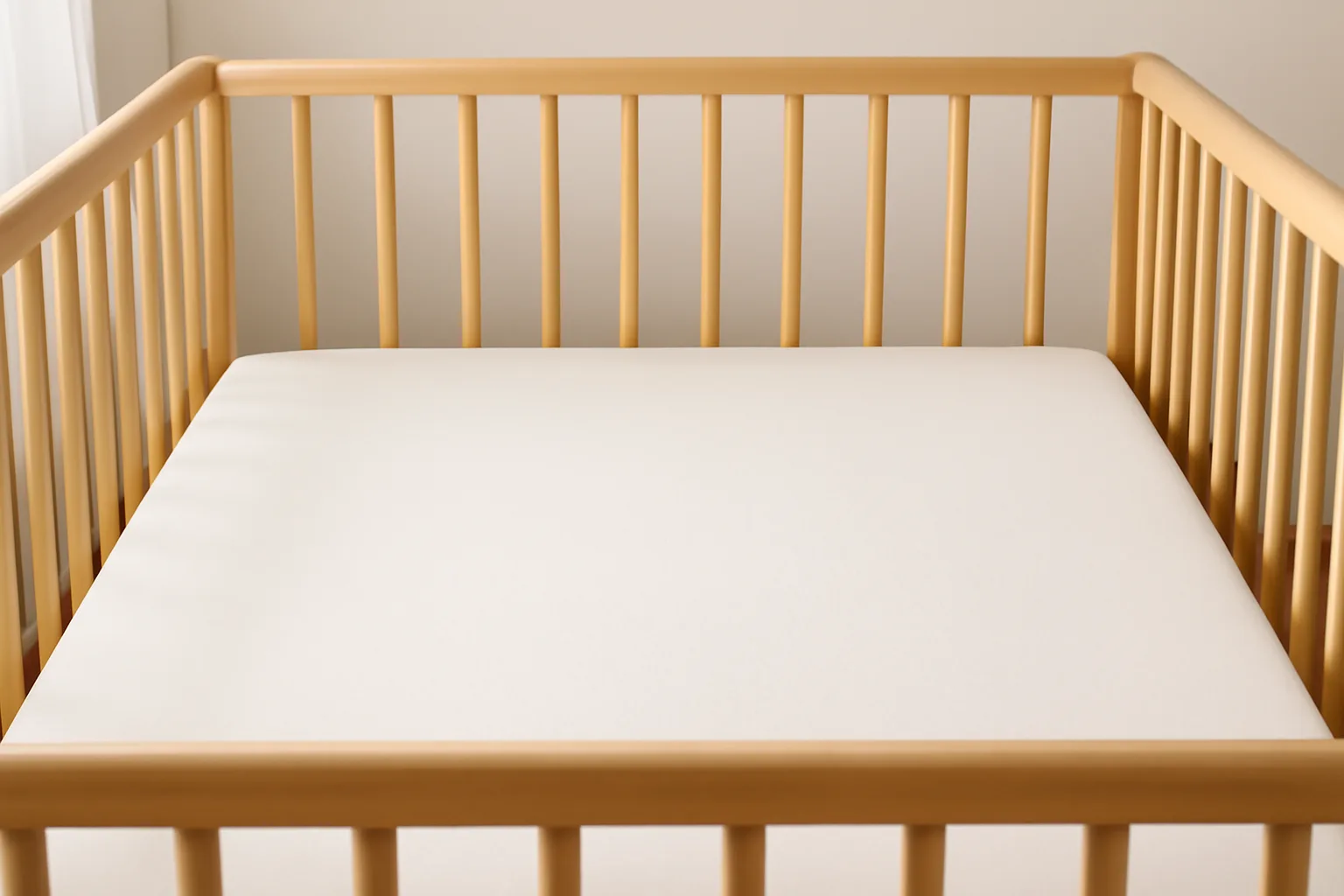
Mattress and Sheets: What Safe Really Means
The mattress should be firm, flat, waterproof, and a snug fit for the cot, crib or basket. Press your hand into it: it should spring back rather than hold a dip. If there is a gap around the edge, the mattress is wrong for that sleep space.
Buy the correct size
Cot mattress sizing is annoyingly easy to get wrong. Common UK sizes include 120 x 60cm for many cots and 140 x 70cm for cot beds, but bedside cribs and Moses baskets vary by brand. Check the exact model before buying.
Typical UK prices:
- Travel cot mattress: about £30-£35 at Argos for Cuggl or Baby Elegance options.
- Basic cot mattress: about £36-£45 for a Baby Elegance Eco cot mattress at Argos.
- Sprung cot bed mattress: about £52-£90 for budget ranges, rising to £120-£200 for premium pocket-sprung or natural-fibre models.
- Bedside crib replacement mattress: usually about £25-£50, depending on brand and shape.
For safety, fit matters more than fancy layers. A £40 correctly sized firm mattress beats a premium mattress that leaves a gap or bows at the edges.
Use fitted sheets, not loose layers
Use fitted cotton sheets designed for the mattress size. Two or three sheets is enough for most homes, with waterproof protectors if your mattress does not already have a wipe-clean cover. Expect to pay about £8-£18 for a two-pack of cot sheets from Argos, Dunelm or John Lewis, and around £12-£25 for branded bedside crib sheets.
Avoid adding a thick mattress topper. Babies do not need a plush hotel-bed feel. They need a firm, flat surface.
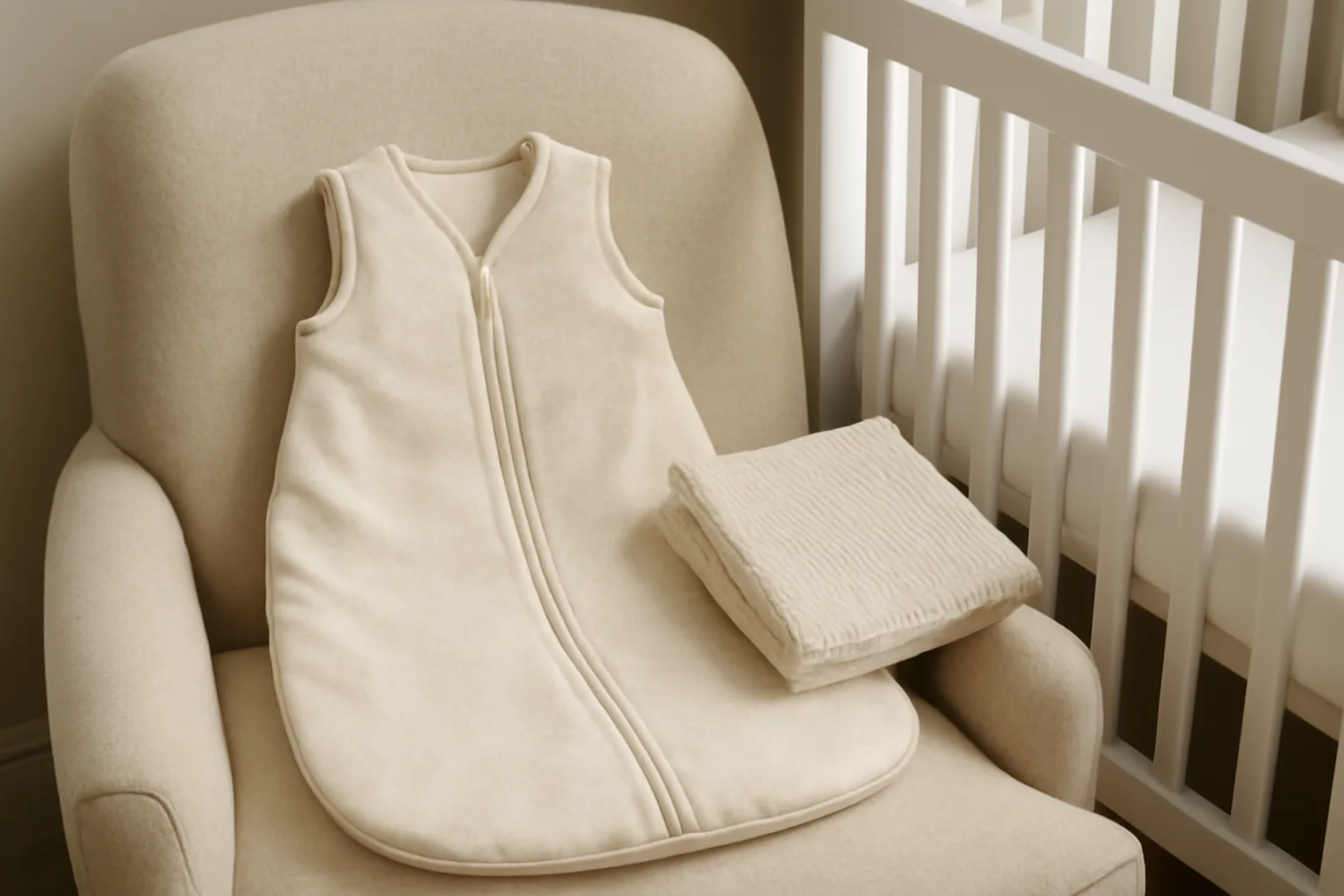
Bedding, Temperature and What Baby Should Wear
The aim is warm enough, not cosy-looking. Overheating is one of the risks highlighted in NHS and Lullaby Trust safe sleep guidance, and it is very easy to overdress a newborn because tiny sleep suits look thin in adult hands.
The NHS advice on sudden infant death syndrome also says babies should be placed on their backs to sleep and should not have their heads covered. Keep that in mind when choosing bedding: nothing loose should be able to ride up over the face.
Sleeping bags vs blankets
A baby sleeping bag is often the neatest solution once your baby is the right size for it. It cannot be kicked over the face like a loose blanket, and TOG ratings make warmth easier to judge. Basic supermarket and Argos sleeping bags often start around £15-£25, while branded Grobag, Tommee Tippee or MORI options can run from about £30 to £60.
Choose the right size by weight and age, not by hoping they will grow into it. If the neck opening is too large, the baby can slip down inside. That is not a bargain; it is the wrong product.
Blankets can still be safe if used properly
Lightweight cellular blankets are fine when tucked securely and kept below shoulder height. A pack of cellular blankets is usually about £10-£25 from John Lewis, Boots, Argos or Amazon UK. Put baby with their feet near the foot of the cot so they cannot wriggle down under the blanket.
Do not use duvets, pillows, weighted blankets or bulky quilts for a baby. They may look comfortable, but they are not needed and they add avoidable risk.
Room temperature
For most UK homes, a simple room thermometer is enough. You do not need a smart nursery station unless you want one. Basic thermometers cost about £5-£12; Groegg-style night light thermometers are commonly around £25-£35.
In winter, resist the urge to solve every chill with extra bedding. A vest, sleepsuit and suitable sleeping bag usually beats layers of loose blankets. In summer, a short-sleeved vest or nappy-only sleep may be enough during a hot spell. Check the baby’s chest or back of neck rather than cold hands, which are a poor guide.
Room Sharing and Where to Put the Sleep Space
Room sharing is not the same as bed sharing. The safest default for the first six months is baby in their own sleep space, in the same room as you. That applies to night sleep and, where practical, naps.
Placement in the bedroom
Put the crib or cot where you can reach it without leaning dangerously, but keep it away from:
- Radiators and heaters: overheating is a real risk, especially in small UK bedrooms.
- Windows and blind cords: cords should be tied well out of reach before baby can roll or grab.
- Loose shelves: nothing should be able to fall into the sleep space.
- Pets: a curious cat or dog should not have access to the cot during sleep.
- Trailing monitor cables: baby monitor leads need routing well away from the crib.
If you already use a monitor, the camera position matters. A wall-mounted camera or high shelf is usually better than clipping a camera to the cot rail. We cover the viewing angle in more detail in our guide to positioning a baby monitor camera.
Daytime naps
The same setup rules apply during the day. A Moses basket in the lounge is fine if it is flat, clear and stable. A baby sleeping in a bouncer, car seat or sling after a walk is different. Move them to a proper sleep space when you can do so safely.
This is the bit parents actually find hard, because babies often fall asleep in all the wrong places. No judgement. The practical rule is to use the safe sleep space as the default and avoid letting convenience become the regular routine.
Products to Avoid, Even If They Look Helpful
Baby sleep shopping is full of products that solve adult anxiety better than baby safety. The packaging often says calm, cosy, breathable or supportive. Those words do not override safe sleep guidance.
Skip these for unattended sleep
- Cot bumpers: they add fabric and ties where a clear cot is safer.
- Sleep positioners and wedges: a healthy baby should be placed on their back on a flat surface, not held in place.
- Pods and nests: useful for supervised awake lounging, not a replacement night sleep space.
- Pillows and duvets: save them for much later childhood, not baby sleep.
- Weighted sleep sacks: avoid them unless your health visitor or doctor has given specific advice.
- Thick sheepskins or toppers: they soften the surface and can make temperature harder to manage.
I would also be cautious with second-hand sleep products where you cannot confirm the full history. A used wooden cot can be fine if it meets current standards, has no damage and takes a new correct-size mattress. A used mattress with unknown storage, dips or stains is a false economy.
What about monitors?
Movement and breathing monitors can reassure some parents, but they do not replace safe setup. Basic audio monitors start around £25-£40, video monitors are often £50-£150, and breathing or movement pads can run from about £80 to £250. If you use one, choose it for your anxiety and lifestyle, not because you think it lets you add unsafe bedding or skip room sharing. Our separate guide asks whether baby movement monitors are worth it, and the short version is: useful for some families, not magic.
What a Safe Sleep Setup Costs in the UK
A safe setup does not need to be expensive. Spend on the parts that affect safety and fit; ignore the decorative extras.
Sensible budget setup
For a newborn in a small bedroom, a budget setup might look like this:
- Bedside crib: Chicco Next2Me Essential, about £99 at John Lewis.
- Extra fitted sheets: two-pack, about £12-£20.
- Room thermometer: about £5-£12.
- Cellular blankets or sleeping bag: about £15-£30.
That puts the core setup around £130-£160 if you already have somewhere safe to place nappies and night-feed bits. A Moses basket route can be cheaper, often around £70-£120 all-in with a stand and spare sheets.
Mid-range setup
This is where most families land:
- Bedside crib: Silver Cross Lunar around £175 or SnuzPod 5 around £199.95 at John Lewis.
- Branded sheets and mattress protectors: about £25-£45.
- Groegg-style thermometer: about £25-£35.
- Two sleeping bags: about £50-£90 total.
Expect £275-£370. The nicer crib may be easier to use, but the safety gain comes from correct use, not the brand badge.
Longer-term cot bed setup
If you have space, a cot bed can be better value:
- Cot bed: about £180-£350 from IKEA, John Lewis, Mamas & Papas or Tutti Bambini.
- Correct cot bed mattress: about £50-£150.
- Sheets and protectors: about £25-£50.
That is often £255-£550 upfront, but it can last into toddler years. If you already own a bedside crib, do not rush the cot bed purchase before you have measured the nursery and chosen a mattress size.
Night and Nap Checklist
The point of a checklist is not to make bedtime feel clinical. It is to remove decisions when you are tired. At 3am, tired adults make optimistic choices. A fixed routine protects you from that.
- Check the sleep space is clear. Remove toys, muslins, spare blankets, comforters, pillows and loose packaging.
- Put baby on their back. Do this for every sleep, even if they settled differently in your arms.
- Check the mattress and sheet. The sheet should be fitted, flat and not bunched under the baby.
- Choose clothing by room temperature. Use the baby’s chest or back of neck as your guide, not cold hands.
- Keep the crib close but clear. Make sure adult bedding, monitor cables and blind cords cannot reach the baby.
- Reset after feeds. If you feed in bed or on the sofa, plan how baby gets back into their own sleep space before you feel sleepy.
If you are also sorting feeding routines, our guides to storing and freezing breast milk safely and choosing a bottle steriliser pair well with this setup. Night feeding is easier when the sleep space, bottles and changing bits all have a repeatable place.
For warmth decisions, the most relevant follow-up is our guide to choosing the right TOG for your baby’s room temperature. For the bigger bedtime routine, see how to create a bedtime routine that works. Keep each piece simple. Safe sleep is one job; settling habits are another.
Frequently Asked Questions
What is the safest sleep space for a newborn? A clear, flat, firm cot, crib or Moses basket in the same room as an adult is the safest default. The mattress should fit properly, and the sleep space should be free from pillows, duvets, bumpers, toys and pods.
Can a baby sleep in a bedside crib every night? Yes, if the bedside crib is suitable for unattended sleep, assembled correctly, used with its correct mattress, and kept clear. Follow the manufacturer’s age and weight limits, and stop using it when your baby reaches the stated movement milestone.
Do I need a new mattress for a second-hand cot? Usually, yes. A new, correctly sized mattress is the safer choice because old mattresses can lose firmness, pick up damage, or be stored poorly. The cot itself can be reused if it is stable, undamaged and meets current safety expectations.
Are baby sleeping bags safer than blankets? They can be easier to manage because they stay in place, but only when the size and TOG are right for the baby and room. A lightweight blanket can also be safe if it is tucked in securely and kept below shoulder height.
Should I use a baby monitor in the same room? You can, but it does not replace room sharing or safe setup. If you use a monitor, route cables well away from the cot and avoid clipping anything with a lead directly to the sleep space.
What should I avoid putting in the cot? Avoid pillows, duvets, cot bumpers, soft toys, loose blankets near the face, pods, nests, sleep positioners, wedges and weighted bedding. A safe cot looks sparse, and that is the point.