Introducing allergens is one of the weaning steps that sounds scarier than it usually is. The safest approach for most babies is calm and boring: wait until your baby is ready for solids, offer one common allergen at a time in a baby-safe form, start small, and keep the food in the routine if there is no reaction. If your baby has severe eczema, a known food allergy, or you have been told they are high risk, speak to your GP, health visitor or allergy team before starting.
In This Article
- The Quick Answer
- Before You Start: Readiness and Risk
- Which Allergens to Introduce First
- How to Introduce Allergens Step by Step
- Safe Food Forms for Babies
- What Reactions Look Like and What to Do
- Keeping Allergens in the Routine
- Frequently Asked Questions
The Quick Answer
For most babies, common allergenic foods can be introduced from around 6 months, once weaning has started and your baby is developmentally ready for solids. The NHS says foods such as egg, peanut, cow’s milk, wheat, fish, shellfish, sesame, soya and nuts can be introduced from around 6 months in small amounts and one at a time. Its food allergies in babies and young children guidance also says that, if tolerated, these foods should stay part of your baby’s usual diet.
The basic rule
Do not save allergens for later because they feel intimidating. Also do not rush them all into one weekend because you want the job done. The middle path is best: introduce allergens baby safely by spacing them out, choosing a normal morning or lunchtime, and watching your baby afterwards.
For a low-risk baby who is already managing simple first foods, a practical order might be:
- Well-cooked egg: Mashed hard-boiled egg or omelette strips.
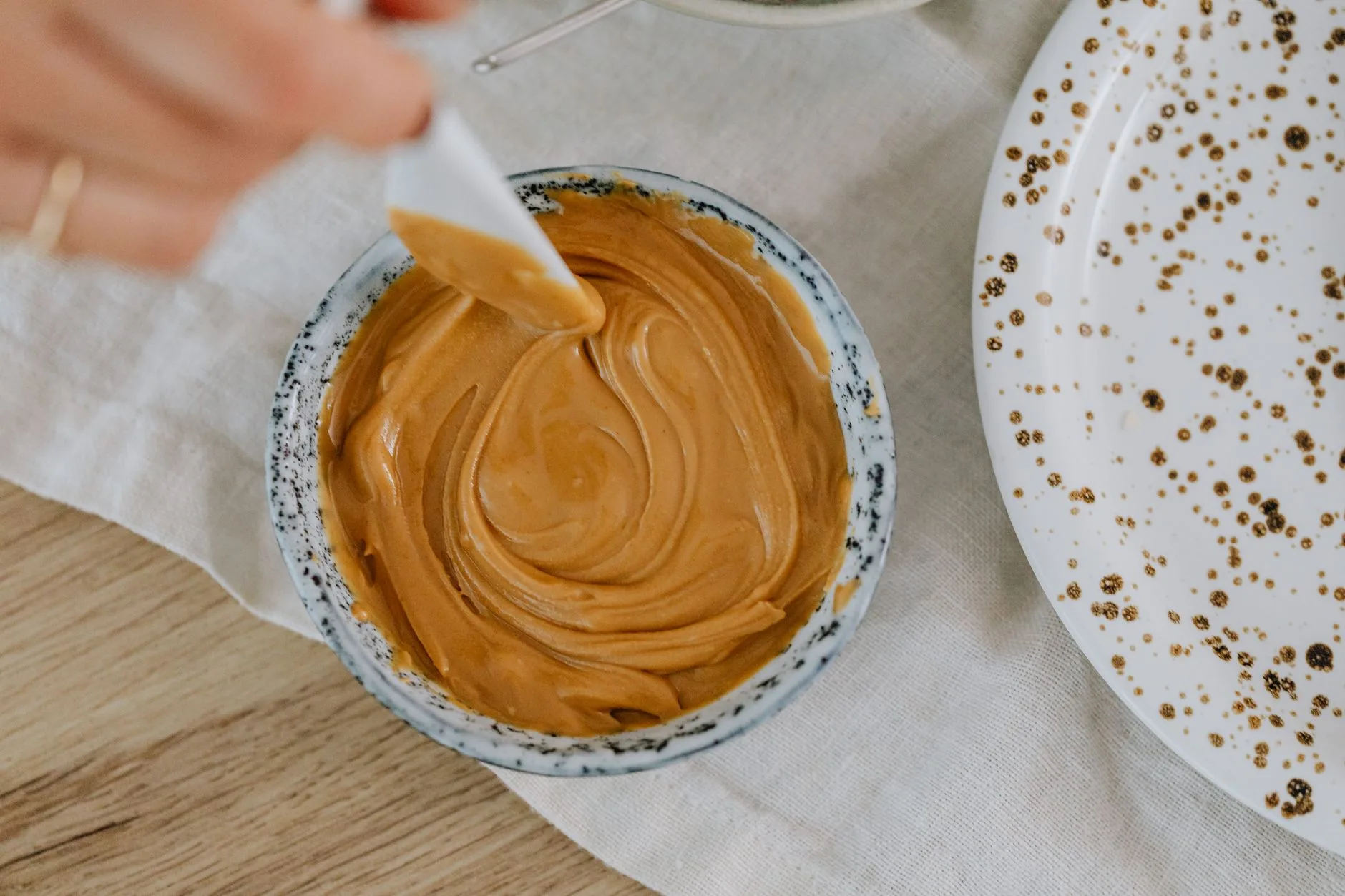
- Peanut: Smooth peanut butter thinned into porridge, yoghurt or puree.
- Cow’s milk products: Plain full-fat yoghurt or cheese in food, not cow’s milk as the main drink under 12 months.
- Wheat: Toast fingers, pasta or wheat cereal.
- Sesame: Smooth tahini mixed into yoghurt or hummus-style puree.
- Fish: Soft cooked salmon, cod or tuna flakes with bones removed.
You do not need specialist baby allergen powders for most families. A jar of smooth peanut butter is about £1.50-£3 from Tesco, Sainsbury’s or Aldi. A box of eggs is roughly £2-£4. Plain full-fat yoghurt is often £1-£2. Baby spoons, bibs and a wipe-clean mat might cost £8-£25 total from Boots, John Lewis, IKEA or Amazon UK. The kit is not the hard part. The hard part is staying calm enough to go slowly.
What this guide is and is not
This guide is practical weaning support, not medical diagnosis. If your baby has already reacted to a food, has severe eczema, has been prescribed allergy medication, or you are worried about symptoms, get individual advice. Do not use an online article to override your child’s care plan.
Before You Start: Readiness and Risk
Introducing allergens only makes sense once your baby is ready for solids. For most babies that is around 6 months. Readiness matters because allergenic food still needs to be swallowed safely, not smeared hopefully around the chin while everyone panics.
Signs your baby is ready
Look for the same signs you would use for starting weaning:
- Sitting with support: Your baby can sit upright enough to eat safely.
- Good head control: Their head is steady, not flopping forward.
- Interest in food: They watch food and may try to bring it to their mouth.
- Swallowing ability: Food is not instantly pushed out every time.
Our week-by-week weaning plan covers this in more detail. For allergen introduction, the extra point is timing. Pick a day when your baby is well, you are not rushing to nursery pickup, and you can watch them afterwards.
Babies who need extra advice first
Some babies should not be treated as a standard low-risk weaning case. Speak to a GP, health visitor, dietitian or allergy clinic before introducing higher-risk allergens if your baby:
- Has severe eczema, especially if it is difficult to control.
- Has already reacted to a food.
- Has a diagnosed food allergy.
- Has been advised to avoid a food by a healthcare professional.
- Has complex medical needs affecting feeding or swallowing.
Family history alone can feel worrying, but it does not automatically mean your baby will react. The useful question is not “does anyone in the family have hay fever?” It is “has this baby shown signs that need individual advice?”
Do you need allergy testing first?
Most low-risk babies do not need allergy testing before trying allergenic foods. Testing can be helpful in specific higher-risk cases, but it can also delay foods unnecessarily if used without a clear reason. If your baby has severe eczema or previous reactions, ask for proper advice rather than trying to interpret tests yourself.
Private allergy appointments in the UK can cost roughly £180-£300 before any tests, and test packages can add more. NHS advice is free, though waiting times vary. I would start with your GP or health visitor unless there is an urgent reaction history.
Which Allergens to Introduce First
There is no prize for introducing every allergen in a perfect order. What matters is offering common allergens in safe forms, one at a time, and keeping tolerated foods in the diet.
The common allergenic foods
In UK weaning advice, the foods parents usually need to think about are:
- Cow’s milk: Yoghurt, cheese or milk used in cooking from around 6 months; not as the main drink before 12 months.
- Egg: Well-cooked egg, not runny egg for babies.
- Peanut: Smooth peanut butter, peanut powder or finely ground peanut mixed into food; never whole peanuts.
- Tree nuts: Smooth nut butters or finely ground nuts mixed into food; never whole nuts.
- Sesame: Tahini, hummus-style puree or sesame paste mixed thinly.
- Wheat and gluten: Toast, pasta, cereal or soft bread in safe shapes.
- Soya: Tofu, soya yoghurt or soya in cooked foods.
- Fish and shellfish: Soft cooked fish or shellfish in tiny pieces with bones and shells removed.
The NHS and allergy charities agree on the big idea: introduce small amounts, one at a time, and do not delay egg and peanut beyond the first year without a medical reason. Anaphylaxis UK gives parent-facing infant weaning allergy advice that also stresses introducing common allergenic foods in small amounts so reactions are easier to spot.
Start with foods your family eats
If your family never eats shellfish, it does not need to be the first allergen you tackle. Start with normal foods you can keep offering: egg at breakfast, yoghurt after lunch, peanut butter stirred into porridge, wheat toast fingers, or sesame in a smooth dip.
This matters because introduction is not a one-off box tick. If your baby tolerates egg once and then does not see egg again for four months, you have not really built it into the diet.
Avoid unsafe forms
The allergen is not the only risk. Shape and texture matter. Whole nuts are a choking risk and should not be given to babies. Thick peanut butter on a spoon can clag in the mouth. Large chunks of hard cheese, rubbery egg and dry toast can be difficult for some babies.
If you are using baby-led weaning, our baby-led weaning vs spoon feeding article is worth reading alongside this. The method can be flexible; the safety rules still apply.
How to Introduce Allergens Step by Step
The best process is deliberately uneventful. Choose one allergen, use a tiny amount, watch, then build slowly if all is well.
Step-by-step method
- Choose a normal day. Avoid days when your baby is unwell, overtired, post-vaccine and miserable, or about to be handed to someone else.
- Serve it early in the day. Breakfast or lunch gives you time to observe before bedtime.
- Offer a tiny amount first. Think a smear, a quarter teaspoon mixed into familiar food, or a small soft piece.
- Wait and watch. Stay with your baby during the meal and keep an eye out afterwards.
- Increase gradually next time. If there is no reaction, offer a slightly larger amount on another day.
- Keep it in the routine. Once tolerated, keep offering that food regularly in a normal baby-safe form.
That process is slow enough to spot a problem and simple enough to repeat. It is also cheaper than buying a cupboard full of special pouches. A basic highchair from IKEA is about £19-£25, while cushioned or folding highchairs from Joie, Maxi-Cosi or Chicco are more like £60-£160. Any stable, easy-clean chair is fine; our highchair buying guide is useful if you want a wipe-clean seat that does not turn every meal into a fabric-laundry project. You do not need a luxury feeding throne to introduce allergens baby safely.
How much time between new allergens?
Many parents leave two or three days between new allergens so it is easier to identify what caused a reaction. That is a practical approach, especially at the beginning. You do not have to leave a dramatic gap between every normal food forever, but avoid introducing egg, peanut and sesame for the first time in the same meal.
If your baby is low risk and eating well, you might introduce egg one week, peanut a few days later, then yoghurt or wheat after that. If you are anxious, go slower. The aim is steady progress, not a calendar challenge.
What if your baby refuses it?
Refusal is not an allergy. Babies reject foods for all sorts of reasons: texture, mood, teething, tiredness, or because the moon is apparently in the wrong place. Try again another day in a different form.
Useful swaps:
- Egg refused: Try omelette strips, mashed hard-boiled egg with yoghurt, or egg in a soft pancake.
- Peanut butter too sticky: Thin it with warm water, breast milk, formula or yoghurt.
- Fish too strong: Mix a tiny amount into mashed potato or vegetable puree.
- Tahini too bitter: Stir a little into full-fat yoghurt or hummus-style chickpea puree.
Keep the first attempts small and boring. Big reactions are rare, but big mess is guaranteed.
Safe Food Forms for Babies
Safe allergen introduction is mostly food preparation. The same ingredient can be sensible or risky depending on form.
Peanut and tree nuts
Never give whole nuts or chopped nuts to babies. Use smooth peanut butter, smooth almond butter, peanut powder or finely ground nuts mixed into soft food. The texture should be loose, not gluey.
Good first options:
- Peanut butter stirred into porridge: Use a tiny amount and thin well.
- Peanut butter mixed with yoghurt: Smooth, easy to swallow and cheap.
- Finely ground nuts in puree: Make sure there are no hard pieces.
- Nut butter on soft toast fingers: Use a very thin layer, not a thick spread.
Smooth peanut butter is usually £1.50-£3 per jar. Specialist peanut powders can be £5-£12, but they are not necessary for most families unless you prefer the convenience.
Egg, dairy and wheat
Egg should be well cooked. Scrambled egg, omelette strips and mashed hard-boiled egg are all workable. Avoid runny egg for babies because it is messier and harder to judge texture.
Cow’s milk can be used in cooking or offered as yoghurt and cheese from around 6 months, but it should not replace breast milk or formula as the main drink before 12 months. Plain full-fat yoghurt is a useful early dairy food because it is smooth and easy to mix with fruit or cereal.
Wheat can be introduced through toast fingers, pasta, soft bread, couscous or cereal. Watch the texture. Dry bread can ball up in the mouth, so lightly toasted strips or softened pasta are often easier.
Our best first foods for weaning guide gives broader first-food ideas if you are still building confidence with textures.
Fish, shellfish, sesame and soya
Fish should be cooked until soft, with bones removed carefully. Start with mild white fish if strong flavours put your baby off. Tinned tuna can be salty, so use small amounts and choose options in spring water when possible.
Shellfish needs extra care because the texture can be rubbery. Serve tiny, soft pieces only when your baby is managing similar textures well. If shellfish is not part of your normal family diet, there is no need to make it the first allergen.
Sesame is easiest as tahini thinned into yoghurt or a smooth hummus-style puree. Soya can be introduced through tofu, soya yoghurt or foods containing soya, depending on what your family eats.
What Reactions Look Like and What to Do
Most babies will not react. Some will get mild redness around the mouth from food contact, especially acidic foods, and that is not always a true allergy. Still, you need to know what to watch for.
Possible mild to moderate signs
Stop the food and seek medical advice if you notice symptoms such as:
- Hives or raised itchy rash
- Swelling around the lips, face or eyes
- Vomiting soon after eating
- Repeated coughing or wheezing
- Sudden runny nose or sneezing with other symptoms
- Unusual distress that seems linked to the food
Take photos of rashes if they appear, note the food, amount and timing, and avoid that food until you have advice. Do not keep “testing” it over and over at home to see if the reaction happens again.
Emergency signs
Call 999 if your baby has breathing difficulty, becomes floppy, has swelling of the tongue or throat, seems unusually drowsy or pale, or you are seriously worried. If your baby has been prescribed an adrenaline auto-injector, follow the plan you were given.
This is the part nobody enjoys reading, but it is better to know it before you start. Serious reactions are uncommon, and being prepared is not the same as expecting the worst.
What to record
If something happens, write down:
- The food and brand, if relevant.
- How much your baby ate.
- How it was prepared.
- Time from eating to symptoms.
- Photos of visible skin symptoms.
- Any medicine given and who advised it.
That information helps a GP, health visitor, dietitian or allergy team far more than “I think it was breakfast”.
Keeping Allergens in the Routine
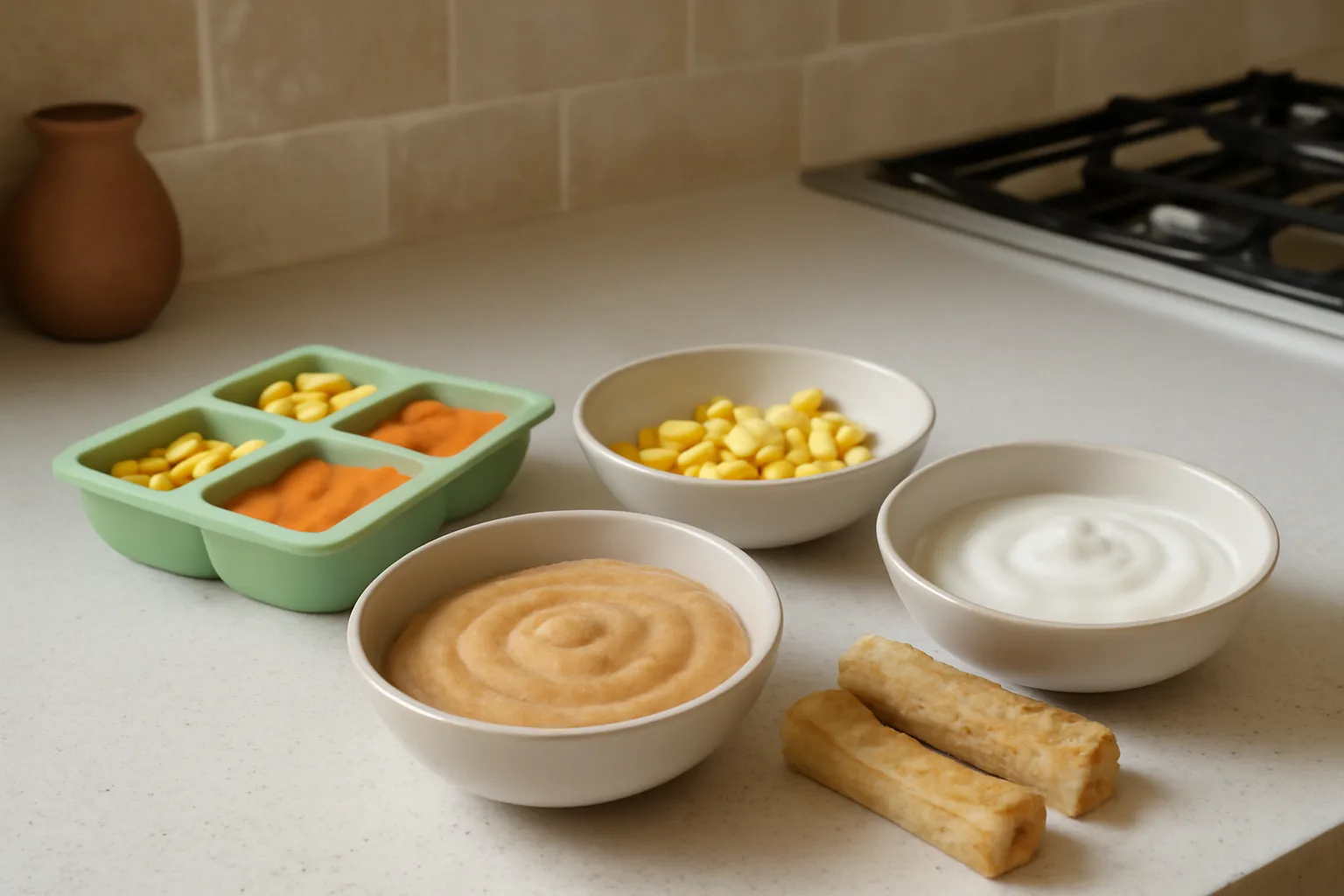
The job is not finished when your baby tolerates a tiny taste. Once an allergenic food is accepted without symptoms, keep it in the normal routine in a baby-safe form.
Simple weekly rhythm
You might use:
- Egg: Omelette strips once or twice a week.
- Peanut: Thin peanut butter in porridge or yoghurt.
- Dairy: Plain yoghurt, cheese in meals or milk in cooking.
- Wheat: Toast, pasta or cereal.
- Fish: Soft flakes in mash or fish pie.
- Sesame: Tahini-yoghurt dip or smooth hummus-style spread.
It does not need to be elaborate. A £3 wipe-clean bib, a £5-£10 suction bowl, and a freezer tray for batch portions can make it less messy, but none of that replaces the habit of offering the foods again.
Batch prep without confusion
If you batch-cook baby food, label portions clearly when they contain allergens. This is useful if grandparents, nursery or a babysitter feeds your baby. Our baby food batch prep guide is useful here, but with allergens I would be extra clear: “contains egg”, “contains peanut”, “contains milk”.
Freezer labels cost about £2-£5. Small silicone freezer trays are usually £8-£18 from Amazon UK, Boots or John Lewis. They are not essential, but they stop mystery beige cubes becoming a family admin problem.
What I would not do
I would not introduce a new allergen for the first time at nursery, in a restaurant, just before a long car journey, or at bedtime. I would not smear thick peanut butter straight onto a spoon. I would not keep feeding a food after a convincing reaction just because an internet group said rashes are normal.
The calm approach is still the best one: small amount, safe texture, one new allergen at a time, watch, repeat if tolerated, get advice if something looks wrong.
Frequently Asked Questions
When should I introduce allergens to my baby? For most babies, common allergenic foods can be introduced from around 6 months once they are ready for solids. Babies with severe eczema, previous food reactions or known allergy may need individual advice first.
Which allergen should I try first? Egg, peanut and dairy are common early choices because they are easy to offer in baby-safe forms and easy to keep in the diet. The exact order matters less than introducing one at a time.
Can babies have peanut butter? Babies can have smooth peanut butter from around 6 months if it is thinned into porridge, yoghurt or puree. Do not give whole peanuts, chopped nuts or thick spoonfuls of peanut butter because they are choking risks.
How long should I wait between new allergens? Many parents leave two or three days between new allergens so any reaction is easier to identify. Go slower if you are anxious or if your baby has higher-risk symptoms that need advice.
What should I do if my baby gets a rash after eating? Stop that food, take photos, write down what they ate and seek medical advice. Call 999 immediately if there is breathing difficulty, tongue or throat swelling, floppiness, severe drowsiness or you are seriously worried.
Do I need special allergen powders? Most families do not. Normal foods such as well-cooked egg, smooth peanut butter, plain yoghurt, wheat toast and tahini can work well when prepared in safe textures.